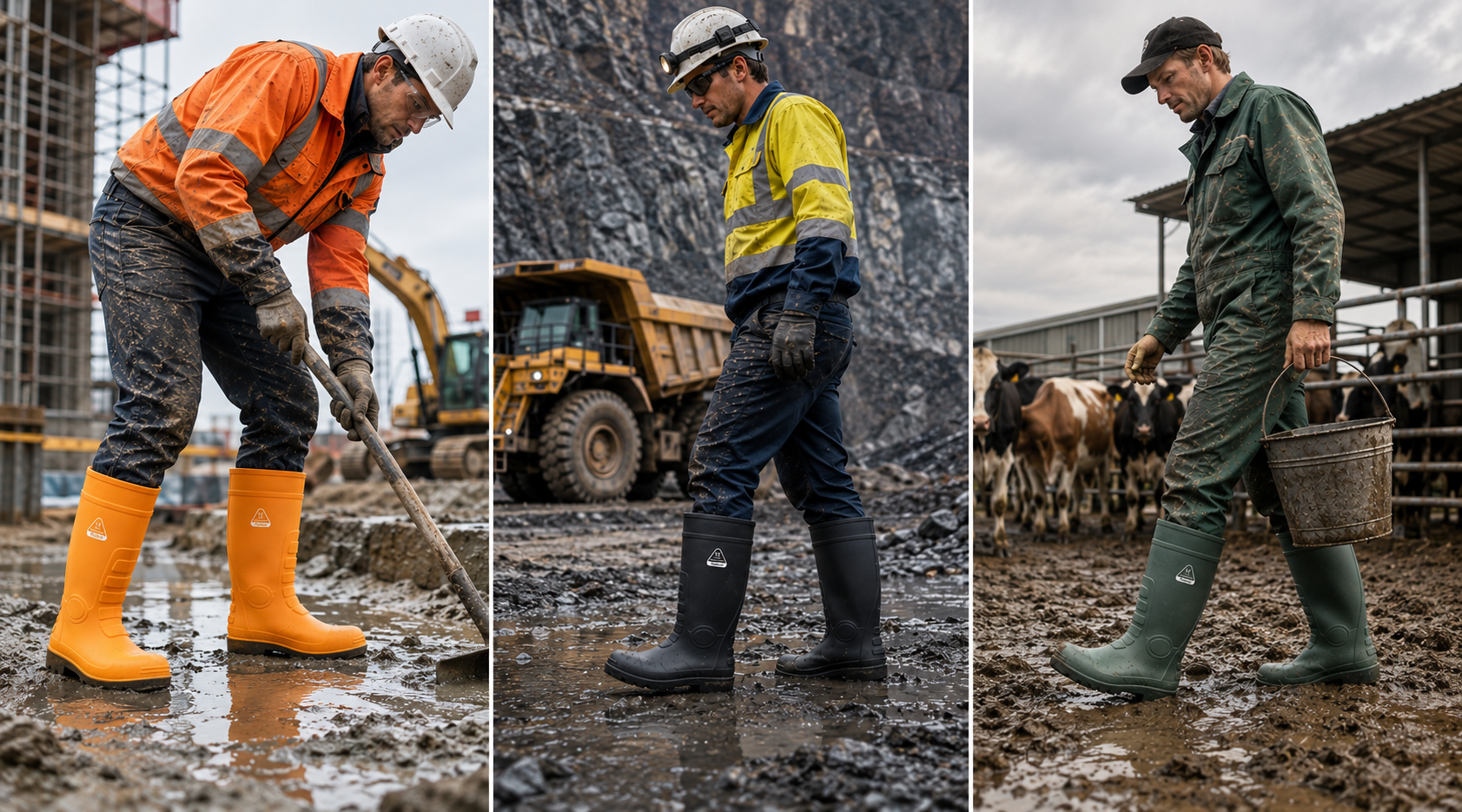
Safety Wellington Boots Guide: How to Choose the Right Boots for Your Industry
Safety Wellington boots are used across construction, mining, agriculture and other wet industrial environments, but the protection required can vary significantly between workplaces. For PPE buyers, the challenge is not simply finding a waterproof boot; it is identifying the right level of protection for the specific hazards workers face.
When selecting Wellington boots for your team, try to ask:
Do you need safety or occupational footwear?
Which hazards need protection?
Which standard applies?
How important are waterproofing, grip and durability?
This guide helps PPE buyers select Wellington boots according to workplace risk, industry and required protection.
1. What Are Safety Wellington Boots?
☞A Wellington boot is a waterproof wet-work boot, typically made from rubber, PVC or similar materials, designed to keep feet dry in mud, water and washdown conditions.
☞A safety Wellington boot adds safety protection to this waterproof format. Models certified to EN ISO 20345 include protective toe caps, with other properties depending on classification.
☞An occupational Wellington boot is designed for workplace use under requirements such as EN ISO 20347. It may offer waterproof and grip function but does not require a protective toe cap.
Because safety and occupational Wellington boots may look almost identical, buyers should not rely on color, material, or product appearance. Check the model marking, applicable standard, protection classification, and supporting documentation. Not every waterproof Wellington boot is a safety boot.
2. Safety vs Occupational Wellington Boots: Which Do You Need?
The choice between safety and occupational Wellington boots should come from a workplace risk assessment.
Boots | Safety Wellington Boots | Occupational Wellington |
Typical Standard | EN ISO 20345 | EN ISO 20347 |
Main Focus | Workplace safety protection | Occupational performance |
Toe Protection | Depending on applicable safety classification | Not the defining safety requirement |
Typical Use | Higher-risk workplaces | Lower-risk wet-work environments |
Selection Basis | Workplace risk assessment | Workplace conditions |
Need detailed standards information? Learn More About Wellington Boot Standards & Certification
3. Start with the Hazards, Not the Boot
Before comparing materials, features, or prices, define the job and its hazards. Procurement teams should ask where workers stand and walk, what can strike or penetrate the boot, and how often the footwear is exposed to water, mud, or washdown processes.
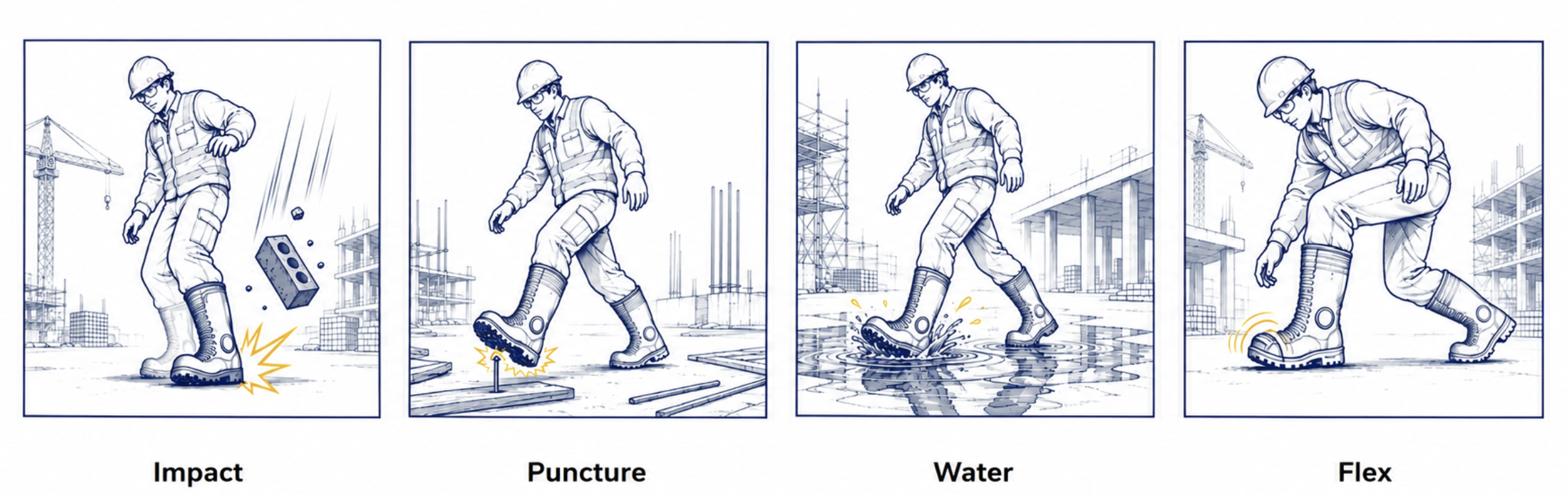
Impact--Falling tools, moving equipment, and livestock can injure or crush the foot. Where impact or compression risks exist, select certified safety Wellington boots with toe protection suitable for the required classification.
Puncture--Nails, sharp debris, wire, and metal objects can penetrate the outsole. Worksites with these hazards may require a puncture-resistant insert verified under the applicable footwear standard.
Water--Standing water, deep mud, and frequent washdown require footwear designed to keep water out during its intended use. Check the boot construction, height, and verified waterproof performance rather than relying only on a product description.
Slip--Wet, muddy, oily, and contaminated surfaces create different traction demands. Match the outsole design and tested slip-resistance marking to the actual floor surface and contaminants present.
Repeated Flexing--Walking, bending, kneeling, and long shifts repeatedly flex the upper and outsole. Buyers should consider flex durability, fit, cushioning, and weight—not only the boot's safety features.
Record the hazards first, then match them with the required standard, classification, and tested properties. Different roles at the same worksite may require different Wellington boot specifications. The right Wellington boot is determined by the hazards workers face—not simply by color, weight or price.
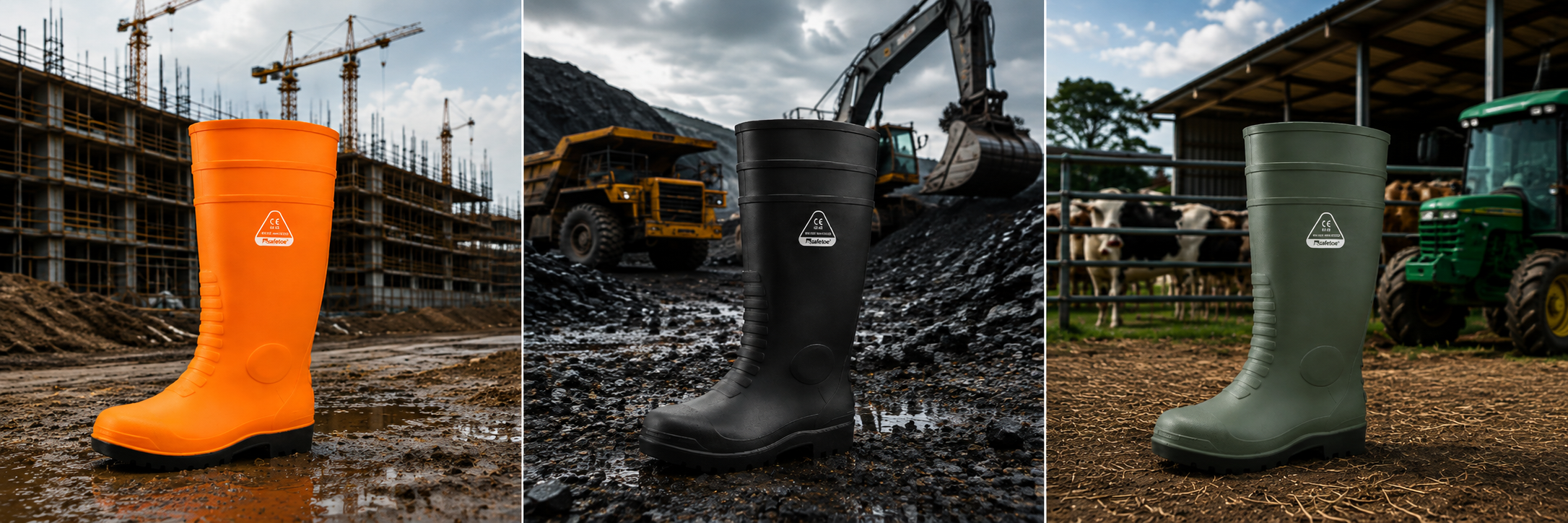
4. Choose Wellington Boots by Industry
Choose Wellington boots according to the main hazards in each industry. Construction, mining, and agriculture may all involve wet conditions, but the required protection is different.
Construction workers may face falling objects, exposed nails, sharp debris, standing water, mud, and slippery ground. Frequent walking, bending, and kneeling also place repeated stress on the boot. Where impact and puncture hazards are present, check whether toe protection and a penetration-resistant insert are required. For wet or muddy sites, evaluate waterproof construction, outsole grip, and flex durability. For long shifts, balance protection with secure fit and walking comfort.
Mining environments often involve sharp ground hazards, uneven terrain, water and heavy-duty wear. Grip and durability are critical because workers may walk on wet rock, gravel or compacted surfaces for long shifts. Safety Wellington boots for mining should provide strong underfoot protection and reliable traction.
Agricultural workers may encounter mud, standing water, livestock, farm tools, wet floors, and frequent cleaning or washdown. Livestock handling and work around machinery or sharp tools may require toe and puncture protection. For lower-risk feeding, cleaning, or general wet-work tasks, occupational Wellington boots may be suitable.
5. Understand the Key Protection Features
Once the main hazards are clear, focus on the protection features that match those hazards.
6. Waterproofing and Flex Durability Matter More Than They Look
Two features are often underestimated during procurement: waterproofing and flex durability.
Waterproof Protection | Flex Durability |
PVC is generally considered waterproof, but "PVC = waterproof" is not enough for product selection. Waterproof performance depends on the complete boot construction and how effectively it limits water ingress during intended use. Buyers should examine the connection between the upper and outsole, possible entry points, boot height, and expected exposure. A boot used for standing water, deep mud, or frequent washdown may need different performance from one exposed only to rain or occasional splashes. Confirm the claimed waterproof capability against the actual environment |
Walking, bending, squatting, and working on rough terrain repeatedly stress the boot’s main flex zones. This long-term movement can expose material or construction weaknesses that may not be visible when the product is new. Buyers should consider how often workers move, how long each shift lasts, and whether the ground forces the boot to bend continuously. Flex evaluation should focus on signs of cracking, splitting, deformation, or separation after repeated movement. |
7. Check Standards and Certification Before Buying
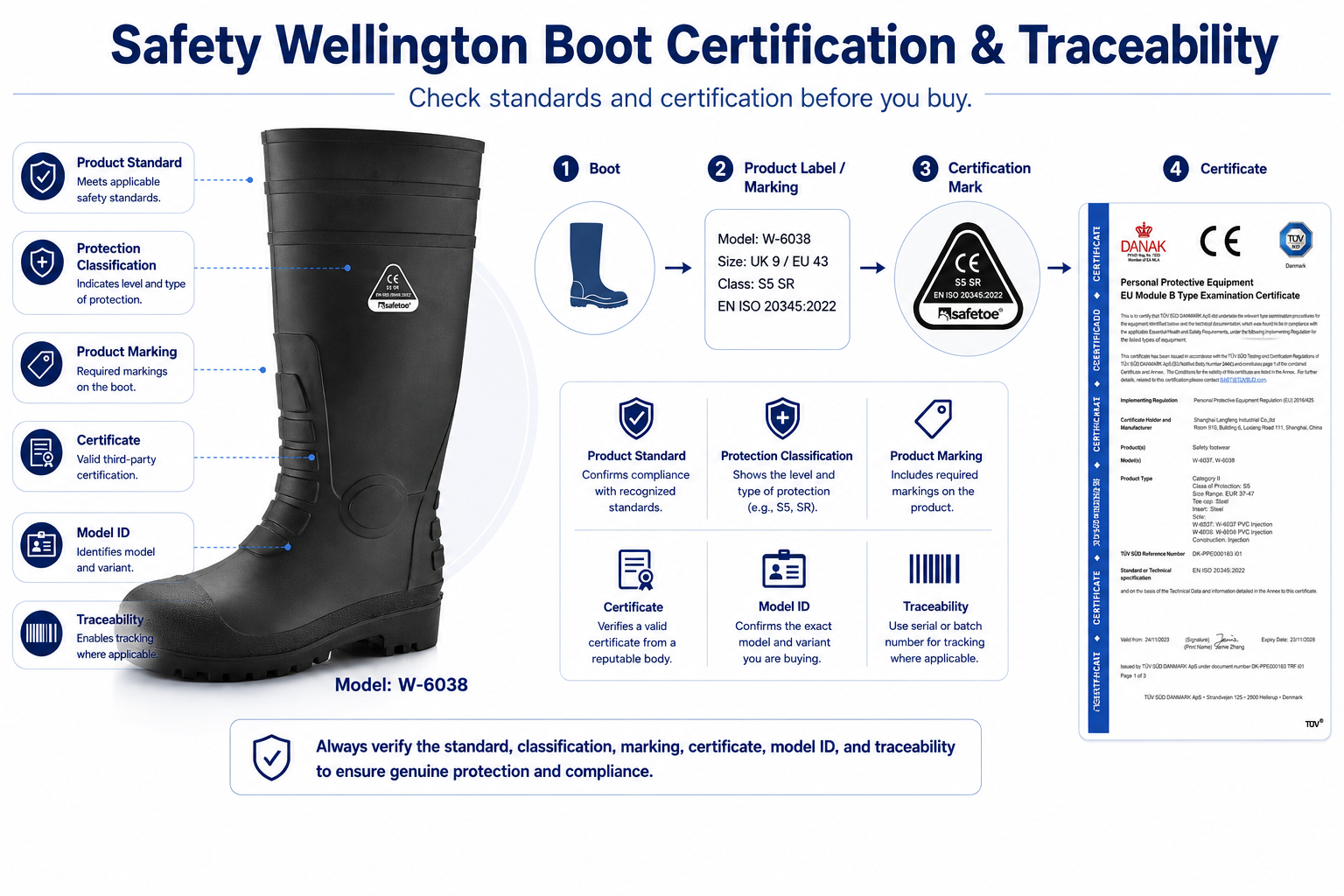
A product photo or catalogue description does not prove compliance. Before approving samples or placing a bulk order, buyers should confirm that the quoted Wellington boot, its markings, and its supporting documents all refer to the same product.
Check the following:
Product standard – for example EN ISO 20345 or EN ISO 20347
Protection classification – S3 or S5
Product marking – visible marking on the boot
Certificate – available from the supplier or manufacturer
Model identification – clear model reference
Traceability – batch or production information where applicable
8.Safety Wellington Boots Buyer's Checklist
Choosing Wellington boots for a workforce should follow a repeatable procurement process. Use this checklist before requesting quotations, approving samples, or placing a bulk order. Complete it for each job role and each proposed model so that suppliers are answering the same practical questions.
| Check | Question to Ask |
| Industry | Where will the boots be used? |
| Hazards | Impact, puncture, water, slip or other risks? |
| Standard | Is EN ISO 20345 or EN ISO 20347 appropriate? |
| Protection | What protection level is required? |
| Waterproofing | How much water exposure is expected? |
| Outsole | What surfaces will workers walk on? |
| Durability | Will the boots face repeated flexing and rough use? |
| Comfort | How long will workers wear them each shift? |
| Certification | Can the supplier provide applicable evidence? |
| Product fit | Is the model suitable for the actual work environment? |
For B2B procurement, compare Wellington boots by application, protection and verified performance—not price alone.
Recommended Safetoe Wellington Boots
W-6038----S5 Safety Wellington Boots----Construction · Mining · Higher-Risk Wet Work
W-6037----S5 Safety Wellington Boots----Industrial · Construction · Wet Worksites
W-6036----EN ISO 20347 Occupational Wellington Boots----Agriculture · Cleaning · General Wet Work
W-6055----Industrial Waterproof Wellington Boots----General Industrial · Outdoor Wet Work
☛View All Safety Wellington Boots
⏲FAQ
Q: What are safety Wellington boots?
A: Safety Wellington boots are waterproof pull-on boots designed for wet workplaces and equipped with safety features required by the applicable classification. Under EN ISO 20345, safety footwear includes protective toe caps, while puncture resistance, slip performance, and other properties depend on the model and classification. Buyers should verify product markings and certification rather than assume every PVC Wellington boot is a safety boot.
Q: What is the difference between safety and occupational Wellington boots?
A: Safety Wellington boots are generally evaluated under EN ISO 20345 and include protective toe caps. Occupational Wellington boots are covered by EN ISO 20347 and focus on workplace performance where a safety toe is not the defining requirement. Both types may provide waterproofing, grip, and comfort. The correct choice depends on the hazards identified through the workplace risk assessment.
Q: Which Wellington boots are suitable for construction?
A: Construction Wellington boots should match hazards such as falling objects, exposed nails, sharp debris, water, mud, slippery ground, and repeated flexing. Depending on the risk assessment, workers may need certified toe protection, puncture resistance, and tested slip performance. Buyers should also evaluate waterproof construction, outsole grip, fit, and durability, then confirm that the product marking and certificate cover the selected model.
Q: Which Wellington boots are suitable for mining?
A: Mining Wellington boots should be selected for sharp ground hazards, standing water, deep mud, uneven terrain, and demanding daily use. Important considerations include puncture protection, toe protection where required, grip, stability, waterproof construction, and heavy-duty durability. Buyers should match the outsole to loose or wet ground and verify the applicable standard, protection classification, product marking, and certification before ordering.
Q: How should businesses choose Wellington boots for employees?
A: Businesses should begin with each employee's job, workplace hazards, walking surface, water exposure, and shift length. They should then determine the applicable standard and protection level before comparing waterproofing, outsole design, flex durability, comfort, and fit. Quotations, samples, product labels, technical datasheets, and certificates should identify the same model. Final selection should be based on application and verified performance—not price alone.
Summary:
Choosing the right safety Wellington boots starts with understanding the workplace, hazards and required protection. This guide helps PPE buyers compare safety and occupational Wellington boots, key protection features, certification requirements and solutions for construction, mining and agriculture.
Author: Safetoe Technical Team
Source: Safetoe Academy




 English


