When purchasing waterproof work rain boots (Wellington Boots), the most common question is:
What’s the difference between Safety Rain Boots and Occupational Rain Boots?
When do you need EN ISO 20345? And when is EN ISO 20347 good enough?
Many buyers mix them up because they look almost the same:
Both are made of PVC, both are waterproof, and both are designed for wet and slippery environments.However, the key differences are actually about:
✅ Whether the protection level must meet safety footwear requirements
✅ Whether the boots meet PPE compliance for job sites
In this article, we’ll help you quickly decide in the simplest way:
● Which industries require EN ISO 20345 (Safety Footwear)?
● Which jobs are suitable for EN ISO 20347 (Occupational Footwear)?
We’ll also provide a quick S5 vs OB comparison table and specific product recommendations to help you avoid wrong purchasing decisions.
1. Why Do Buyers Confuse Safety Rain Boots and Occupational Rain Boots?
When searching for boots, buyers often use keywords like:
● safety rain boots
● safety wellington boots
● occupational wellington boots
● waterproof work rain boots
● steel toe wellington boots
These terms are often used interchangeably across different platforms, which leads to confusion. The main reasons include:
1) They Look Almost Identical
Most rain boots feature a tall shaft design and similar materials (PVC or rubber). It is difficult to tell visually whether the boots have a steel toe cap.
2) “Waterproof” Is Not the Key Standard
Many buyers assume that if boots are waterproof and slip resistant, they must be safety boots. But in reality:
Waterproofing is only a basic function. The real core of safety rain boots is the protective structure.
3) Overlapping Applications but Different Risk Levels
Rain boots may be used in agriculture, cleaning, municipal maintenance, and construction—but the risk level differs significantly.
4) Some Suppliers Don’t Clearly State the Standard
Many product pages only mention “waterproof,” “slip resistant,” or “durable,” without clearly listing EN ISO 20345 or EN ISO 20347, making it hard for buyers to confirm compliance.
2. What Is EN ISO 20345?
EN ISO 20345 is a Safety Footwear standard. When clear safety hazards exist on-site, it is often a mandatory requirement.
Key Features of EN ISO 20345
✅ It focuses on: impact protection + puncture resistance + higher-risk workplace protection
In real-world use, EN ISO 20345 safety rain boots typically include:
● Steel Toe (toe cap protection): prevents injuries from falling heavy objects
● Anti-puncture protection: prevents sharp objects from penetrating the outsole
● Designed for higher-risk workplaces such as construction sites, road works, pipelines, bridges, and municipal projects
If your customer is in any of the following situations, EN ISO 20345 is usually the correct choice:
✅ Construction sites clearly require “safety footwear”
✅ The ground may contain rebar ends, nails, or metal debris
✅ There is heavy material handling or falling object risk
✅ PPE audits or project tenders specify safety footwear standards

3. What Is EN ISO 20347?
EN ISO 20347 is an Occupational Footwear standard, mainly designed for lower-risk working environments.
Key Features of EN ISO 20347
✅ It focuses more on: waterproofing, slip resistance, comfort, and long-wear performance
❗ It usually does not require a protective toe cap
EN ISO 20347 occupational rain boots are ideal for:
● Cleaning work (wet floors, foam cleaning liquids)
● Food factories and kitchen areas (high demand for waterproof and slip resistance)
● Warehousing and logistics (comfort is important, lower injury risk)
● Agriculture/fishery jobs with low risk of impact injury
When Is EN ISO 20347 Enough?
✅ The main risks come from water and slippery surfaces—not impact or puncture hazards
✅ Workers need lightweight comfort for long hours
✅ The job belongs to a low-risk category (no heavy objects likely to fall on feet)
4. EN ISO 20345 vs EN ISO 20347: The Most Important Differences
EN ISO 20345 is safety-protection rain boots, focusing on impact and puncture resistance. EN ISO 20347 is occupational work rain boots, focusing on waterproofing, slip resistance, and comfort.
Core Differences Between Safety and Occupational Rain Boots
● EN ISO 20345: steel toe + puncture-resistant protection (stronger safety level)
● EN ISO 20347: usually no toe cap (lighter and more comfortable)
5. Quick Selection Table: Application / Protection Level / Recommended Colors
✅ We strongly recommend adding this table to your inquiry emails—it helps customers make decisions much faster.
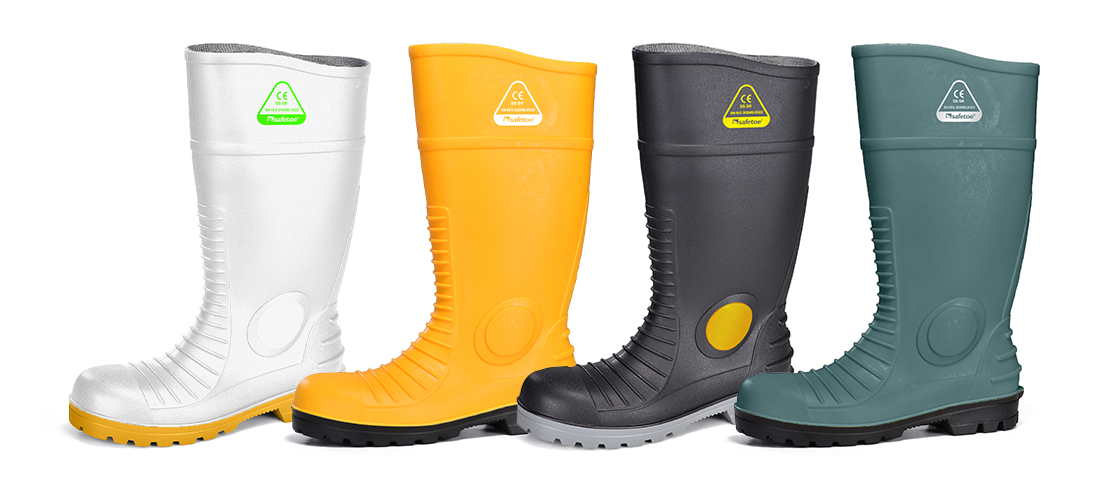
Application Scenario | Recommended Protection Level | Recommended Color |
Construction | S5 | Black |
Road work, bridges/pipelines, municipal engineering | S5 | Yellow |
Agriculture work, farmland/ranch, outdoor wetlands | S5 | Green |
Industrial cleaning, public facility cleaning, wash-down areas | S5 | White |
Agriculture or fishery (low-risk environments) | OB | Black |
● S5 Safety Boots: typical high-protection level for construction and engineering worksites
● OB Occupational Boots: basic occupational footwear level, more suitable for low-risk jobs
6. Boot Selection Recommendations: Which Model for Construction/Engineering? Which for Agriculture/Cleaning?
To reduce the risk of choosing the wrong boots, here are the most direct recommendations:
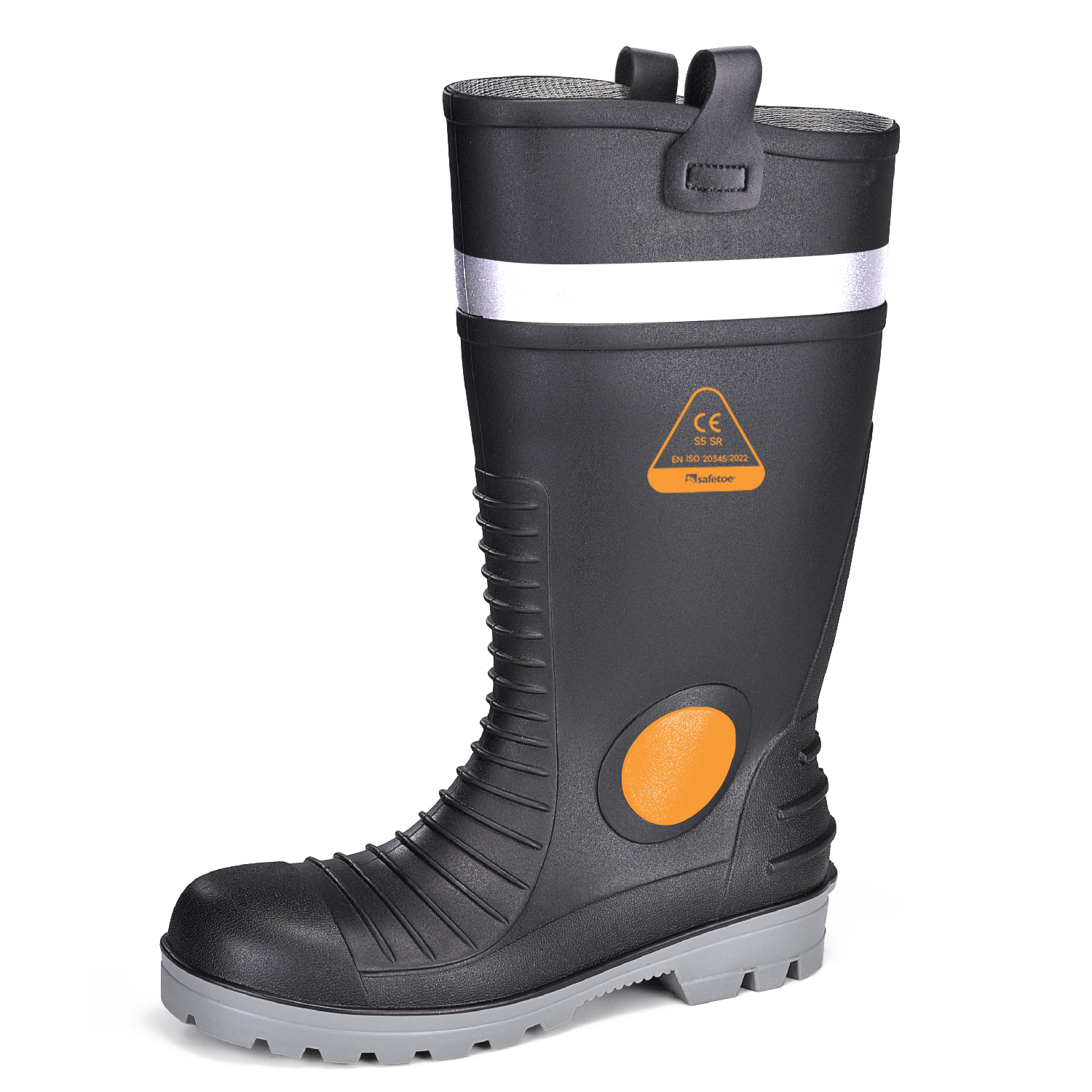
1) Construction / Mining / Engineering Projects → W-6055 (S5 SR)
If your customer works in engineering projects (high risk + strict compliance), this is the best choice:
✅ W-6055 S5 SR (Heavy Duty S5 Safety Rain Boots)
● Key features:Standard: CE EN ISO 20345:2022
● High shaft: 38.5CM
● Applications: construction, chemical, cleaning, farm & garden, etc.
For extended reading:
S5 Safety Waterproof Steel Toe Work Boots: A Comprehensive Solution for Safety, Comfort, and Durability
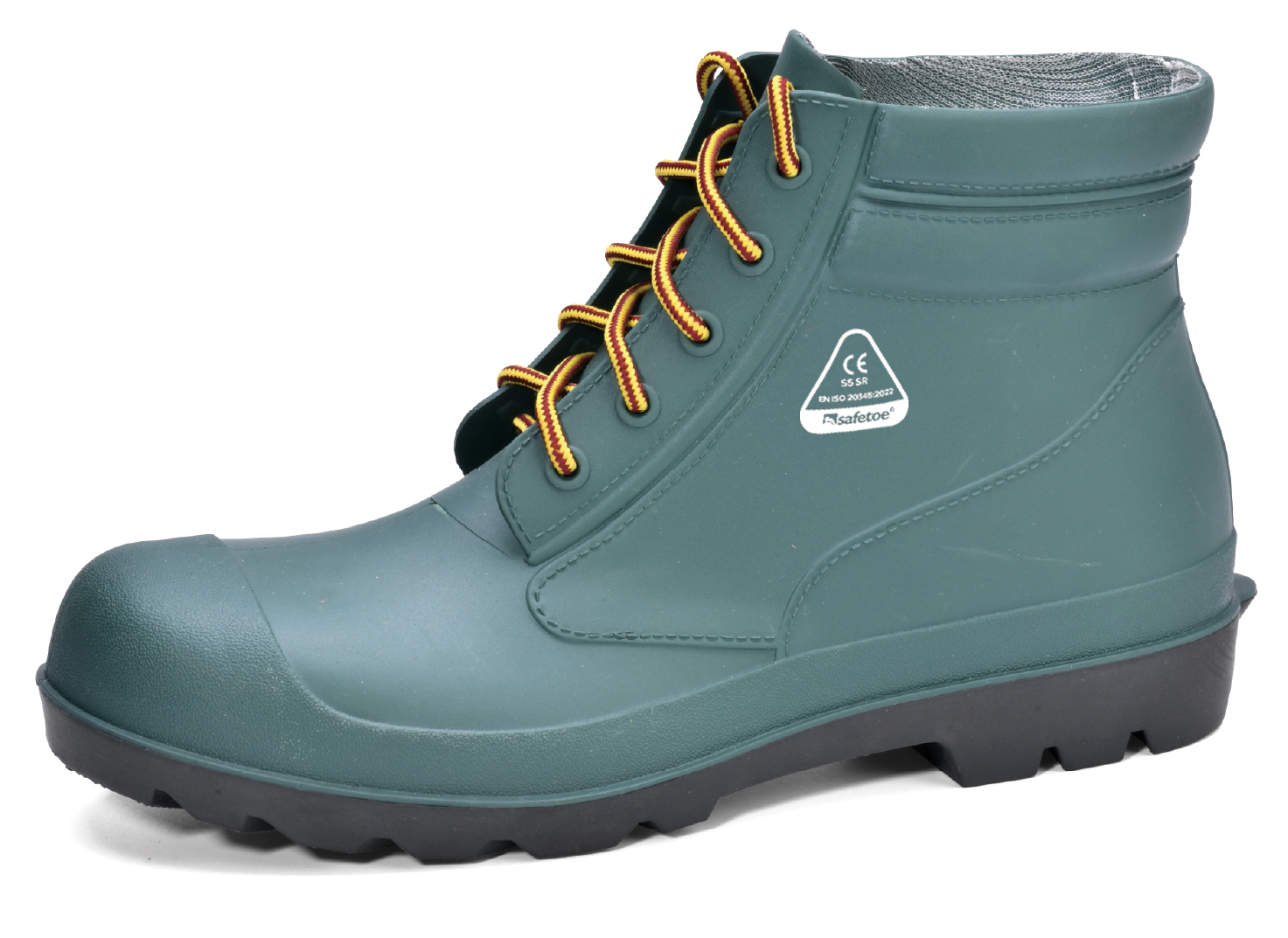
2) Agriculture / Cleaning / Municipal Maintenance → W-6050 (S5 SRC)
If the customer still needs safety-level protection but for more routine maintenance work, this model is a better fit:
✅ W-6050 S5 SRC (Heavy Duty S5 Safety Rain Boots)
● Key features:Standard: CE EN ISO 20345:2011
● Applications: construction, chemical, food industry, catering, cleaning, farm & garden, etc.
7. Recommended Models (With Links): S5 Safety Boots + EN ISO 20347 Occupational Boots Combo
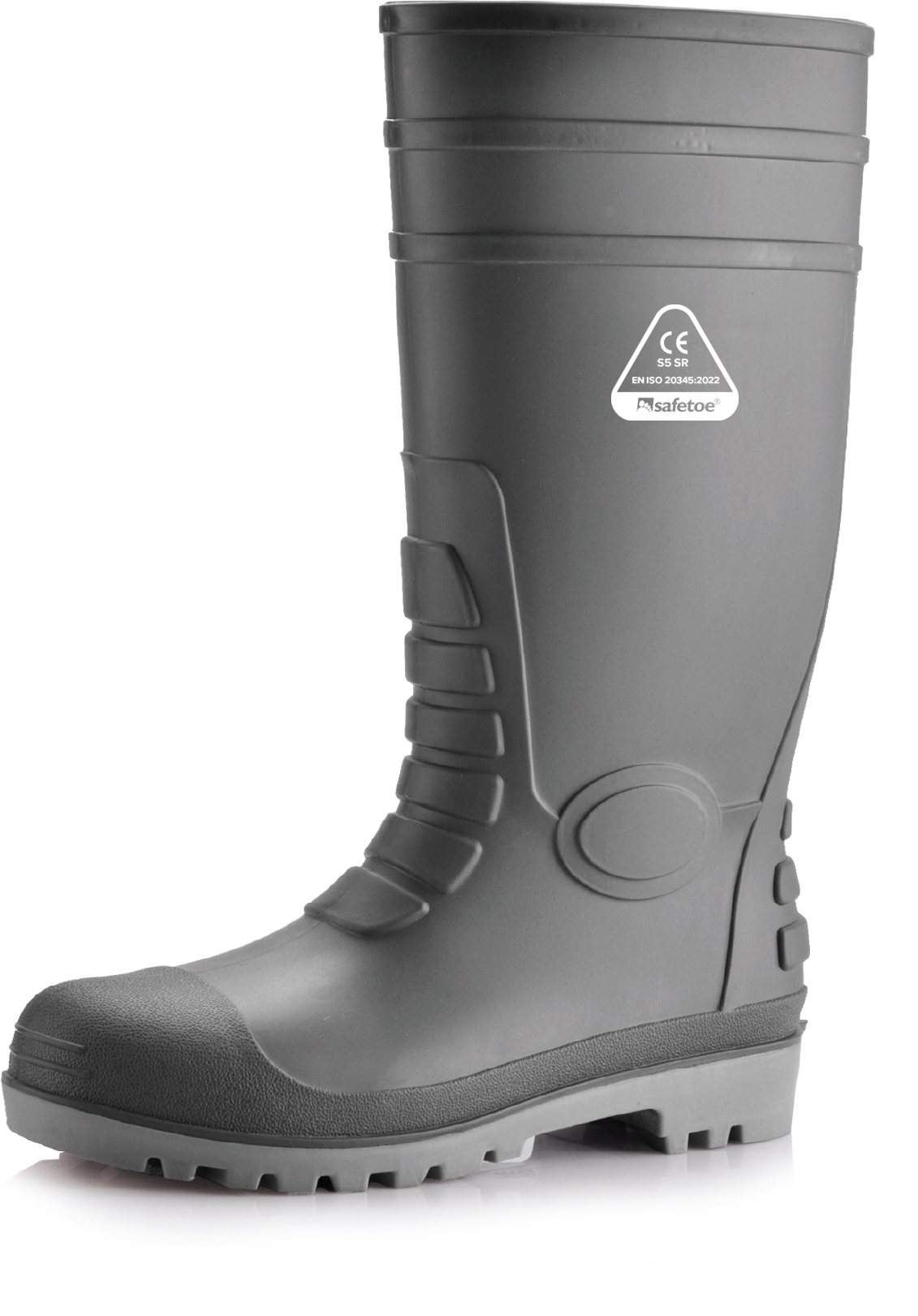
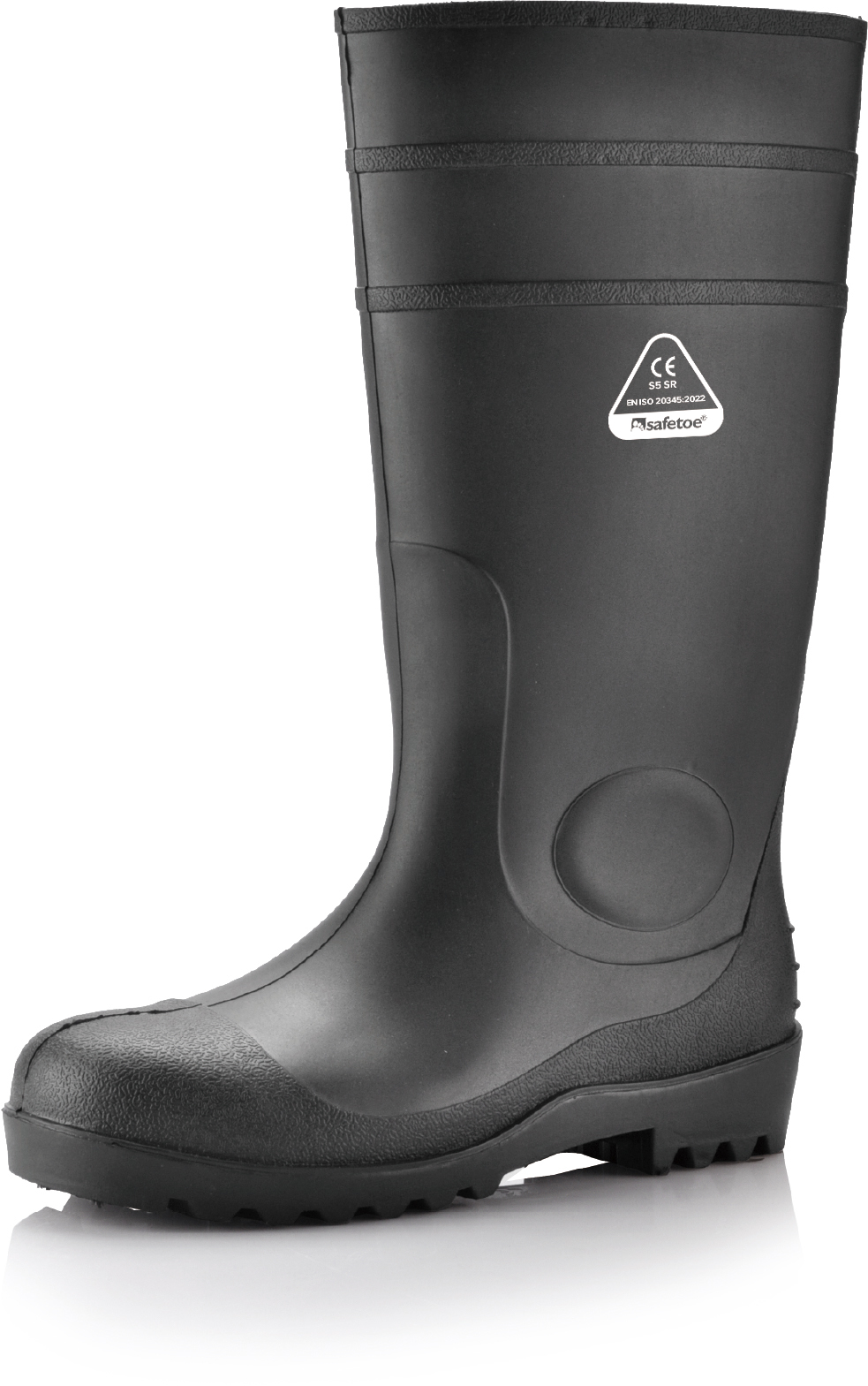
✅ EN ISO 20345: S5 Safety Wellington Boots (High Protection)
W-6038 S5 SR (Heavy Duty Safety Wellington Boots)
W-6037 S5 SR (Heavy Duty Safety Wellington Boots)
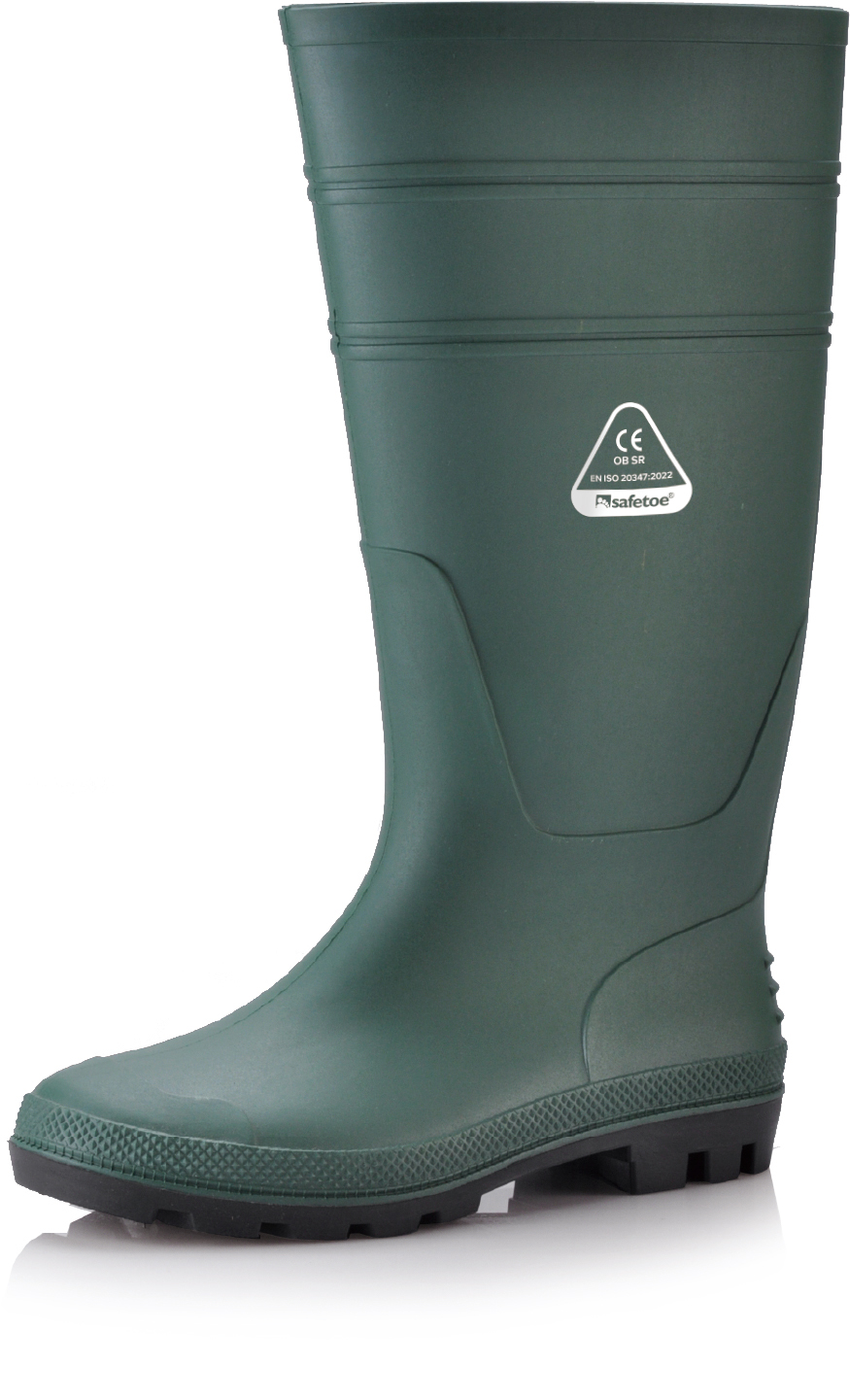
✅ EN ISO 20347: O4 FO SRC Occupational Boots (Lightweight & Comfortable)
W-6036 O4 FO SRC (Occupational Rain Boots)
8. The Simplest Rule to Decide
✅ If there is impact or puncture risk on-site → choose EN ISO 20345
✅ If the main need is waterproof + slip resistance in a low-risk workplace → EN ISO 20347 is enough
If you are unsure, a conservative and safer strategy is:
For engineering projects, prioritize S5 safety rain boots to avoid compliance risks and costly rework.
FAQ
Q1: What is the biggest difference between EN ISO 20345 and EN ISO 20347?
A: The biggest difference is that EN ISO 20345 is a safety footwear standard, usually including a protective toe cap and higher protection. EN ISO 20347 is an occupational footwear standard, typically without a toe cap, focusing more on waterproofing, slip resistance, and comfort.
Q2: Why do construction projects usually require EN ISO 20345?
A: Because construction sites commonly involve falling object hazards, sharp debris on the ground, and strict PPE compliance requirements, EN ISO 20345 safety footwear is often mandatory.
Q3: Do cleaning industries or food factories always need EN ISO 20345?
A: Not necessarily. If the main risks are wet and slippery floors, and there is no clear impact hazard, many roles can use EN ISO 20347 occupational rain boots to meet requirements.
Q4: Which industries are S5 safety rain boots suitable for?
A: S5 boots are widely used in high-risk environments such as construction engineering, municipal pipeline works, road construction, and outdoor wetland agricultural operations—providing stronger protection.
Q5: What if I’m not sure which standard to choose?
A: We recommend sending your jobsite conditions and risk factors to Safetoe (heavy objects, nails/rebar, PPE audit requirements, etc.). We can quickly provide standard recommendations, specification sheets, and a project quotation.
CTA
Still not sure whether your project needs EN ISO 20345 or EN ISO 20347?
Contact Safetoe for a quick recommendation, specification sheet, and project quotation.
Request Samples / Get a Quote
Shop now: https://safetoework.com/
Wholesale: https://safetoe.net/
WhatsApp: +8615375354433
YouTube: @SAFETOE
Featured Recommendations
● W-6038 (AquaShield )
● W-6037 (AquaPioneer)
● W-6036 (AquaBreeze )
● W-6050 (SteelGuarder )
● W-6055 (AquaGuarder)




 English


