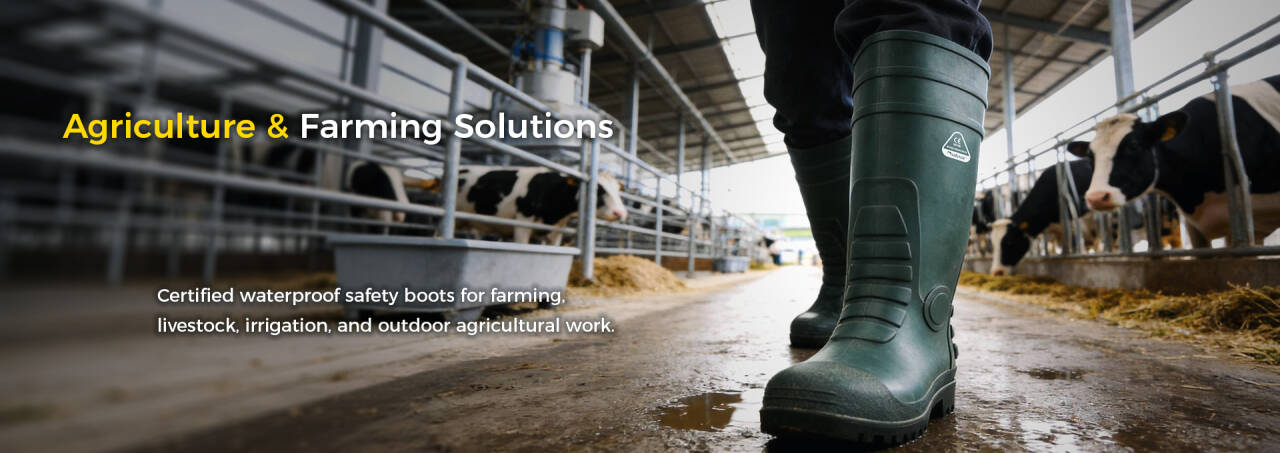
Farming exposes workers to mud, water, slippery surfaces, livestock, machinery and sharp objects. Choosing the right Wellington boots for farming therefore depends on the actual job and its risks.
Quick Answer:
Choose agricultural Wellington boots according to the job: occupational boots may be suitable for general wet farm work, while certified safety Wellington boots may be required where workers face impact, machinery or puncture hazards.
1.Start with the Working Conditions on Your Farm
Different agricultural jobs create different footwear requirements.
Livestock and dairy farming often involves wet floors, manure, frequent cleaning and animal-related risks.
Field and crop work usually means mud, standing water, uneven ground and long periods of walking.
Farm maintenance may involve machinery, tools and sharp debris.
Cleaning and washdown mainly requires reliable waterproofing and good traction on wet surfaces.
Choosing the right farm Wellington boots should therefore start with the actual working conditions.
Common risks include:
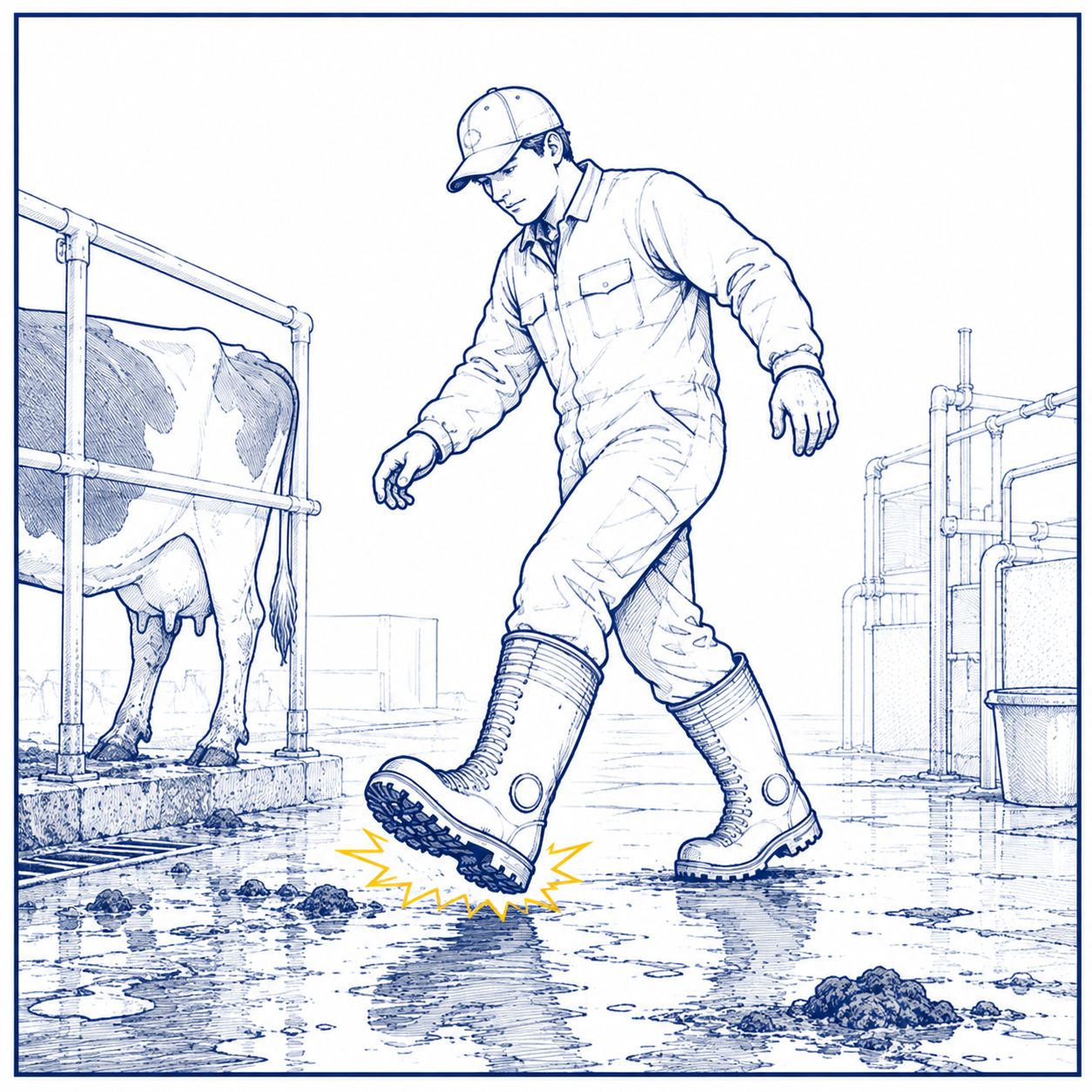
Dairy / Livestock
Water, manure, slip
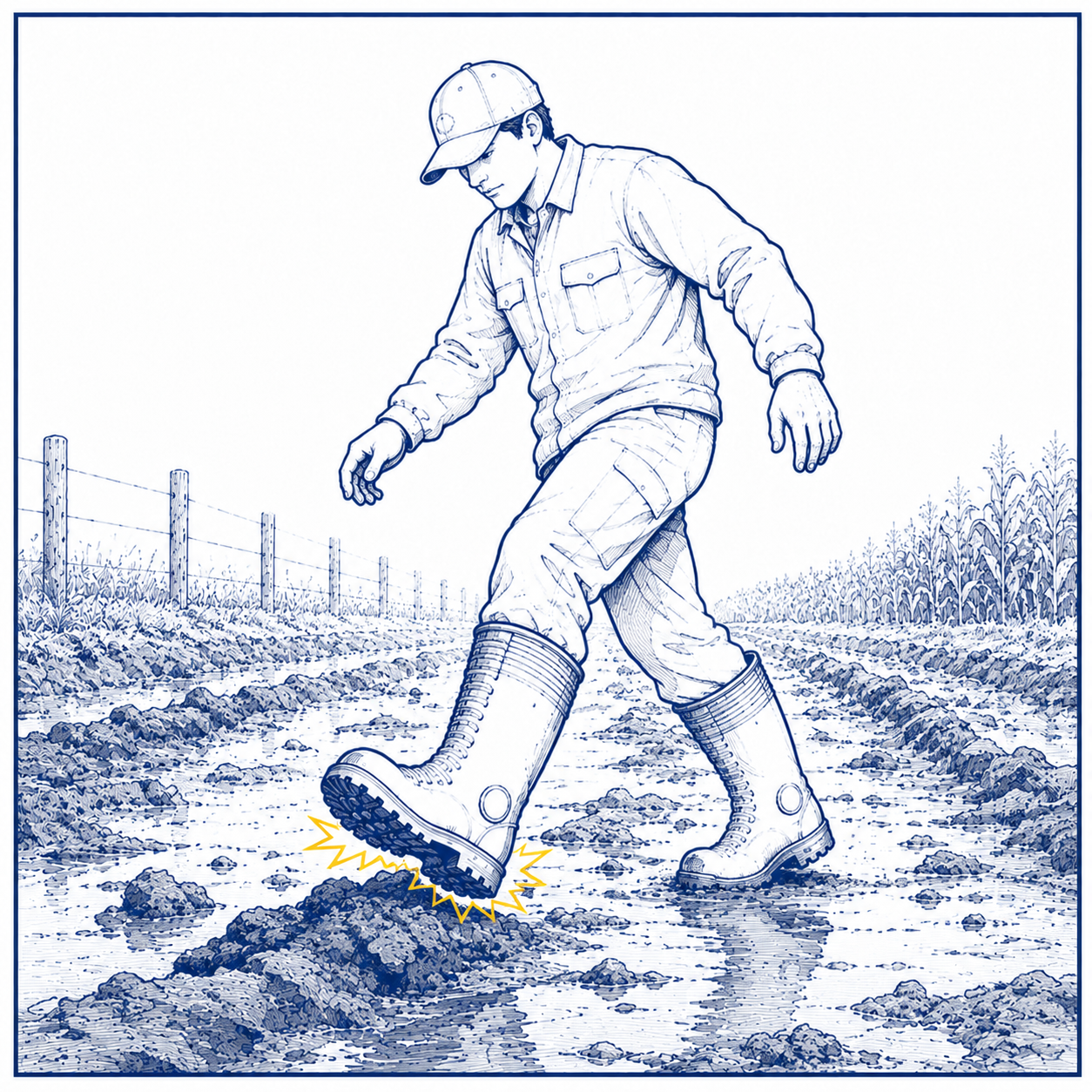
Field Work
Mud, water, uneven ground
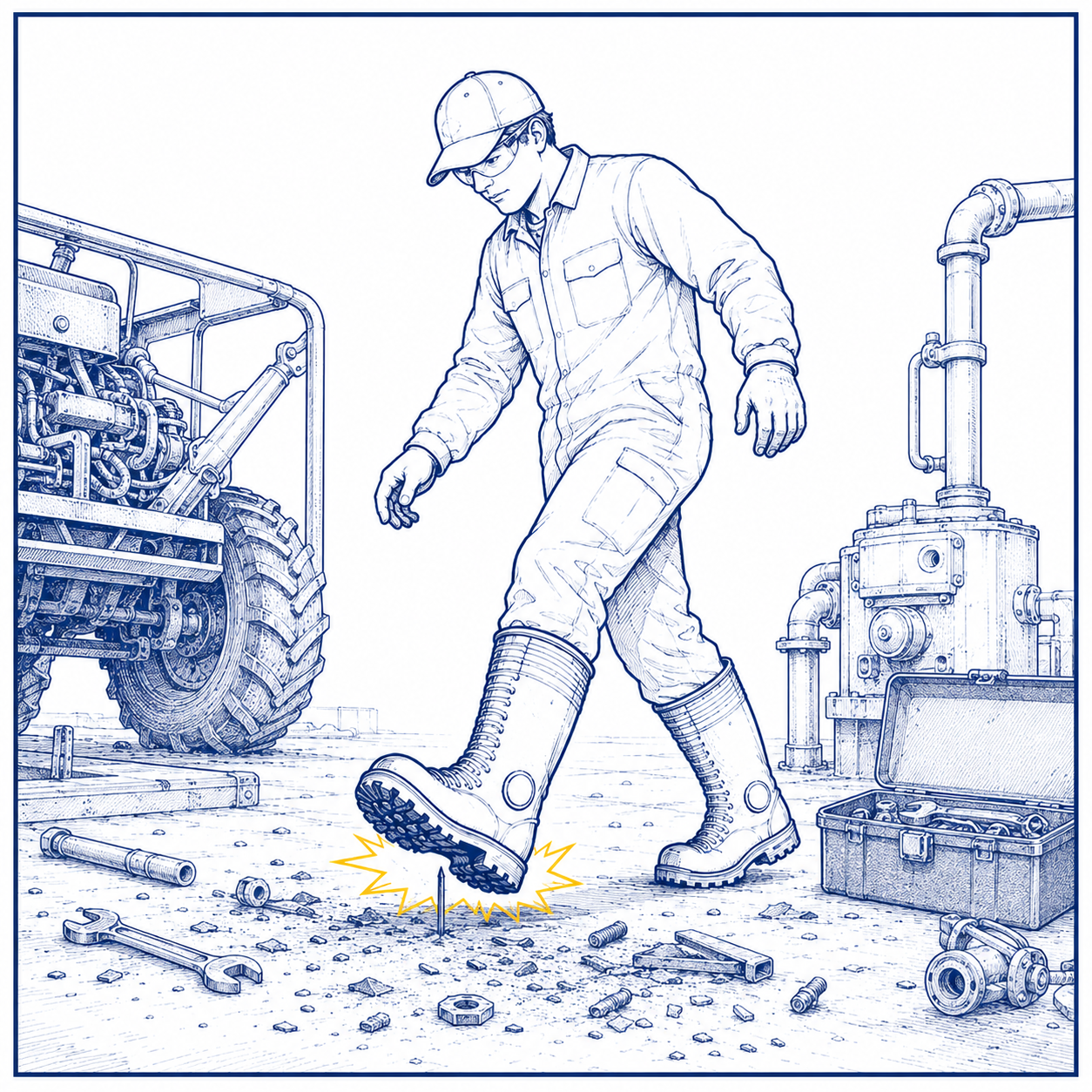
Maintenance
Tools, machinery, impact, puncture
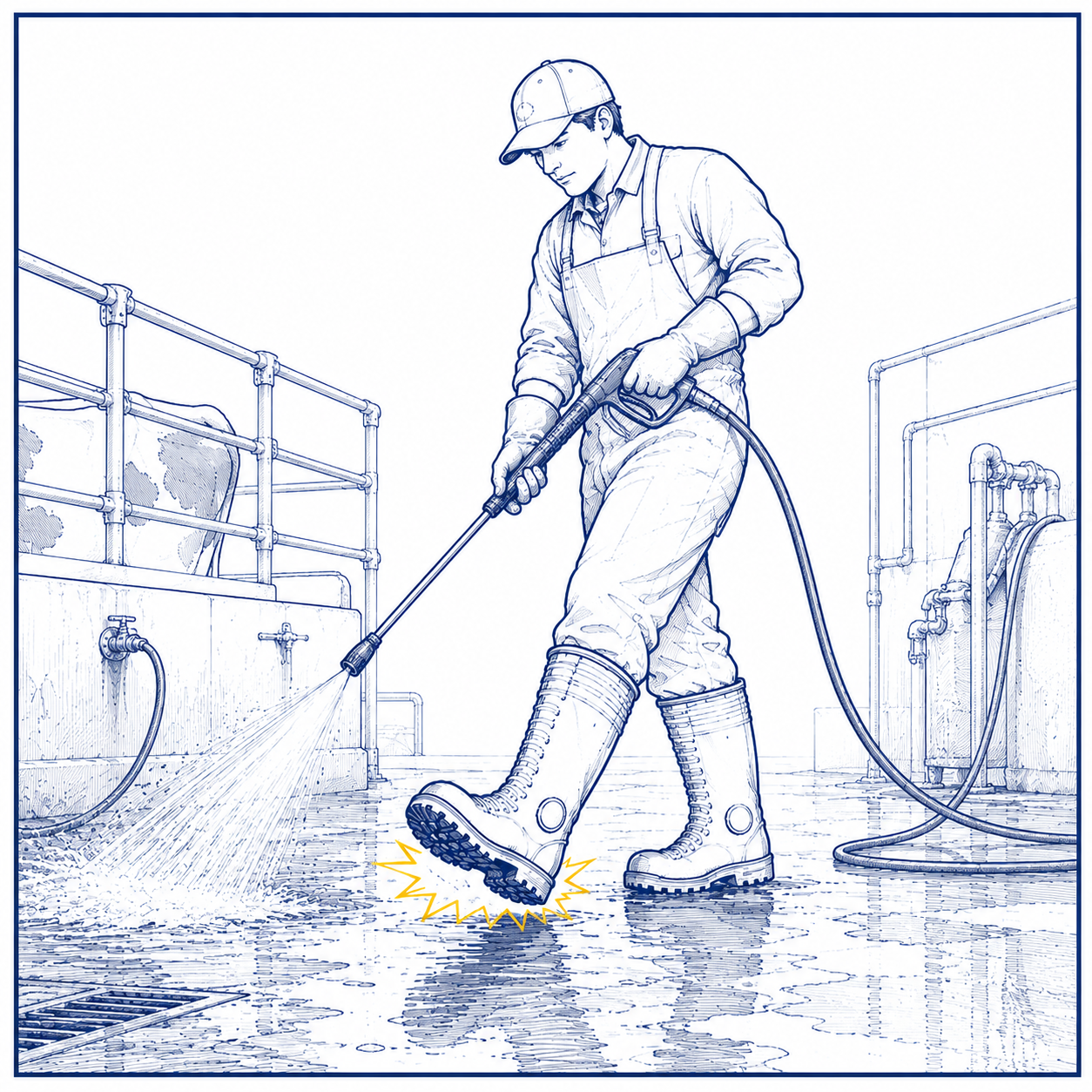 Cleaning
Wet floor, frequent washdown
Buyers should begin with a worksite risk assessment. This helps determine the required combination of toe protection, puncture resistance, waterproof construction, outsole grip and durability.
2.Decide Between Safety and Occupational Wellington Boots
This is one of the most important decisions when choosing agricultural Wellington boots.
Safety Wellington Boots
Safety Wellington boots are more suitable where workers may face:
These jobs may require protective toe caps and puncture-resistant midsoles.
Safety footwear is generally associated with EN ISO 20345, depending on the product and market.
Occupational Wellington Boots
Occupational Wellington boots are suitable when the main priorities are:
They are commonly associated with EN ISO 20347 and are intended for jobs where the same level of toe or penetration protection is not required.
The basic rule is simple:
Choose the protection level according to the workplace risk, not simply the boot style.
3. Waterproof Protection for Wet and Muddy Farm Conditions
Waterproof protection is one of the most important features of Wellington boots for farming.
Workers may regularly encounter:
Mud
Wet fields
Standing water
Livestock areas
Washdown environments
Reliable waterproof construction helps keep feet protected during long periods in wet conditions.
PVC Wellington boots are particularly practical for many agricultural applications because they provide a waterproof construction that is also easy to clean.
Learn more about Endravax™ Waterproof Protection.
4.Look for Grip on Wet, Muddy and Slippery Surfaces
Wet and contaminated surfaces are common in agricultural work.
Depending on the application, workers may walk across wet concrete, mud, livestock areas, farm yards or floors that have recently been washed down.
A slip-resistant outsole design can help improve traction on wet and contaminated surfaces, making outsole performance an important consideration when selecting waterproof farm boots.
However, buyers should not judge a Wellington boot only by how deep or aggressive the outsole pattern appears.
A better evaluation should consider:
The actual working surface + outsole design + applicable slip testing.
For example, footwear intended mainly for muddy field work may face very different conditions from boots used on wet concrete inside a dairy facility.
Understanding where the footwear will actually be worn allows PPE buyers to make a more appropriate decision instead of choosing an outsole purely on appearance.
5. Consider Toe and Puncture Protection Around Livestock and Machinery
Not every farming job requires protective toe caps or puncture-resistant midsoles. However, these features become much more important where workers are exposed to specific physical hazards.
In livestock environments, feet may be exposed to impacts or accidental contact with animals.
Around farm machinery, workers may encounter heavy equipment, components or materials that could cause injury if dropped or moved unexpectedly.
During maintenance and repair work, sharp tools, metal pieces and other debris may also create penetration hazards underfoot.
This is why the required protection level should always be determined through an appropriate workplace risk assessment.
Where toe protection is required, Safetoe's VortiGard™ Toe Protection provides additional information about protective toe solutions.
Where underfoot penetration is a concern, buyers should select an appropriate puncture-resistant construction for the specific application. FlexBarrier™ Penetration Protection provides additional information about flexible puncture protection used in selected Safetoe footwear.
The purchasing principle is straightforward:
Risk assessment determines the required protection.
Do not automatically specify heavy-duty safety features for every agricultural worker, but do not select basic occupational footwear where genuine impact or penetration hazards exist.
6. Consider Cleaning, Hygiene and Easy Maintenance
Agricultural Wellington boots frequently come into contact with mud, water, organic contamination and livestock environments.
As a result, buyers should ask more than:
“Is the boot waterproof?”
Another important question is:
“How easy is the boot to clean and maintain?”
This is especially relevant in livestock and dairy environments where footwear may require frequent washing.
Smooth, practical constructions that can be cleaned efficiently may make daily footwear maintenance easier and help support better workplace hygiene routines.
Cleaning requirements should also be considered when purchasing footwear for multiple workers. A boot that performs well during work but is difficult to clean may create unnecessary maintenance problems over time.
For agricultural PPE buyers, ease of cleaning should therefore form part of the overall product evaluation alongside waterproofing, grip, protection and durability.
7. Durability and Comfort Matter During Long Farm Workdays
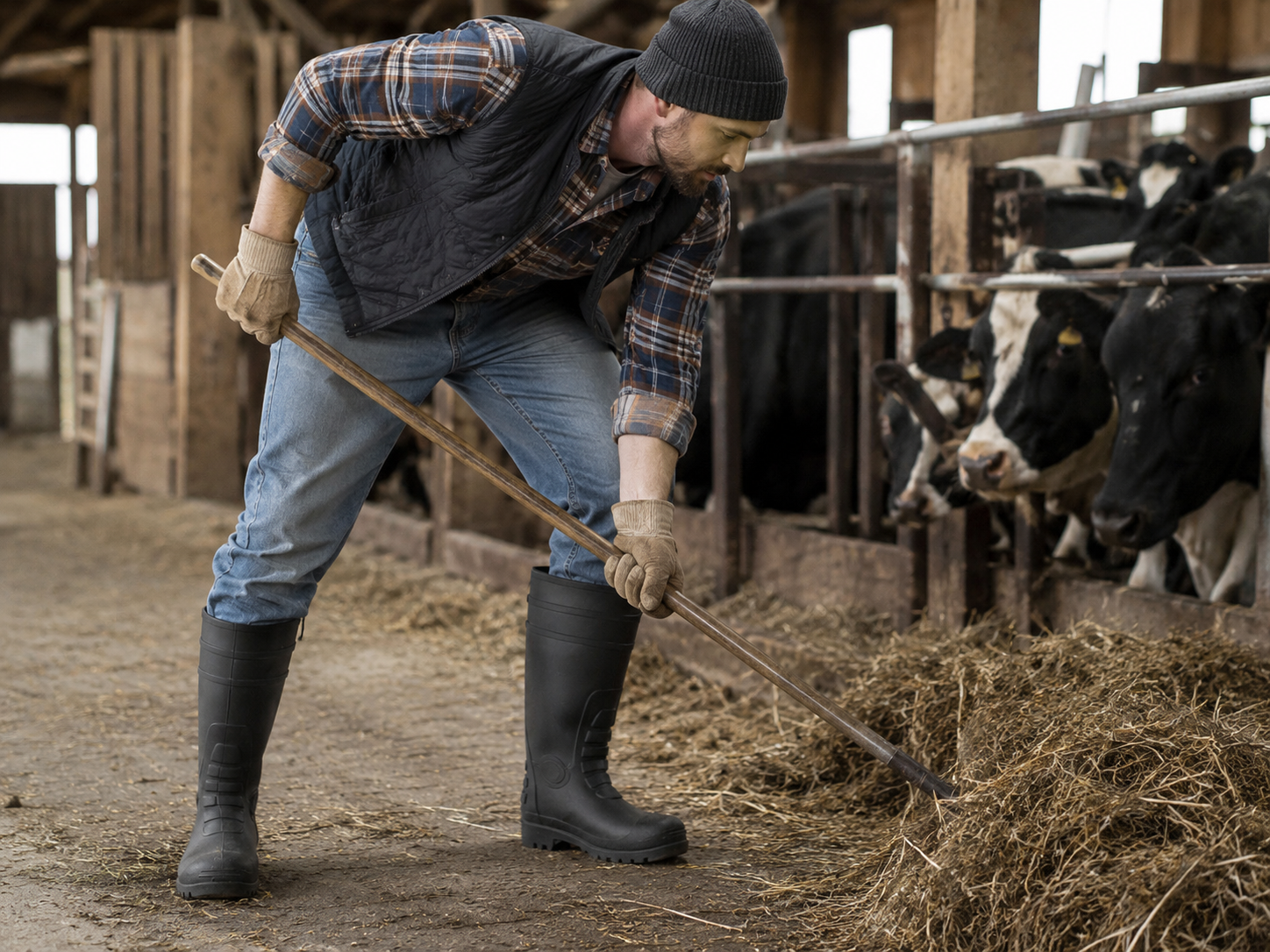
Agricultural workers often spend long periods walking, standing, bending and squatting.
Their footwear may repeatedly flex throughout the day while moving across fields, livestock facilities, yards and other farm environments.
This repeated movement makes flexibility and durability important considerations when evaluating farming work boots.
A boot should be suitable not only for the environmental hazards but also for the physical movements required by the job.
Repeated flexing can place stress on footwear materials and construction over time. For buyers purchasing boots for regular or intensive agricultural work, flex durability can therefore affect product lifespan as well as day-to-day performance.
Comfort is also important during long shifts. Fit should be appropriate for the wearer and the intended working conditions, particularly when the boots may be worn for extended periods.
Safetoe's Korvanta™ Flex Durability Technologyprovides more information about footwear designed to address repeated flexing in demanding work environments.
8. Choose Wellington Boots for Different Agricultural Jobs
Different agricultural jobs create different footwear priorities. The following guide can help buyers identify which factors should receive the most attention.
| Agricultural Work | Main Concerns | What to Consider |
| Livestock & Dairy | Wet floors, animals, cleaning | Waterproofing, grip, protection |
| Field & Crop Work | Mud, water, uneven ground | Waterproofing, grip, flexibility |
| Farm Maintenance | Tools, machinery, debris | Toe and puncture protection |
| Cleaning & Washdown | Water, wet floors | Waterproofing, slip resistance |
| General Farm Work | Long wear, varied conditions | Comfort, durability, fit |
The most important point is to match the footwear to the job.
Recommended Safetoe Wellington Boots
For agricultural work where certified safety protection is required, W-6038 can be considered as a safety Wellington boot option.
It is suitable for applications where workplace risks require additional foot protection.
For jobs mainly involving wet environments, cleaning and general farm work, W-6036 can be considered as an occupational Wellington boot option.
Always confirm the exact product certification and specifications before purchasing.
Frequently Asked Questions
Q: Are Wellington boots suitable for farming?
A: Yes. Wellington boots are particularly practical for agricultural environments involving mud, water, wet fields, livestock areas and frequent cleaning. However, buyers should select the boot according to the specific job. Some agricultural tasks may only require waterproof occupational footwear, while others may require certified safety protection.
Q: Do farmers need steel toe Wellington boots?
A: Not every farmer needs steel toe Wellington boots. The required protection should depend on workplace hazards. Where workers are exposed to machinery, heavy materials, livestock or impact hazards, protective toe footwear may be appropriate. For lower-risk wet agricultural work, occupational Wellington boots may be sufficient.
Q: What is the difference between safety and occupational Wellington boots?
A: Safety Wellington boots are intended for environments where additional hazards such as impact or penetration may require certified protective features. Occupational Wellington boots focus more on workplace needs such as waterproofing, grip and general wet-environment performance where the same level of safety protection is not required.
Q: What should I look for in Wellington boots for livestock and dairy work?
A: For livestock and dairy environments, consider waterproof construction, grip on wet or contaminated floors, ease of cleaning, durability and comfort. If animals, equipment or sharp objects create additional foot hazards, assess whether certified toe or penetration protection is also required.
Article Summary
Choosing Wellington boots for farming requires balancing waterproofing, grip, protection, durability and comfort. This guide helps farmers, agricultural businesses and PPE buyers decide between safety and occupational Wellington boots for different farming environments.
Author: Safetoe Safety Footwear Team
Source: Safetoe

 English


