Safety Wellington Boots Standards & Certification

Understanding Safety Wellington Boot Certifications

Safety and occupational Wellington boots are designed for different levels of workplace risk. EN ISO 20345 covers
safety footwear with protective toe requirements, while EN ISO 20347 applies to occupational footwear without mandatory toe protection.


For North American markets, ASTM F2413 provides additional safety footwear requirements.
Understanding these standards helps buyers select the right protection for each application.

Safety Wellington Boot Certification Comparison


EN ISO 20345 For safety footwear where protective toe caps and additional hazard protection are required.

EN ISO 20347 For occupational footwear where waterproofing, slip resistance and workplace performance are needed without mandatory safety toe protection.

Safety boots certified to EN ISO 20345:2022
Safety boots certified to ASTM F2413-24
Safety boots certified to EN ISO 20347:2022 standards
Safety Wellington Boot Testing & Compliance
Safety boots tested to EN ISO 20345 and ASTM F2413-24 for impact, puncture and slip resistance

Certified Wellington Boots by Protection Level

Protection Technologies Behind Safetoe Wellington Boots

VortiGard steel toe impact protection for mining safety Wellington boots

VortiGard™

Steel Toe Impact Protectio
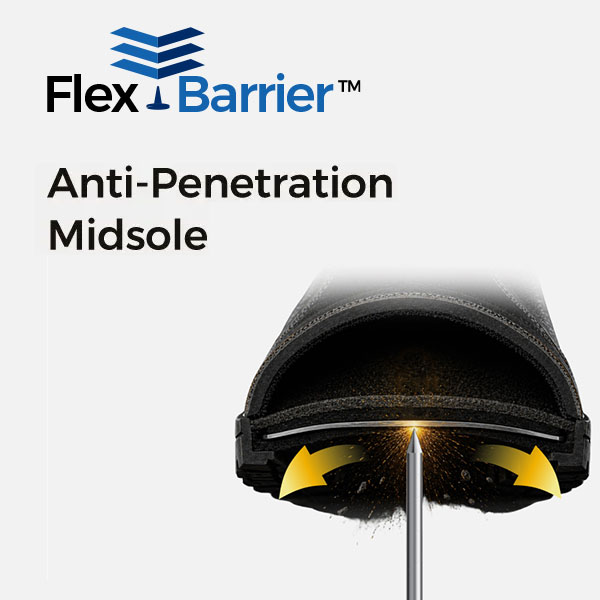
FlexBarrier steel puncture protection for mining safety Wellington boots

FlexBarrier™

Steel Puncture Protection
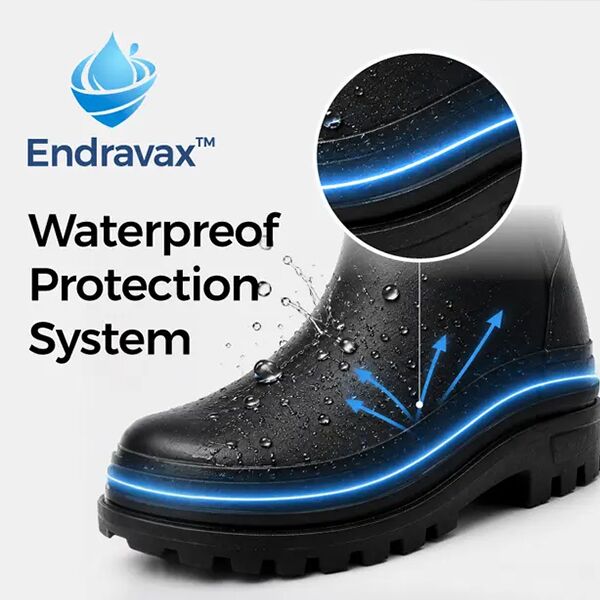
Endravax waterproof PVC construction for mining Wellington boots in wet conditions

Endravax™

Waterproof PVC Construction
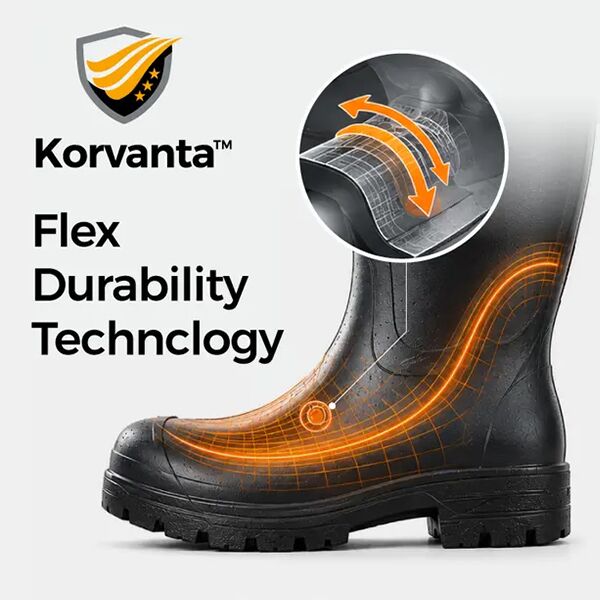
Korvanta flex durability technology for heavy-duty mining Wellington boots

Korvanta™

Flex Durability Technology

Related Videos & Blogs
Safety Rain Boots Vs Occupational Rain Boots: How To Choose Between EN ISO 20345 And EN ISO 20347?

Safety Rain Boots Vs Occupational Rain Boots: How To Choose Between EN ISO 20345 And EN ISO 20347?

This article explains the key differences between safety rain boots and occupational rain boots. Although both types are waterproof and often look similar, EN ISO 20345 safety rain boots are designed for higher-risk workplaces that require toe protection, puncture resistance, and PPE compliance, while EN ISO 20347 occupational rain boots focus more on waterproofing, slip resistance, comfort, and lower-risk work environments. The article compares S5 safety boots and OB occupational boots, explains suitable industries such as construction, road work, agriculture, cleaning, food factories, and municipal maintenance, and recommends Safetoe models including W-6055, W-6050, W-6038, W-6037, and W-6036 to help buyers choose the right waterproof work rain boots.
Read More
How to Choose Safety Wellington Boots for Mining Operations?

How to Choose Safety Wellington Boots for Mining Operations?

This article explains how mining operators and PPE buyers can select suitable safety Wellington boots by evaluating toe and puncture protection, waterproof construction, outsole performance, durability, comfort and certification for different mining environments.
Read More
How to Choose Wellington Boots for Farming and Agriculture?

How to Choose Wellington Boots for Farming and Agriculture?

This article explains how to choose Wellington Boots for Farming and Agriculture and PPE buyers can select suitable safety Wellington boots by evaluating toe and puncture protection, waterproof construction, outsole performance, durability, comfort and certification for different mining environments.
Read More
How to Choose Safety Wellington Boots for Construction Work

How to Choose Safety Wellington Boots for Construction Work

Choosing safety Wellington boots for construction requires more than waterproof protection. This guide explains how to evaluate toe and puncture protection, slip resistance, waterproof construction, flex durability and safety standards to select the right boots for demanding construction environments.
Read More

Certified Wellington Boots FAQ

What certifications should certified Wellington boots have for industrial workplaces?

Certified Wellington boots should comply with internationally recognized safety standards according to workplace hazards rather than waterproof performance alone.

For high-risk environments such as construction, mining, oil & gas, and heavy industry, EN ISO 20345:2022 S5 or S5S and ASTM F2413-24 provide impact, puncture, and slip protection.

For lower-risk workplaces where waterproofing and slip resistance are the primary requirements, EN ISO 20347 occupational footwear may be sufficient.

Selecting properly certified Wellington boots helps employers improve worker safety, comply with PPE regulations, and reduce long-term operational risks.

What is the difference between EN ISO 20345 and EN ISO 20347 Wellington boots?

Why is ASTM F2413 certification important for safety Wellington boots?

How do certified Wellington boots improve workplace safety and durability?

How can buyers verify whether Wellington boots are genuinely certified?

Does CE marking mean a Wellington boot is S5 certified?

Looking for Certified Wellington Boots?

QQ图片20260630142832

Explore CE and ASTM tested solutions for construction, agriculture, mining, and industrial work environments.

Ready to work with safetoe ?
Get pricing, samples, and distributor support from SAFETOE team.
Worldwide Leading Safety Protection Products Supplier.
 

Contact Us

Shanghai Langfeng Industrial Co., Ltd. (Safetoe)
Add: Room 905, Building A, No.2, Jibei Road 117, Shanghai, China (Mainland)
Tel : +86-021-5212 7320
Fax : +86-021-5212 1031
Wechat: +86-181 1626 8656
WhatsApp: +86-18116268656
E-mail: jay@safetoe.net
 
Copyright © 2021 Safetoe. All Rights Reserved. SItemap  Support By Leadong.