Oil and gas operations cover very different working environments—from drilling sites and refineries to pipeline projects and offshore platforms. While safety footwear is commonly required across these operations, the combination of workplace hazards can vary significantly.
A boot suitable for muddy drilling operations may not prioritize the same features as footwear used on oily refinery floors or wet offshore platforms.
This guide explains which footwear protection features should be prioritized for four common oil and gas worksites.
Why Safety Boot Requirements Vary Across Oil & Gas Worksites?
Safety footwear should be selected according to the worksite risk profile, rather than the industry name alone.
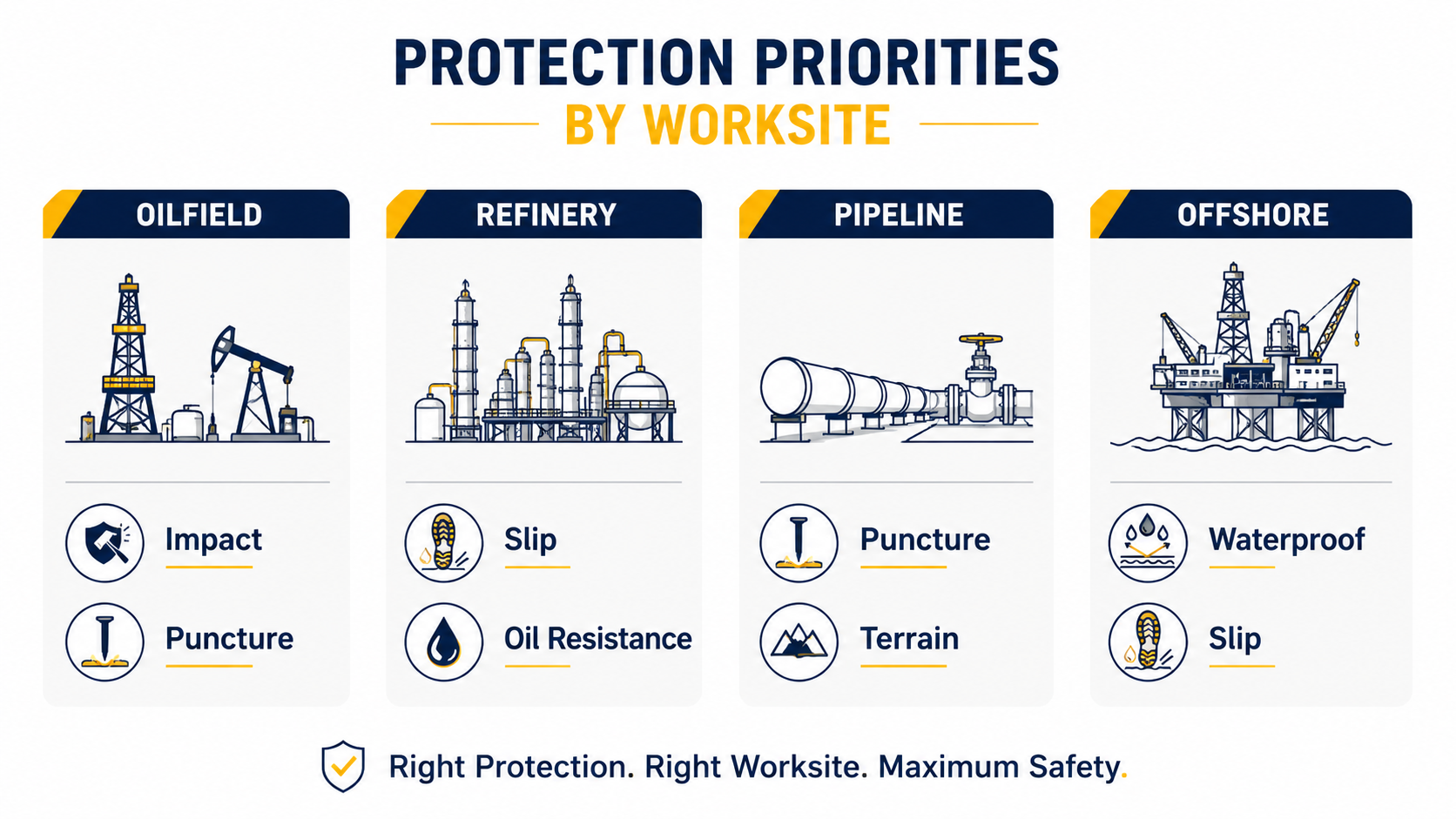
* Oilfield → impact + puncture + mud/water + rugged terrain
* Refinery → wet/oily surfaces + industrial impact
* Pipeline → sharp debris + uneven outdoor terrain + weather exposure
* Offshore → wet surfaces + water exposure + continuous industrial use
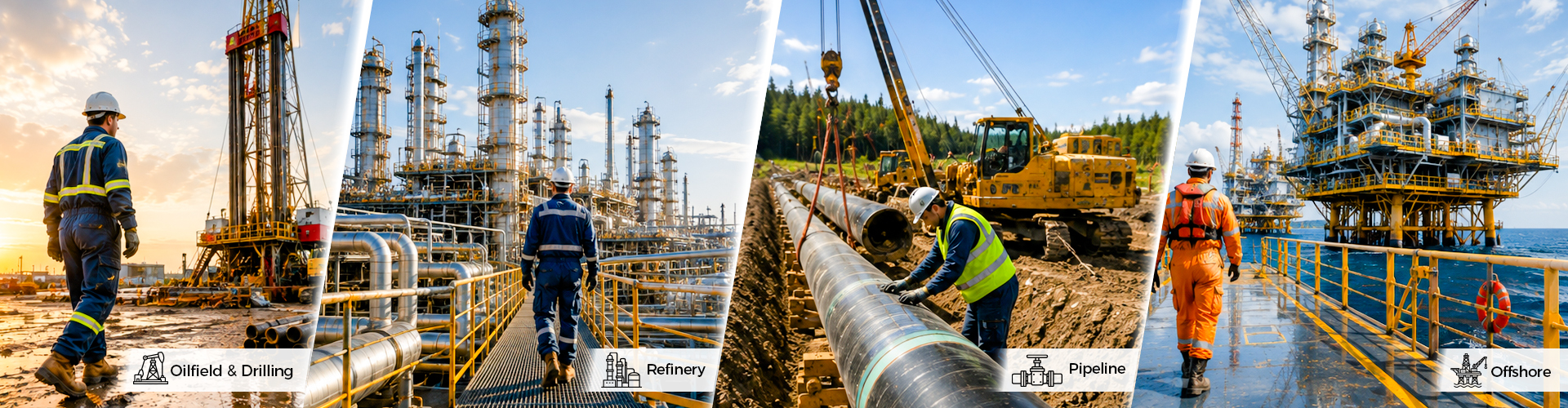
1. Oilfield Safety Boots: Protection for Drilling & Field Operations
Oilfield and drilling operations can expose workers to falling tools, sharp ground debris, mud, water and uneven terrain. Safety boots for these environments therefore need a balanced combination of physical protection and outdoor durability.
Priority Protection
Impact Protection
Workers operating around drilling equipment, tools and heavy materials should consider certified toe protection against impact and compression hazards.
Puncture Resistance
Sharp metal debris and other objects underfoot make a puncture-resistant midsole particularly important in drilling and field operations.
Waterproof Protection & Grip
Mud, standing water and changing outdoor conditions increase the importance of waterproof construction and reliable outsole traction.
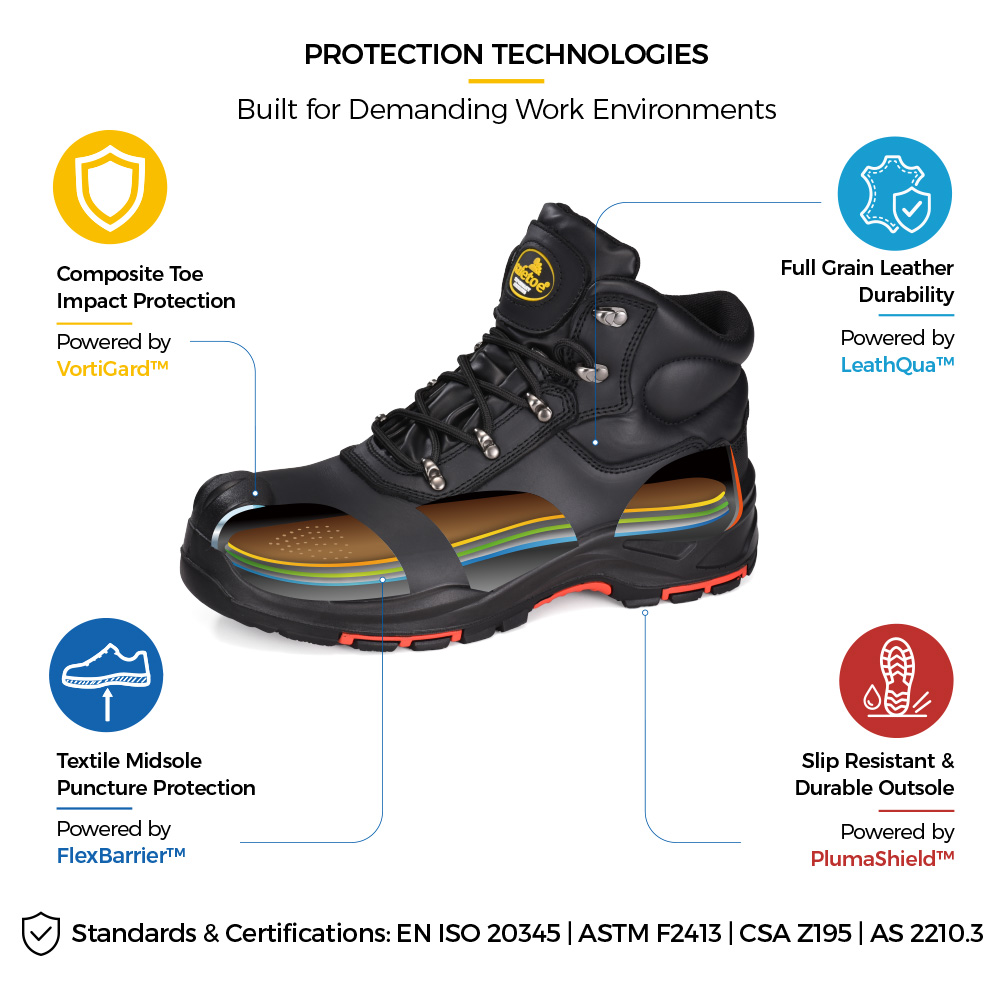
Safetoe technologies : VortiGard™ Toe Protection, FlexBarrier™ Puncture Protection and Sanvlar-Tex™ Waterproof Technology address these key protection areas.
Recommended Safetoe model:
M-8552 waterproof oil & gas safety boots
2. Refinery Safety Boots: Grip for Wet & Oily Industrial Surfaces
Refinery environments present a different risk profile. Workers may spend long hours walking on hard industrial floors, metal stairs and surfaces exposed to water or oil.
For this reason, outsole performance becomes particularly important.
Priority Protection
Slip Resistance
Reliable traction helps reduce slip risks on wet industrial walking surfaces and platforms.
Oil-Resistant Outsole
Where footwear may come into contact with hydrocarbons or oils, an appropriate oil-resistant outsole should be considered according to site requirements.
Toe & Puncture Protection
Industrial impact and underfoot hazards remain important, particularly around equipment and maintenance areas.
Underfoot Comfort
Long shifts on hard surfaces also make cushioning and support important considerations for daily wear.
Safetoe PlumaShield™ Slip Resistant Outsole Technology is designed to support traction in demanding industrial working environments.
Recommended Safetoe model:
M-8565 safety boots
3. Pipeline Work Boots: Protection for Outdoor & Uneven Terrain
Pipeline construction and maintenance often require workers to travel across uneven outdoor terrain, loose ground and areas containing sharp rocks or construction debris.
Compared with refinery environments, mobility and underfoot protection become more important.
Priority Protection
Puncture Resistance
Sharp debris and exposed materials can create penetration hazards, making puncture-resistant midsoles an important consideration.
Toe Protection
Protective toe caps help protect workers handling tools, pipes and construction materials.
Ankle Coverage & Secure Fit
High-cut footwear can provide additional ankle coverage and may help create a more secure fit when workers move across uneven outdoor terrain.
Grip & Weather Protection
Slip-resistant outsoles and weather-resistant construction help workers adapt to outdoor conditions and changing ground surfaces.
FlexBarrier™ Puncture Protection can be considered where underfoot penetration hazards are a major concern.
For traditional oilfield and pipeline applications, high-cut designs such as the H-9437 oil & gas safety boots can provide a practical combination of protection and ankle coverage.
4. Offshore Safety Boots: Wet-Surface Grip & Waterproof Protection
Offshore platforms introduce frequent exposure to water, wet walking surfaces, metal stairs and changing weather conditions.
Unlike pipeline applications, where rough terrain and puncture hazards may dominate, offshore footwear should place greater emphasis on keeping feet protected and maintaining traction in wet industrial environments.
Priority Protection
Waterproof Construction
Frequent exposure to water makes reliable waterproof protection an important consideration for offshore workers.
Slip Resistance
Outsole traction is particularly important when walking on wet platforms, stairs and industrial surfaces.
Oil-Resistant Outsole
Depending on the working area and project requirements, resistance to oils and hydrocarbons may also be required.
Secure Fit & Impact Protection
Footwear should remain secure during movement while providing appropriate protection against common industrial impact hazards.
Safetoe Sanvlar-Tex™ Waterproof Technology provides waterproof protection for demanding work environments.
Models such as the M-8552 waterproof oil & gas safety boots can be considered where waterproofing, toe protection and outsole performance are required.
Quick Comparison: Which Safety Boot Features Matter Most?
For a feature-by-feature purchasing checklist, see our Oil & Gas Safety Boots Buying Guide: 7 Key Features Industrial Buyers Should Check.
| Worksite | Main Hazards | Priority Footwear Features |
| Oilfield / Drilling | Impact, puncture, mud, water | Toe + Puncture + Waterproof + Grip |
| Refinery | Wet/oily floors, industrial impact | Slip + Oil Resistance + Toe + Comfort |
| Pipeline | Sharp debris, uneven terrain | Puncture + Ankle Support + Grip |
| Offshore | Wet surfaces, water, metal platforms | Waterproof + Slip + Secure Fit |
Certification & Project Requirements
Safety footwear requirements vary by country, project and employer specification. International oil and gas buyers should verify the applicable footwear standard and required protection before selecting safety boots.
Common standards include:
The applicable certification alone does not determine which boot is appropriate. Buyers should also confirm the specific protection requirements identified by the worksite risk assessment or project specification.
Choosing Safety Boots for the Right Oil & Gas Worksite
There is no single safety boot configuration for every oil and gas worksite.
Oilfield and drilling operations require rugged impact, puncture and weather protection. Refineries place greater emphasis on grip and outsole performance. Pipeline crews need protection for sharp debris and uneven terrain, while offshore workers should prioritize waterproof construction and wet-surface traction.
Selecting footwear according to the actual worksite hazards helps safety managers and industrial buyers choose the right protection for their teams.
Need Help Selecting Safety Boots for Your Oil & Gas Project?
Safetoe can recommend suitable footwear, certifications and protection features based on your worksite, target market and project requirements.
FAQ: Safety Boots for Different Oil & Gas Worksites
Q: What is the difference between oilfield and refinery safety boots?
A: Oilfield safety boots often prioritize impact protection, puncture resistance, grip and protection from mud and water, while refinery footwear may place greater emphasis on slip resistance, oil-resistant outsoles and comfort on hard industrial surfaces.
Q: What should offshore workers look for in safety boots?
A: Offshore safety footwear should be selected for the actual worksite risks, with particular attention to wet-surface traction, waterproof protection, secure fit and appropriate industrial impact protection.
Q: Are the same safety boots suitable for oilfields, refineries, pipelines and offshore platforms?
A: Not necessarily. Each worksite presents a different combination of hazards, so footwear should be selected according to the risk assessment, project requirements and applicable safety standards.

 English


