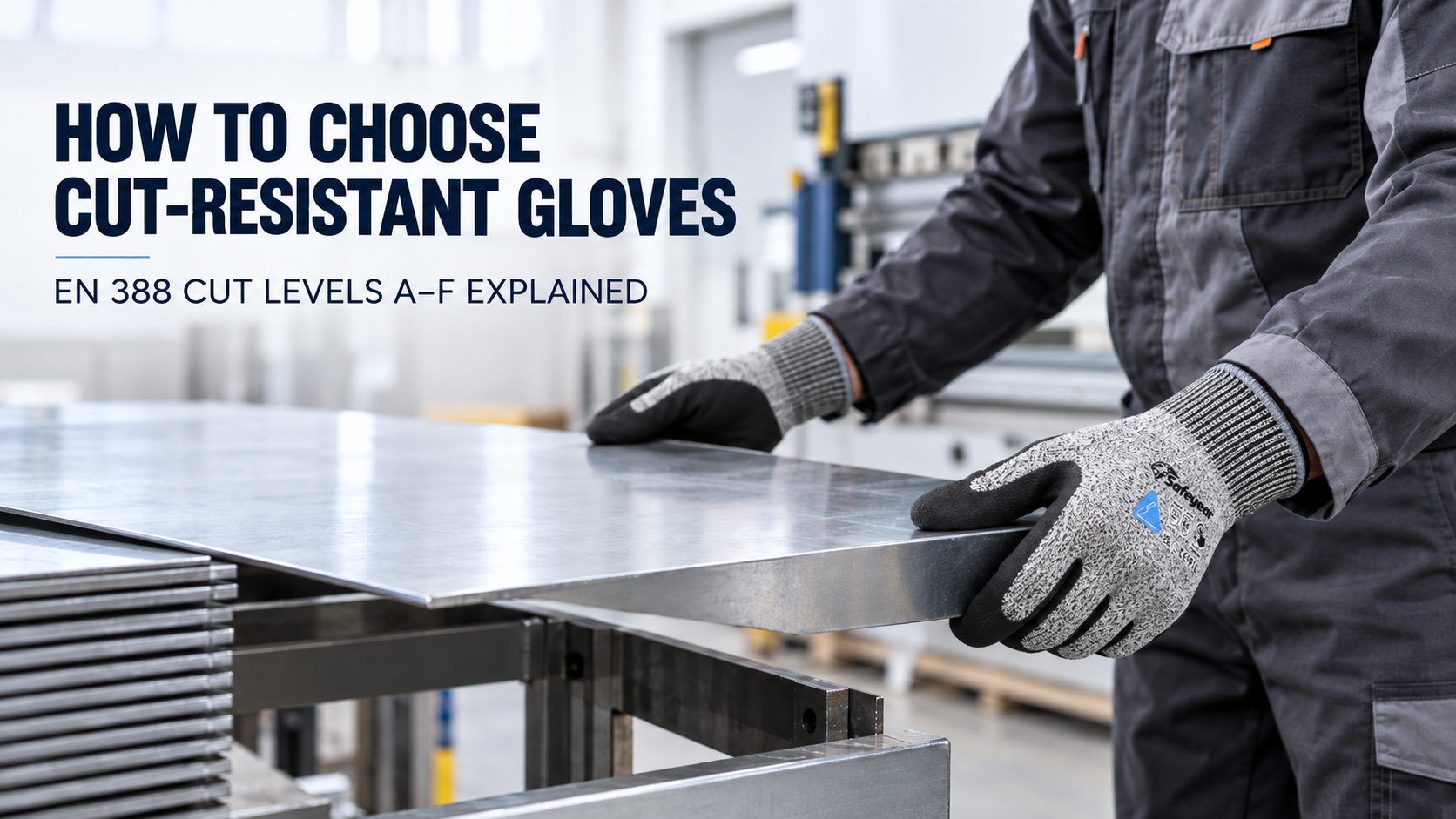
Cut-resistant gloves are used in metalworking, construction, manufacturing, glass handling and other jobs involving sharp edges. But how much cut protection is actually needed? EN 388 uses the ISO 13997 TDM test to classify cut resistance from Level A to Level F. These levels help safety professionals compare laboratory cut performance, but the highest letter is not automatically the best choice for every task. Selection should match the actual hazard while preserving the grip and dexterity the work requires.
What Are EN 388 Cut Levels A-F?
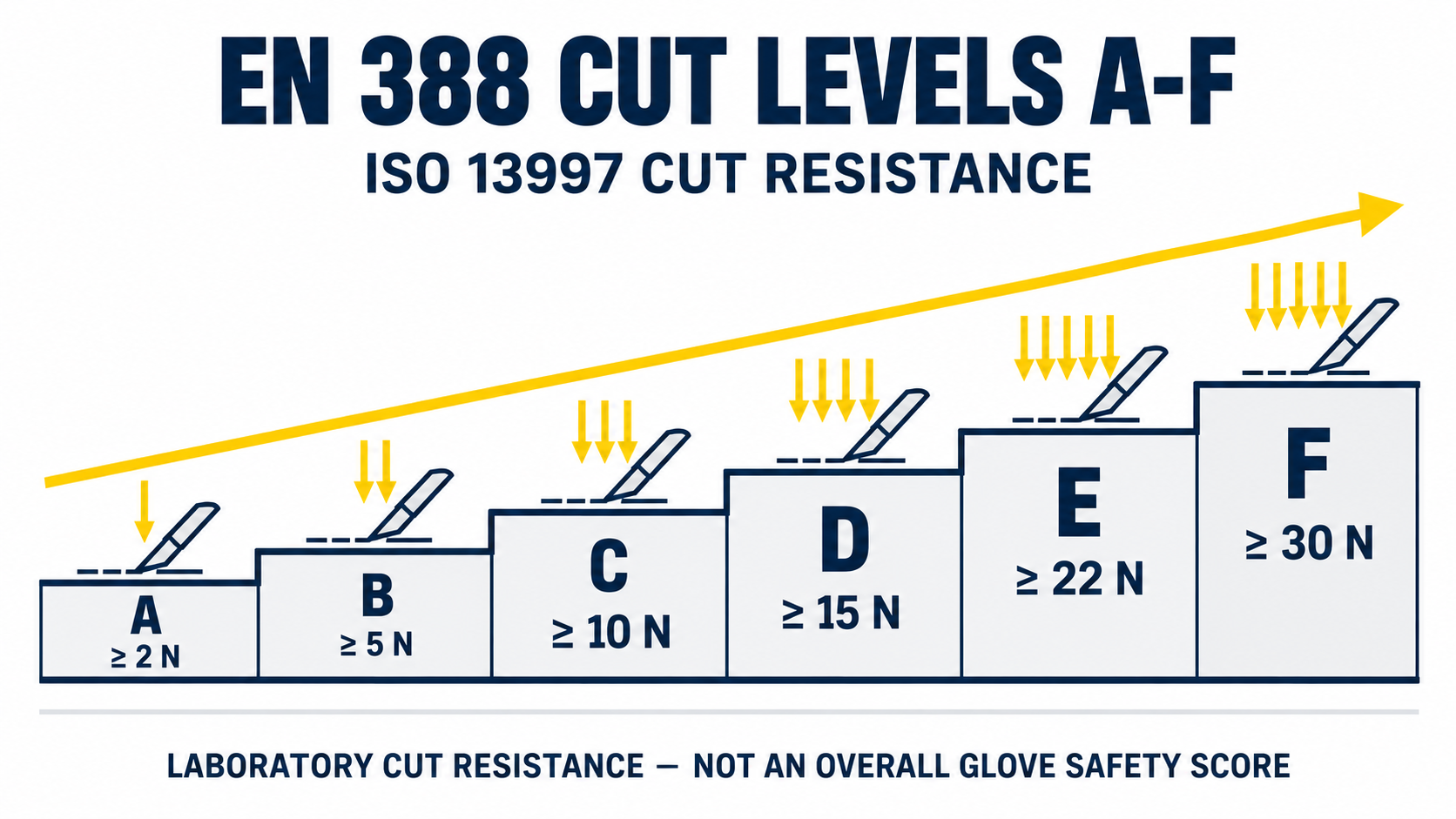
This guide focuses on the ISO 13997 TDM cut result, which classifies performance by the force required to cut through the glove material under standardized conditions.
EN 388 Cut Level | Cutting Force |
A | ≥ 2 N |
B | ≥ 5 N |
C | ≥ 10 N |
D | ≥ 15 N |
E | ≥ 22 N |
F | ≥ 30 N |
Higher letters mean greater force was required under ISO 13997. The result describes laboratory cut resistance—not an overall glove safety score.
How Much Cut Protection Do You Actually Need?
The answer depends on more than the printed letter. Consider edge sharpness, contact force, exposure frequency, handling method and any other hazards present.
Task Example | Selection Consideration |
Light Assembly | Dexterity may be the priority where cut exposure is limited |
General Metal Handling | Balance cut protection, grip and dexterity |
Sheet Metal Handling | Higher cut protection may be appropriate depending on edge hazard |
Glass / Sharp Components | Evaluate higher cut resistance and task-specific risks |
Heavy Sharp-Material Handling | Stronger cut protection may be required based on risk assessment |
This is a practical reference, not a fixed rule. Material thickness, edge condition and handling method can change the cut risk even within the same industry.
What Factors Should You Consider Besides the Cut Level?
Dexterity
Precision work may require a glove that preserves finger control. Too much bulk can reduce task efficiency.
Grip
Metal, glass and tools must be held securely, so grip should be evaluated alongside cut protection.
Abrasion Resistance
Rough materials can wear glove coatings and fibers, making abrasion performance important where friction is frequent.
Puncture Resistance
Cut and puncture resistance are different properties. A high ISO 13997 cut level does not automatically mean high resistance to pointed objects.
Impact Protection
Mining and heavy construction may also require back-of-hand impact protection, which cut level alone does not address.
Safeyear technologies such as GripVanta™, DuralVanta™, TravMora™ and VarioNova™ can support internal links around grip, abrasion, impact and cut protection.
Cut Resistance vs Puncture Resistance: What’s the Difference?
Cut hazards come from slicing contact with sharp edges, blades, sheet metal or glass. Puncture hazards come from pointed objects or projections. They are different mechanical challenges and are reported separately.
Key point: A glove with high ISO 13997 cut resistance does not automatically provide equally high puncture resistance. |
When both hazards are present, review the relevant EN 388 values for cut and puncture. See the EN 388 Glove Ratings Explained guide for the full rating sequence.
ISO 13997 TDM vs Coup Test: Which Cut Rating Should You Use?
The Coup Test uses a circular rotating blade, while ISO 13997 TDM uses a straight blade under increasing force. The A-F classification comes from ISO 13997. An X in the Coup Test position does not automatically mean the glove failed cut testing; the ISO 13997 result may be the relevant value. See the EN 388 Glove Ratings Guide for the full explanation.
How to Choose Cut-Resistant Gloves by Industry
Industry | Typical Cut Hazards | Other Factors |
Construction | Metal, tools, sharp materials | Abrasion / impact / grip |
Manufacturing | Sheet metal, components | Dexterity / grip |
Mining | Metal, cables, rough materials | Impact / abrasion |
Oil & Gas | Metal edges, equipment | Grip / impact |
Logistics | Strapping, damaged packaging | Dexterity / grip |
Forestry | Sharp materials / tools | Grip / abrasion |
Industry is only a starting point; the task determines the glove requirements. In forestry, EN 388 cut resistance does not replace specialized chainsaw protection where required.
Cut Protection Example: Safeyear TPR9004
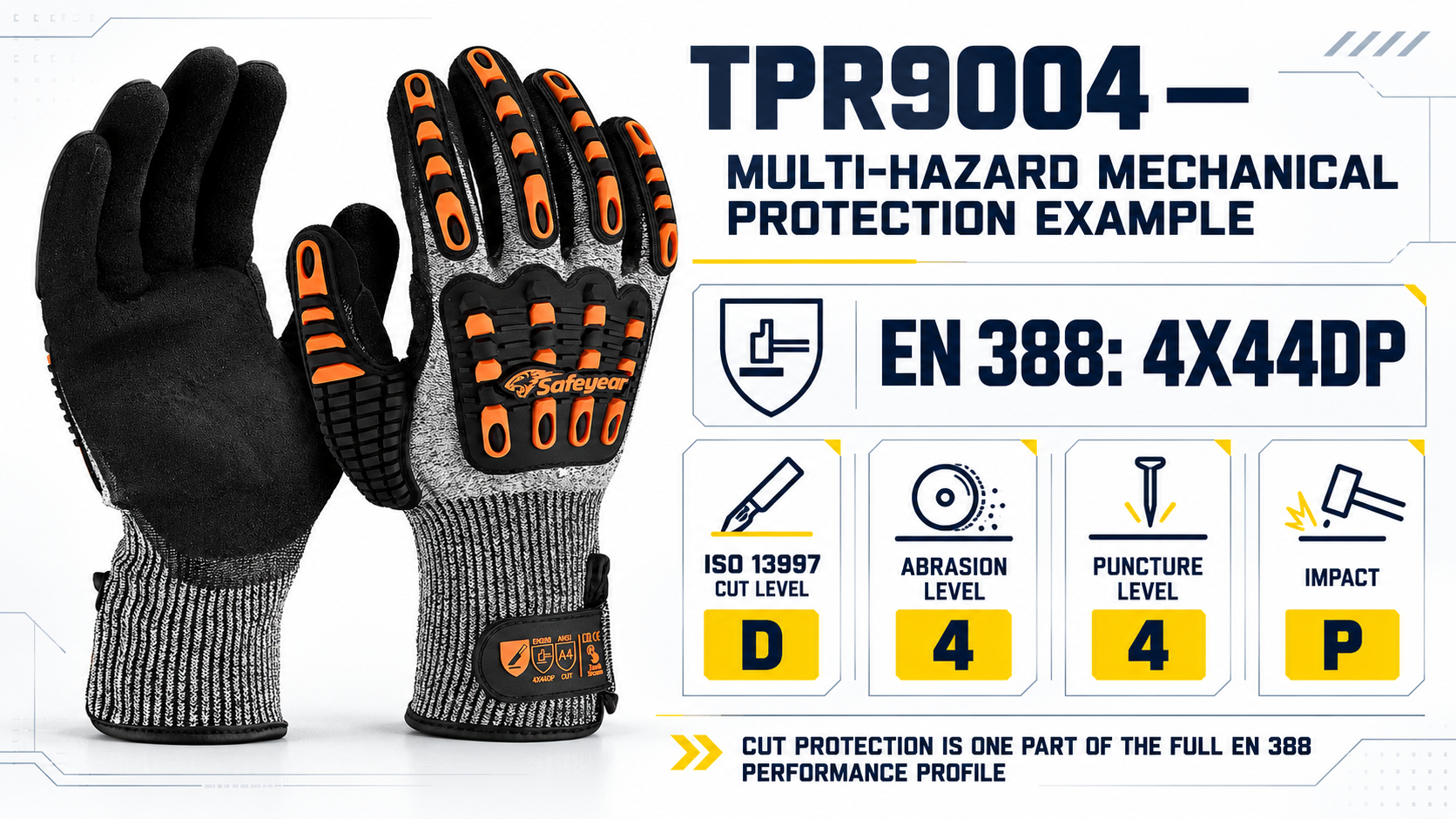
TPR9004 shows why selection should consider several mechanical properties. Its EN 388 rating is 4X44DP, including ISO 13997 Cut Level D, Abrasion Level 4, Puncture Level 4 and Impact P.
This does not mean every cut hazard requires Level D. It shows how one glove can combine cut resistance with other mechanical performance for multi-hazard tasks.
Is a Higher Cut Level Always Better?
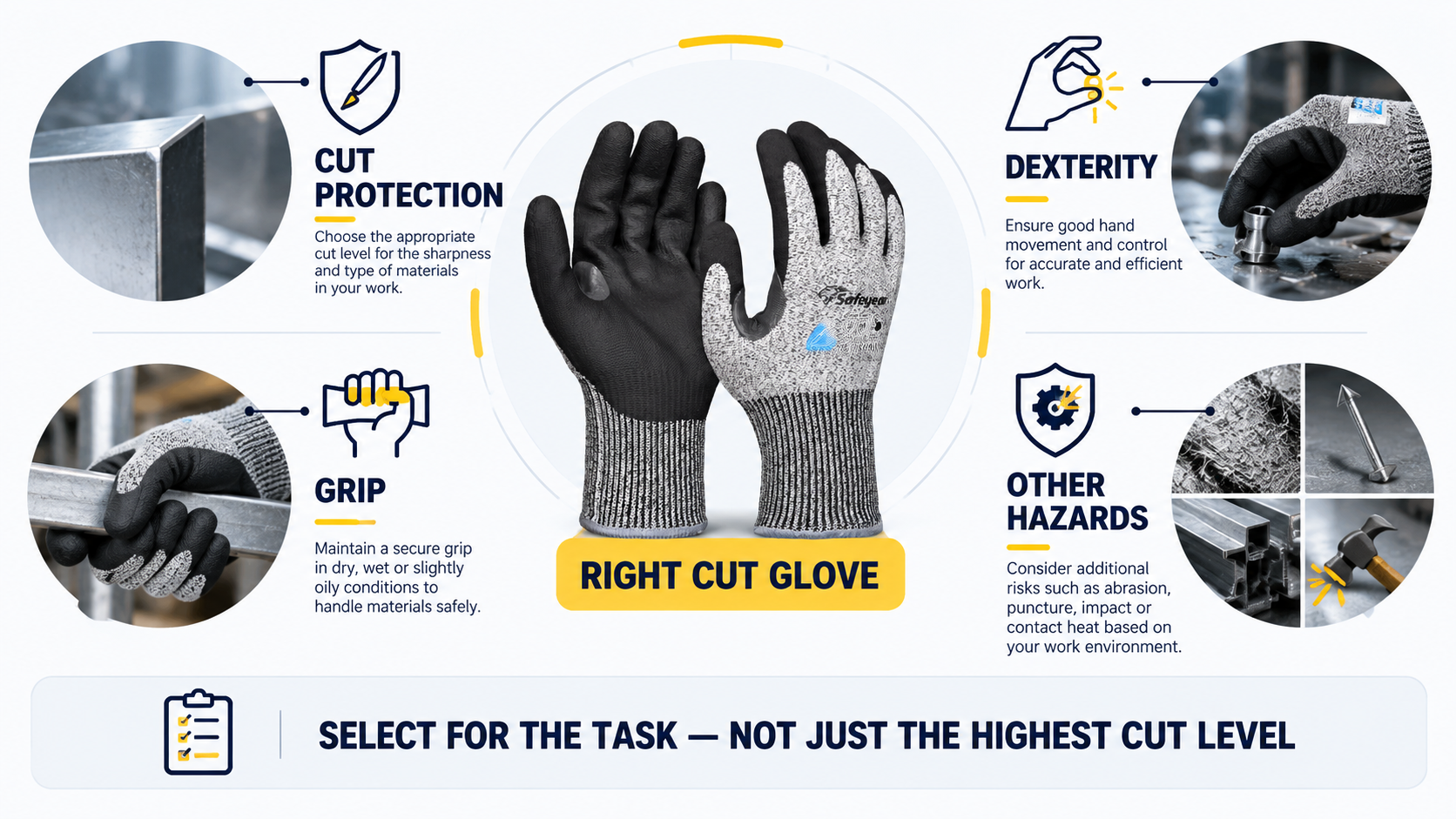
No. A higher letter means higher standardized ISO 13997 cut resistance, but selection still depends on dexterity, grip, comfort, other hazards and task duration.
Cut-Resistant Glove Selection Checklist
☐ What sharp material or edge is being handled?
☐ How severe and frequent is the cut exposure?
☐ What ISO 13997 cut level is appropriate?
☐ Is puncture protection also required?
☐ Are abrasion or impact hazards present?
☐ How much grip and dexterity does the task require?
☐ Does the rating apply to the exact glove model?
Cut-Resistant Gloves FAQ
What do EN 388 cut levels A-F mean?
They are ISO 13997 cut-resistance classifications based on the force required to cut through the glove material under standardized test conditions: A ≥ 2 N, B ≥ 5 N, C ≥ 10 N, D ≥ 15 N, E ≥ 22 N and F ≥ 30 N.
What cut level do I need for work gloves?
It depends on the actual cut hazard and task. Consider edge sharpness, contact force, frequency, handling method, grip, dexterity and any additional hazards rather than assigning one level to an entire industry.
Is Cut Level F better than Cut Level D?
Level F represents higher standardized cut resistance than Level D, but it is not automatically the better glove choice for every task. A glove still needs to fit the actual work requirements.
Is cut resistance the same as puncture resistance?
No. Cut resistance and puncture resistance are different properties. High cut performance does not automatically indicate equally high puncture performance.
What is the difference between ISO 13997 and the Coup Test?
The Coup Test uses a circular rotating blade, while ISO 13997 uses a straight blade under increasing force. The EN 388 A-F cut levels come from ISO 13997.
Conclusion
EN 388 Cut Levels A-F are useful laboratory references, but they are only one part of selection. Start with the sharp-edge hazard, review the ISO 13997 result, then consider grip, dexterity, abrasion, puncture, impact and task duration. The right glove is the one that provides the appropriate balance for the work—not simply the highest available cut level.

 English


