How to Choose Chainsaw Gloves: A Guide to Forestry Hand Protection & EN ISO 11393-4
Forestry workers handle chainsaws, timber, branches, tools and rough materials in demanding outdoor environments. Chainsaw operation introduces a specialized cutting hazard that cannot be assessed from ordinary mechanical cut resistance alone.
Choosing chainsaw gloves means matching the task to verified chainsaw performance, protective coverage and practical hand control. General forestry work may require a different glove altogether. This guide explains EN ISO 11393-4 and how to assess protection, grip, durability and documentation for chainsaw and logging work.
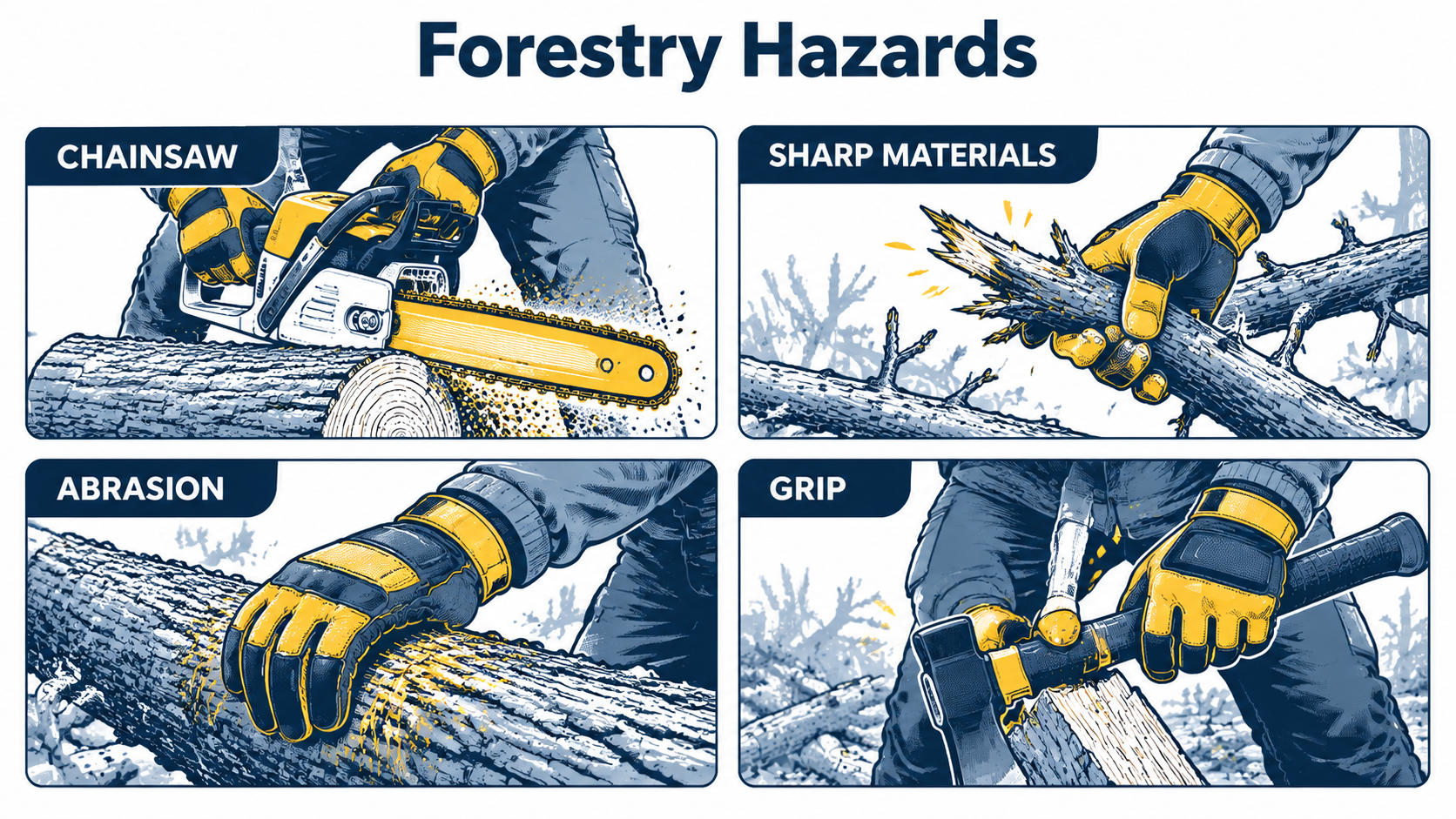
What Hand Hazards Do Forestry Workers Face?
Chainsaw Cutting Hazard--Contact with a moving chainsaw chain is different from contact with a sharp edge. Gloves intended for this exposure require specialized design and evidence of chainsaw-specific performance.
Cuts & Sharp Materials--Branches, timber edges, tools and metal components create mechanical cutting risks. Review relevant cut-resistance results for these tasks without treating them as proof of chainsaw protection.
Abrasion & Rough Timber--Repeated handling of bark, logs and rough surfaces can wear glove materials. Abrasion resistance and construction durability matter, especially during repeated loading and material handling.
Grip & Tool Handling--Wet surfaces, debris and poor fit can affect tool control. Evaluate handling grip and fit under the expected conditions, rather than selecting solely by protective thickness.
Chainsaw Gloves vs Cut-Resistant Gloves: What's the Difference?
Cut-resistant work gloves are commonly assessed under EN 388, including blade-cut testing and, where applicable, ISO 13997 testing. These results help buyers compare protection against specified mechanical hazards. Chainsaw protective gloves address a different cutting mechanism and use dedicated chainsaw testing.
A high EN 388 cut level does not automatically make a glove suitable for chainsaw use. For chainsaw operation, check chainsaw-specific performance, protected areas and instructions. Neither leather construction nor a forestry product name establishes protection.
What Does EN ISO 11393-4 Mean for Chainsaw Gloves?
EN ISO 11393-4 covers performance requirements and test methods for gloves offering protection against cutting by hand-held chainsaws. It also addresses design requirements, identification and marking information.
Buyers should understand three related elements:
Design and configuration: Identify the protected zones and which parts of the glove pair provide the claimed protection. Do not assume equal coverage across both hands, palms and fingers.
Class: Read the standardized chainsaw-protection classification alongside the complete product marking.
Test chain speed: Check the chain-speed condition associated with that classification. It is a laboratory test parameter, not a general guarantee of safe contact.
Always check the exact model's classification, design and tested chain-speed information in its technical documentation. Confirm that the documents describe the same model. A higher class does not automatically establish task suitability.
How to Choose Gloves for Different Forestry Tasks
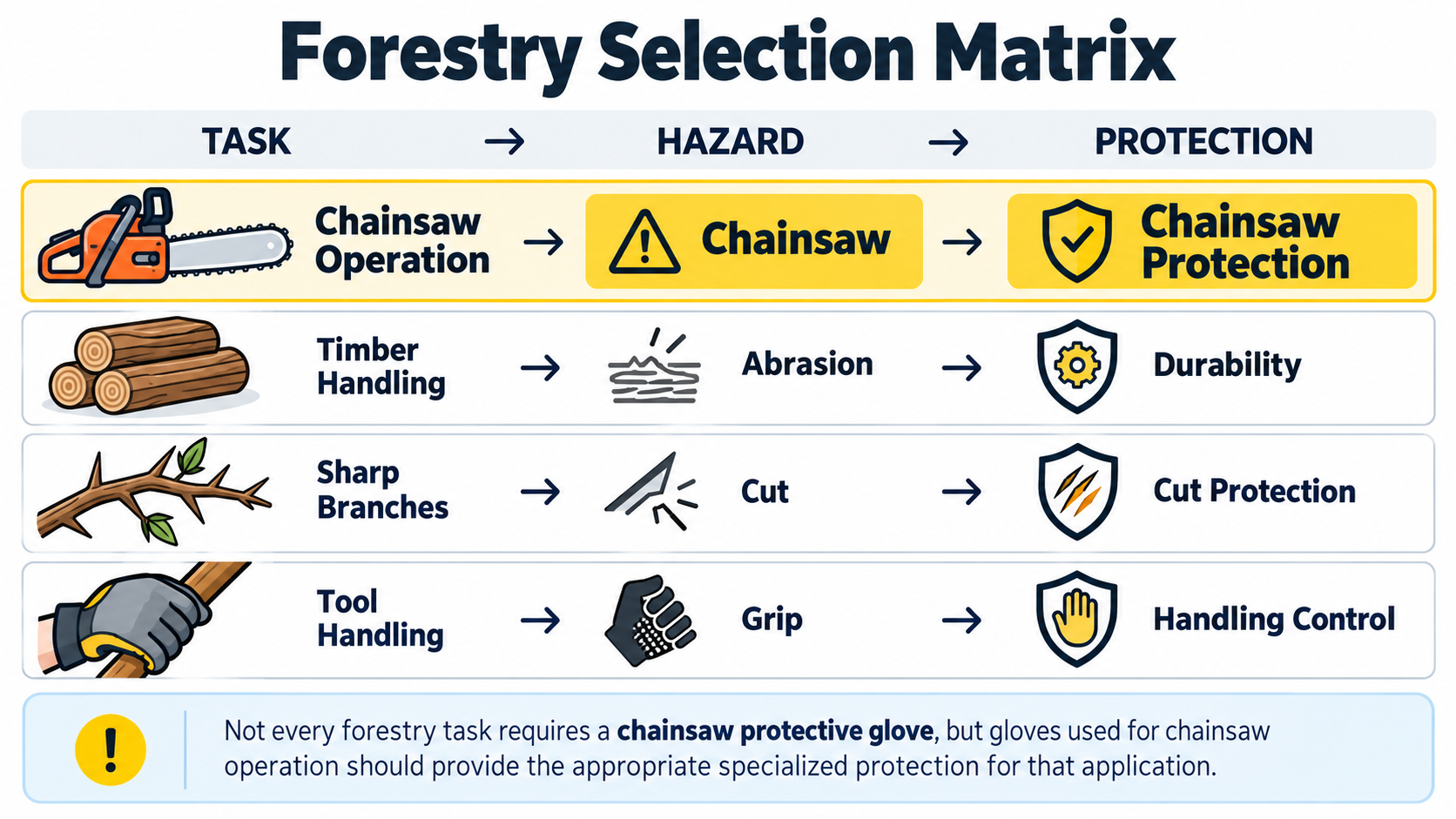
Forestry includes both chainsaw work and non-chainsaw handling. Identify the actual activity before choosing protection.
Forestry Task
Main Hazard
What to Look For
Chainsaw Operation
Chainsaw cutting hazard
Verified chainsaw protection
Logging & Timber Cutting
Chainsaw + mechanical hazards
Chainsaw protection + durable construction
Timber Handling
Abrasion / cuts
Mechanical protection + durability
Branch & Tool Handling
Cut / grip
Cut protection + handling grip
Forestry Maintenance
Grip / abrasion / dexterity
Task-appropriate work glove
Not every forestry task requires chainsaw protective gloves. Where chainsaw protection is required by the assessment or applicable rules, ordinary work gloves are not a substitute.
What Else Matters Besides Chainsaw Protection?
Grip--Workers need secure control of handles, tools and timber. Check palm contact, wet-condition handling and whether the glove interferes with controls. Explore GripVanta™ for related grip-design information, while verifying the individual model's performance separately.
Durability--Inspect seams and high-wear areas. Follow the manufacturer's inspection and replacement instructions. DuralVanta™ provides related durability information; durability alone does not establish chainsaw protection.
Fit & Dexterity--A glove should fit securely without restricting essential movements. Check finger length, wrist adjustment and the ability to operate controls. Assess fit with equipment stopped and follow the equipment manufacturer's safety instructions.
Chainsaw protection, grip and dexterity must work together. Excessively bulky construction can interfere with controlled handling.
Safeyear Gloves for Chainsaw & Forestry Work
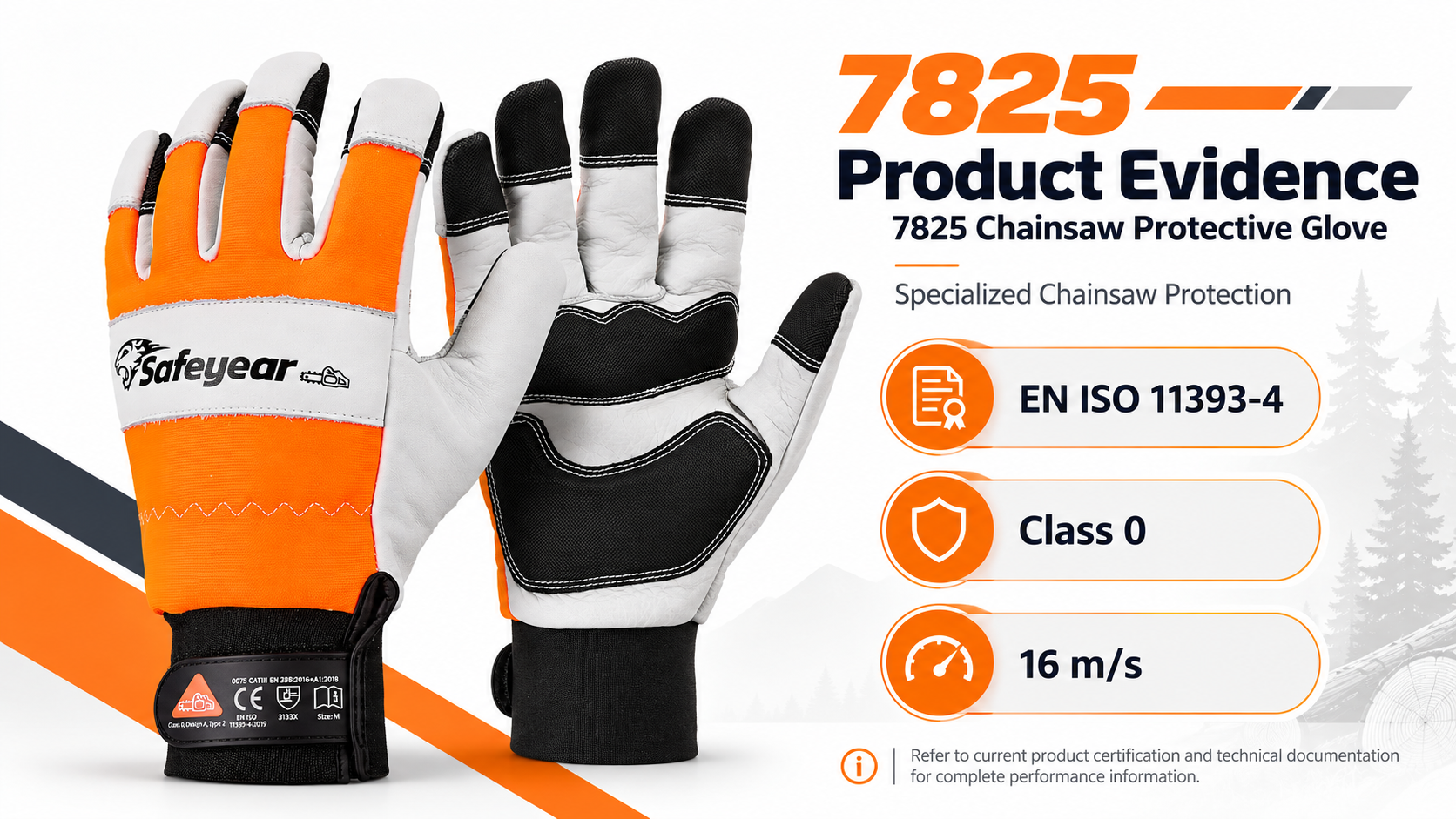
7825 — Chainsaw Glove Option
Safeyear identifies 7825 as its chainsaw glove model for forestry and logging enquiries. Before specifying it for chainsaw operation, request the current technical datasheet, user instructions, declaration of conformity and relevant certification documents.
Check the EN ISO 11393-4 design, class, test chain speed and protected zones, together with any EN 388 mechanical performance. Confirm that the documents cover the exact supplied model, sizes and construction. For European purchasing, also verify the applicable Category III conformity-assessment documentation. Historical ratings or an older document do not, by themselves, establish current conformity coverage.
Chainsaw Glove Selection Checklist
Will the worker operate a chainsaw?
Is the required chainsaw protection verified?
What EN ISO 11393-4 design and class apply?
What test chain speed and protected zones are specified?
Are additional cut and abrasion hazards present?
Is grip appropriate for the tools and timber?
Does the glove provide secure fit and adequate dexterity?
FAQ:
Q: Are chainsaw gloves the same as cut-resistant gloves?
A: No. EN 388 cut resistance and chainsaw-specific protection assess different hazards. A glove with a high mechanical cut rating is not automatically suitable for chainsaw operation. Check the applicable chainsaw standard and model-specific documentation.
Q: What does EN ISO 11393-4 mean for chainsaw gloves?
A: It specifies requirements and testing for protective gloves intended for users of hand-held chainsaws. Buyers should check the exact design, class, protected zones and test chain speed rather than relying on the standard number alone.
Q: What does the chainsaw protection class mean?
A: It identifies a classification based on standardized chainsaw testing, including specified chain-speed conditions. Interpret it together with the design, coverage and instructions. It is not a guarantee against injury or permission to contact a moving chain.
Q: Do all forestry workers need chainsaw protective gloves?
A: No. Timber handling, maintenance and material handling involve different hazards from chainsaw operation. Choose gloves for the actual task. Where specialized chainsaw protection is required, select appropriately documented equipment alongside the other required chainsaw PPE.
Author: Jay Yuan, Technical Marketing Director, Safetoe

 English