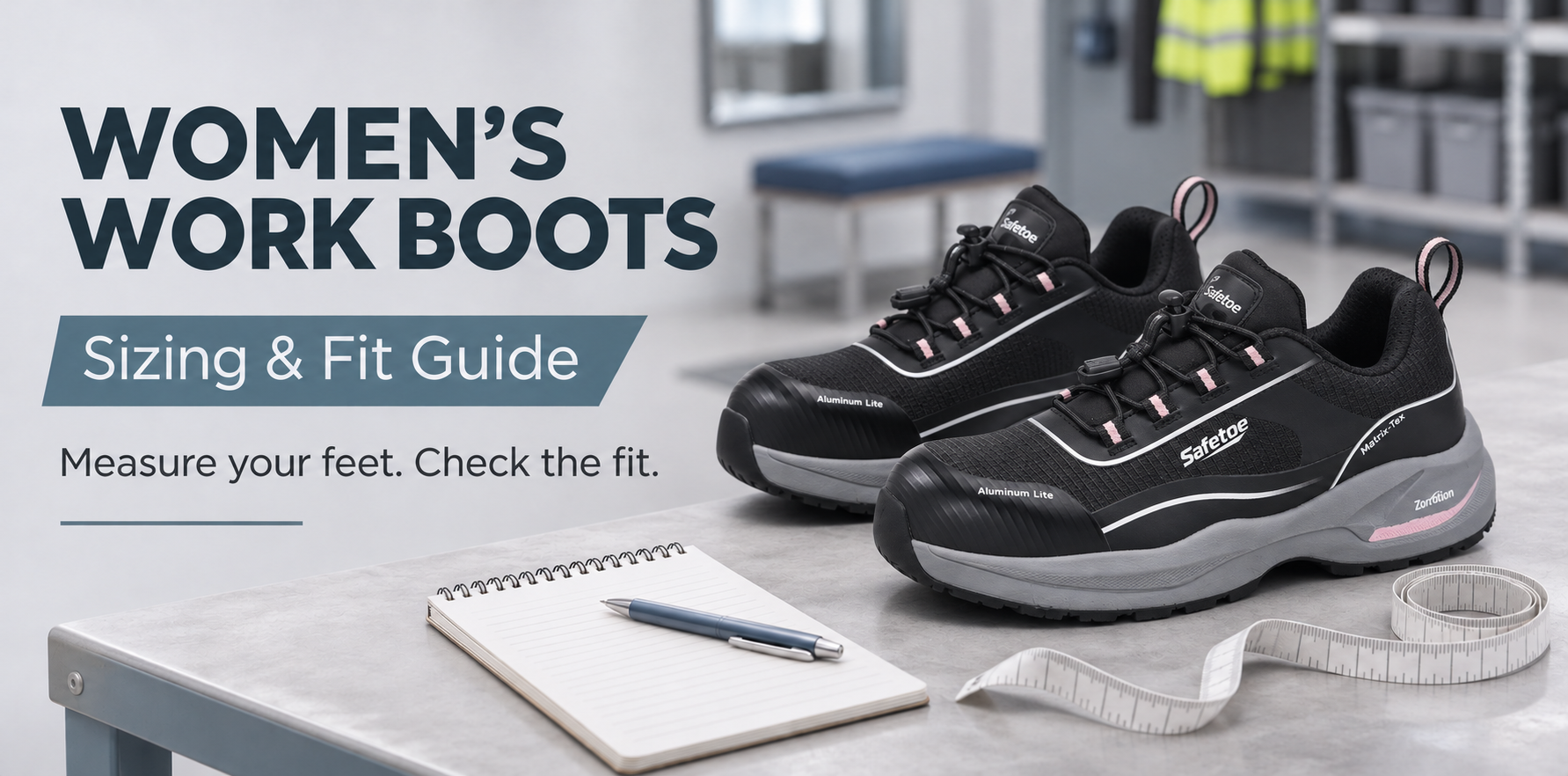
Women’s Work Boots Sizing Guide: Find the Right Fit
The right size in women’s work boots depends on more than the number on the label. Foot length, width, heel fit, instep space, and the shape of the protective toe area all influence how footwear feels during work.
Start with your measurements, compare them with the size chart for the exact model, and check the fit while wearing your usual work socks. Avoid relying on a fixed conversion from men’s sizes or assuming that your everyday shoe size will fit every safety boot.
This guide explains how to assess the fit before purchasing, whether you are buying one pair or selecting footwear for a work team.
1. Understand Size and Fit
A size label identifies a position within a sizing system. It does not fully describe the internal shape of a boot.
Two styles carrying the same size can feel different around the heel, forefoot, or instep. Protective toe caps, linings, insoles, and closure designs also influence the available space.
Women-specific footwear offers another fit option to evaluate, but individual feet vary. Some wearers need a narrower fit, while others need more width or volume.
If a boot feels too narrow but already has enough length, moving up a size may create excess space at the heel. Compare another width or last shape rather than treating extra length as the only solution.
2. Measure Both Feet
Prepare a simple measurement record before contacting a supplier or choosing an online size.
Place a sheet of paper on a firm, level surface.
Stand naturally and have another person mark the heel and the end of the longest toe.
Measure the distance between the marks and record it in millimeters.
Record the width across the widest part of the forefoot if the supplier requests it.
Repeat for the other foot and keep both measurements.
Measure later in the day where practical, and record whether you were wearing socks. Follow the supplier’s measurement procedure if it differs.
Use the larger foot as the starting point for sizing, then check that the selected footwear fits both feet securely.
Do not add an arbitrary allowance to your foot measurement. First establish whether the chart refers to foot length, insole length, or another measurement.
3. Use the Chart for the Exact Model
Before selecting a size, confirm:
The product model and version.
Whether the chart uses EU, UK, US women’s, or US men’s sizes.
Whether the measurements describe the foot or the footwear.
Available widths or alternative fits.
Any guidance for insulated versions or approved replacement insoles.
Avoid using a universal rule such as “subtract two sizes to buy men’s boots.” A numerical conversion does not confirm that the boot’s width, heel shape, or protective toe area will fit.
For online orders, send your measurements and usual footwear details to the supplier. Treat the recommended size as a starting point to verify through fitting.
4. Check the Fit in Five Areas
Try both boots with the socks normally worn at work. Fasten them properly and walk in a clean, safe area.
| Area | What to check |
| Toe space | Toes can move without pressing against the front or top of the protective cap |
| Forefoot width | The widest part of the foot is not squeezed or pushed over the footbed edge |
| Heel | The heel remains reasonably secure without persistent rubbing or excessive movement |
| Instep | The closure holds the foot without concentrated pressure across the top |
| Collar and ankle | The boot does not dig into the ankle or restrict necessary movement |
The protective toe cap should not press into the foot. If it does, reconsider the size, width, or style.
Check the fit while standing and walking, not only while seated. Where relevant, include normal bending or kneeling movements in a controlled sample trial.
5. Consider the Closure and Boot Construction
Lace-Up Work Boots
Laces allow adjustment across the instep and ankle. Check whether you can achieve secure retention without overtightening.
If the boot only feels stable when the laces are pulled excessively tight, a different fit may be needed.
Chelsea and Pull-On Boots
These styles offer less adjustment through the upper. Pay particular attention to instep hold, heel movement, and ease of putting the boot on and taking it off.
Do not select an oversized pair simply because it is easier to pull on.
Safety Sneakers
Low-cut safety sneakers provide another option where the workplace specification permits them. Evaluate heel retention, closure security, and protective toe space just as carefully as with boots.
6. Avoid Common Sizing Mistakes
Choosing only by casual shoe size: Use your usual size as a reference, then check the specific model.
Sizing up automatically for thick socks: Try the intended socks first and assess the complete fit.
Expecting tight boots to stretch: Do not rely on wear to correct pressure from a protective toe cap or an unsuitable fit.
Using extra insoles to fill excessive space: Confirm replacement-insole compatibility with the manufacturer. Changing the supplied configuration can affect fit and protective properties.
Assuming a women’s label guarantees a fit: Assess the actual footwear on the intended wearer.
7. SAFETOE Women’s Footwear to Compare
Compare the following styles according to the required protection, closure preference, and sample fit.
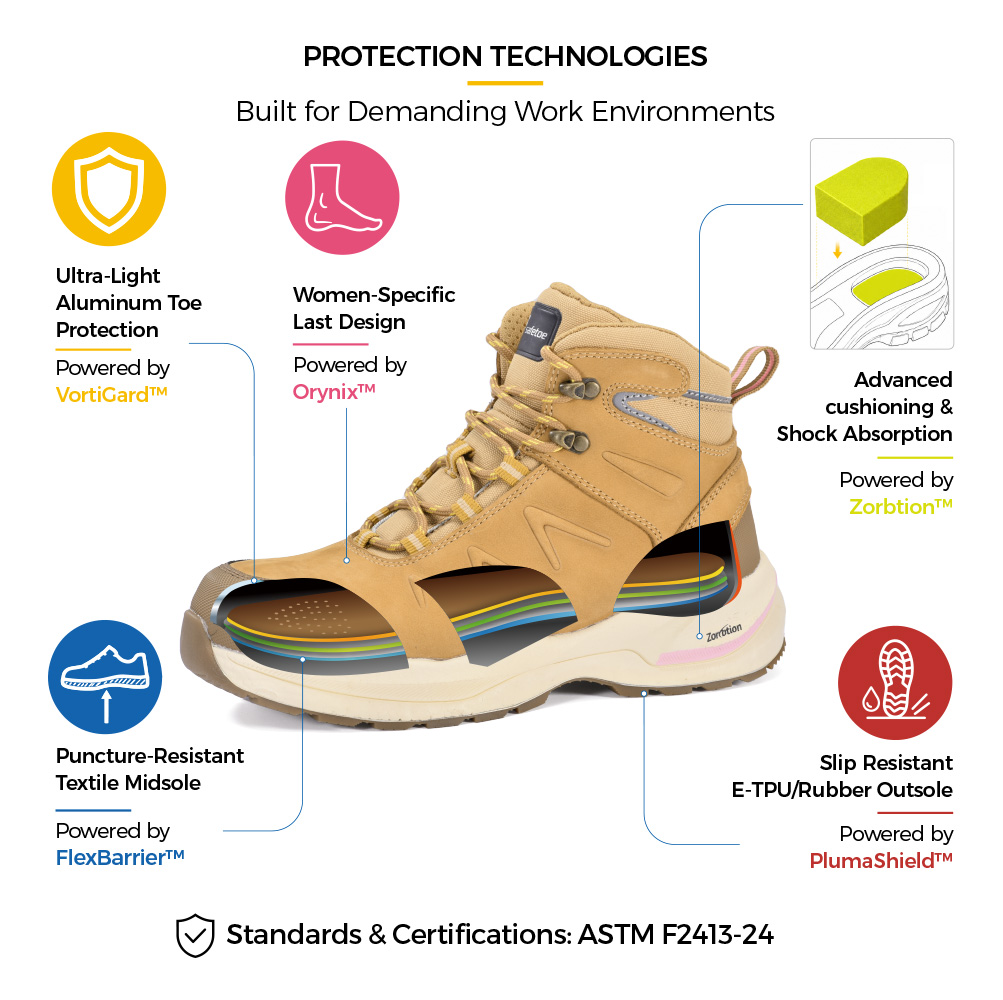
M-8553W Pro — Women’s Lace-Up Safety Boots
M-8553W Pro combines a nubuck leather upper, aluminum toe protection, a PE protective midsole, and an E-TPU/rubber outsole.
Its lace-up construction provides a starting point for wearers who prefer adjustable fastening around the instep and ankle.
Explore M-8553W Pro Women’s Safety Boots
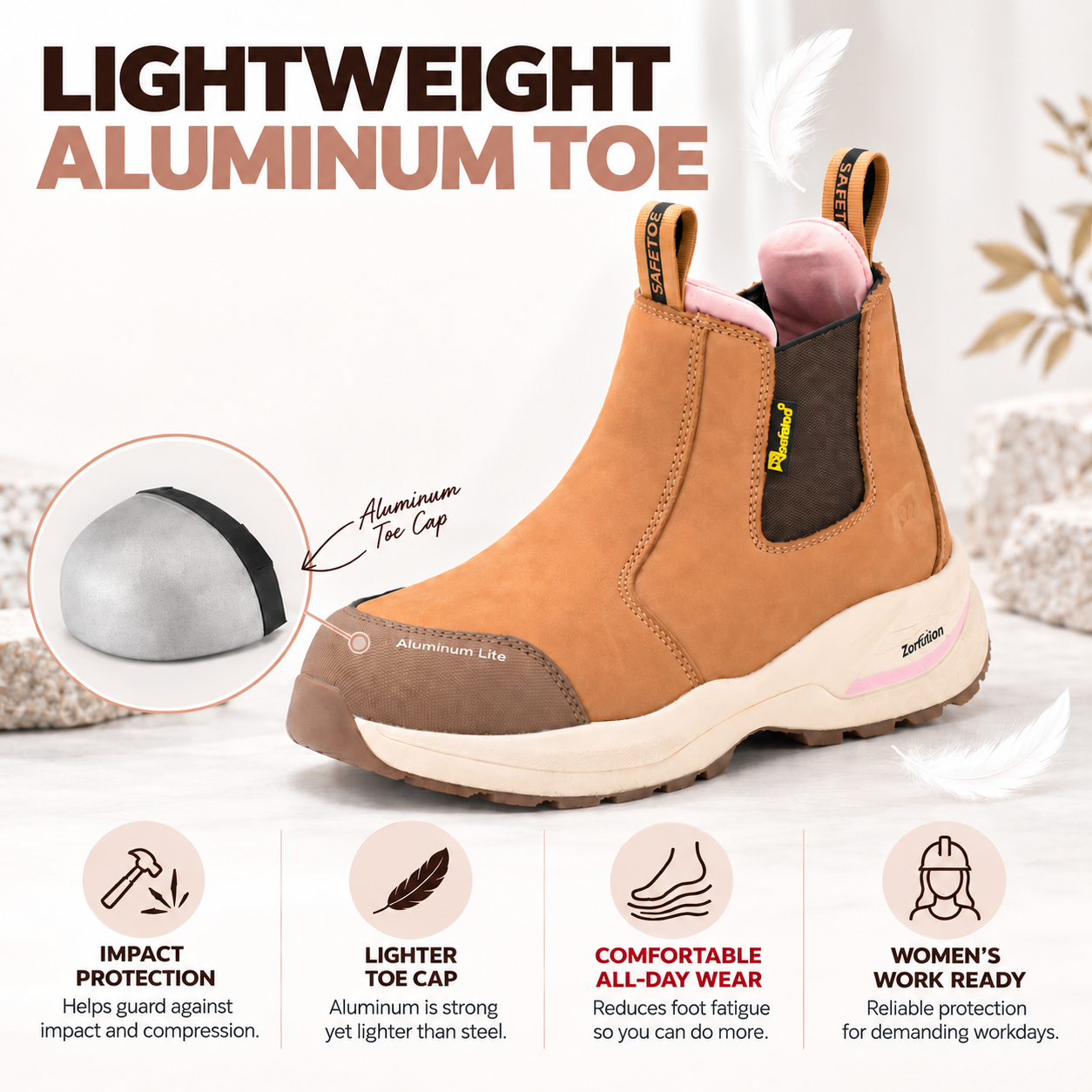
M-8025W Pro — Women’s Chelsea Safety Boots
M-8025W Pro offers a Chelsea slip-on design with a nubuck leather upper, aluminum toe protection, and a PE protective midsole.
During fitting, pay particular attention to instep retention and heel movement because the upper does not offer lace adjustment.
Explore M-8025W Pro Women’s Chelsea Safety Boots
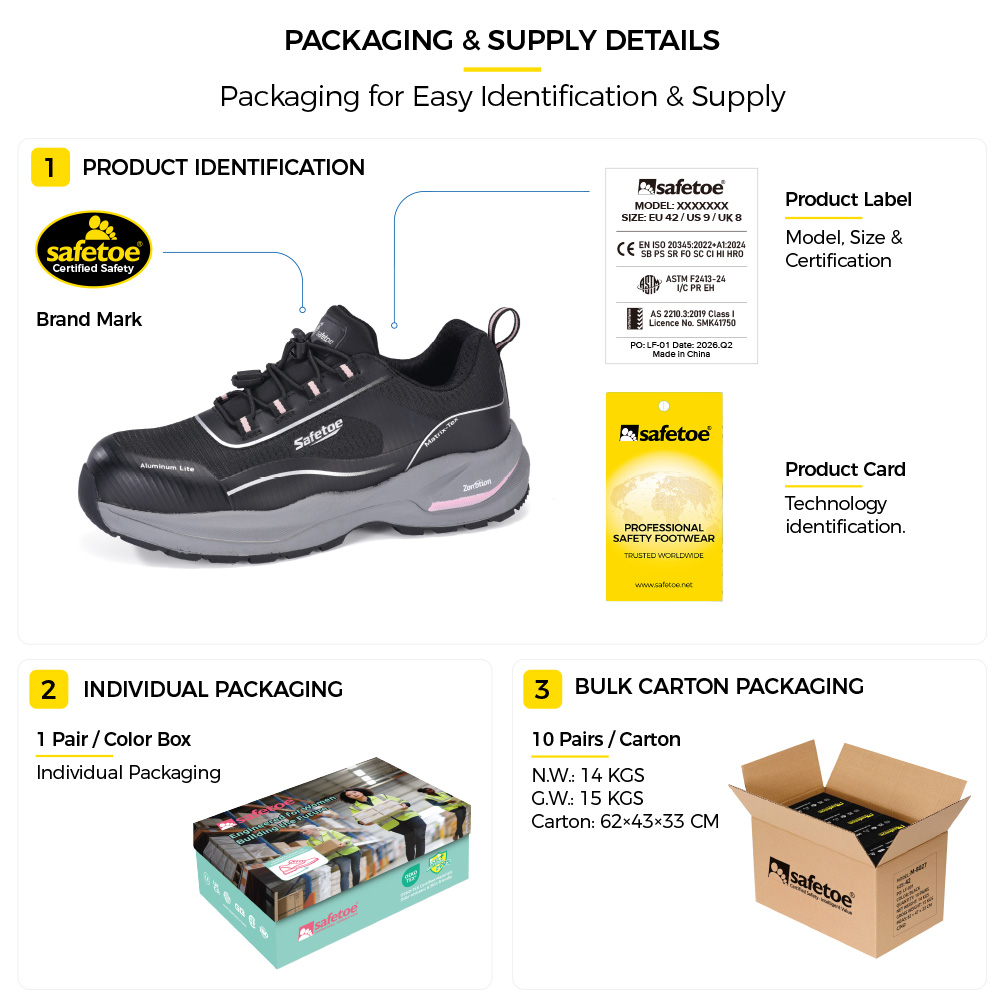
L-7613 — Women’s Safety Sneakers
L-7613 provides a low-cut alternative with a woven upper, TPU reinforcement, aluminum toe protection, and a PE protective midsole.
Consider this style where low-cut footwear meets the workplace requirements, then compare its fit with the available boot options.
Explore L-7613 Women’s Safety Sneakers
Request the current size chart and product documentation for the exact version being supplied. Comfortable fit and the required protection must be assessed together.
8. Plan Size Trials Before Bulk Orders
For distributors and employers, a fitting process can help identify problems before the full order is placed.
Collect individual foot measurements and identify any recurring width or fit concerns. Arrange samples across representative sizes and compare feedback from more than one wearer.
Record the approved model, size, socks used, and any agreed insole configuration. Confirm the size-label format and fitting or exchange arrangements before approving production or delivery.
A single successful fitting does not establish that the same style will fit the whole team.
Frequently Asked Questions
1. Should women’s work boots be tight or loose?
They should hold the foot securely without squeezing it. Check toe space, forefoot width, instep pressure, and heel movement together.
2. Should I buy work boots one size bigger?
Not automatically. Start with the model-specific chart and your measurements. A larger size can create excessive movement if the real issue is width or shape.
3. Can I convert my men’s boot size to a women’s size?
Use the manufacturer’s conversion chart for the relevant models. Even when the numerical conversion is correct, the two styles may fit differently.
4. Will a tight safety toe cap become more comfortable after breaking in?
Do not expect a protective toe cap to stretch to fit your foot. Pressure from the cap is a reason to reassess the size or style.
5. What should I send a supplier when asking for sizing advice?
Provide the model, measurements for both feet, usual size and sizing system, intended socks, and any specific fit concerns. Ask which measurement basis the size chart uses.
Get Help Choosing Women’s Work Footwear
Explore the available designs and request sizing guidance before selecting your next pair or planning a team order.
Explore SAFETOE Women’s Safety Footwear
Contact SAFETOE
Author: Jay Yuan
About the Author
Jay Yuan shares practical guidance on safety footwear selection, fit, and product care as part of the SAFETOE team. Footwear selection should follow workplace requirements and the instructions supplied with the specific product.

 English


