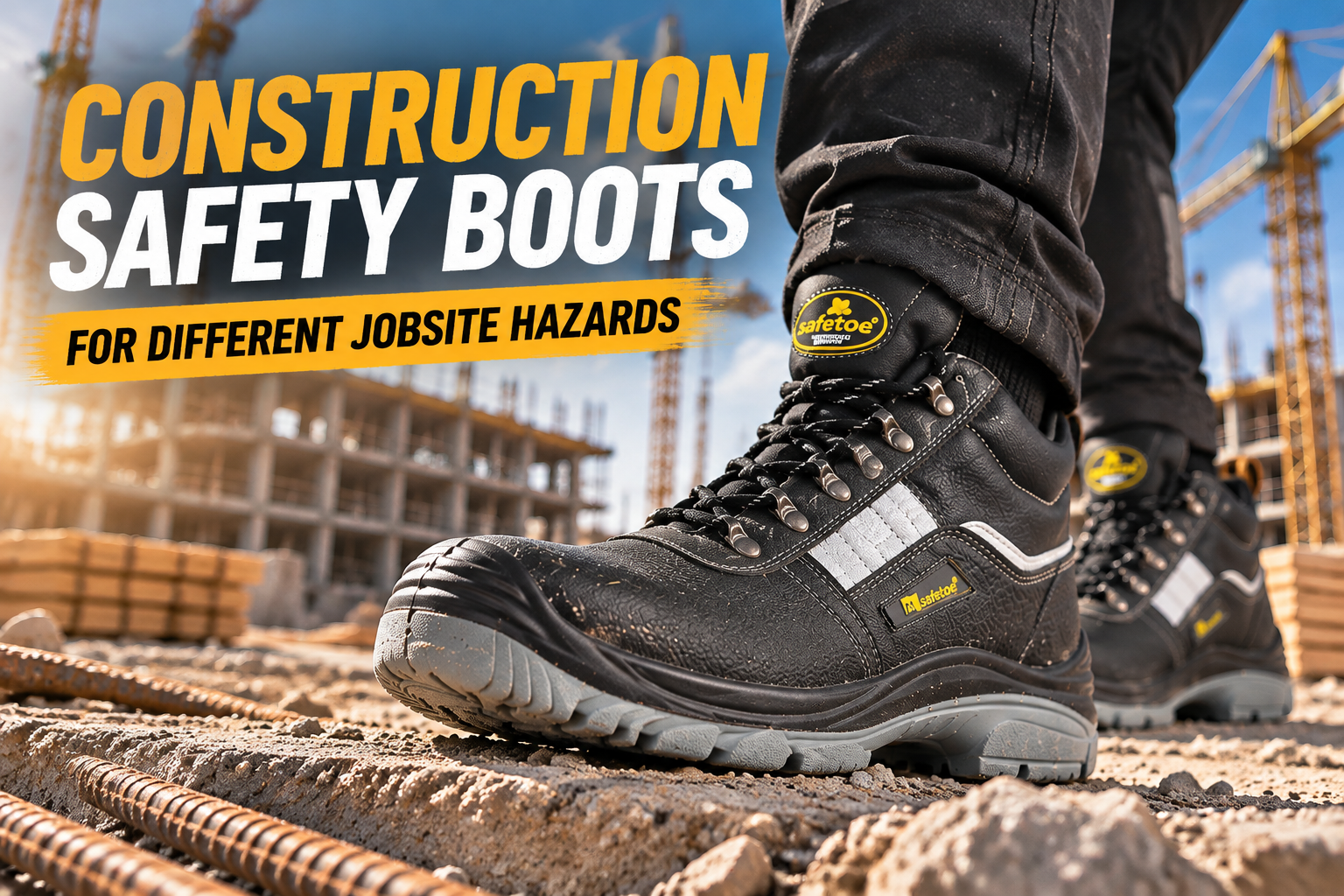
Construction sites expose workers to different combinations of foot hazards. Falling materials, sharp debris, slippery surfaces, standing water and hot roadwork surfaces can all create risks, but each requires a different approach to footwear protection.A suitable safety boot should address the actual hazards of the job rather than relying on a generic "construction boot" label. Understanding the injury mechanism helps buyers identify the protection needed and select footwear that matches the working environment.
Explore Safetoe Construction Safety Footwear Solutions for footwear designed for different construction applications.
For a broader buying checklist covering footwear features and certification, read our guide: How to Choose Safety Boots for Construction Work.
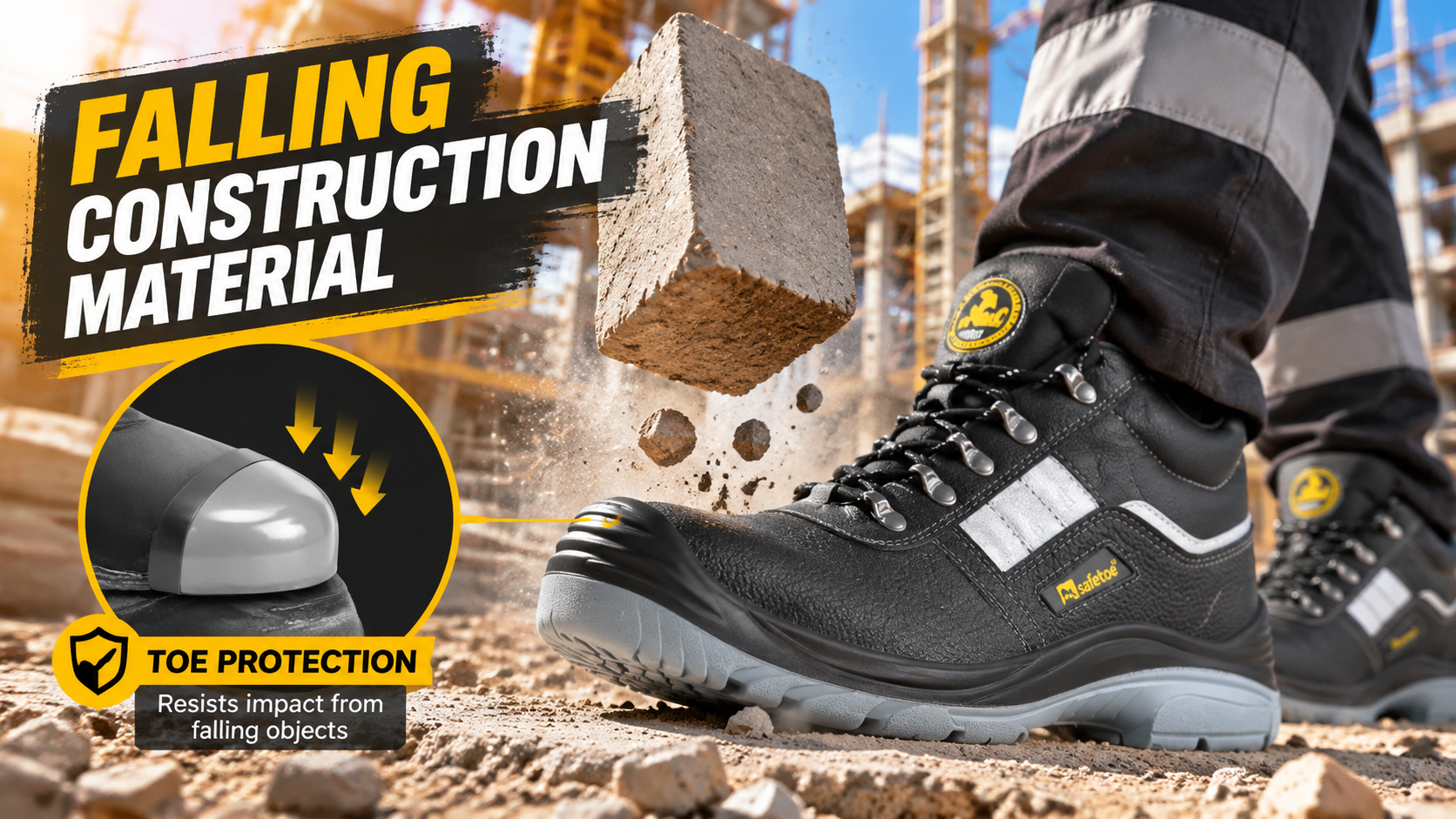
1. Falling Objects & Heavy Materials
Construction workers may handle bricks, steel components, tools and heavy building materials that can fall, roll or strike the foot. These incidents can cause serious toe injuries if the footwear does not provide appropriate protection.
Protection needed: Certified toe protection
Depending on the footwear model and project requirements, safety boots may use steel, composite or aluminum protective toe caps. The important consideration is whether the specific footwear meets the required impact-protection standard.Safetoe's VortiGard™ Toe Protection Technology covers protective toe-cap solutions designed for workplace impact and compression hazards.
For example, M-8027 WorkGuard Pro is a heavy-duty construction boot designed for building and civil engineering applications.
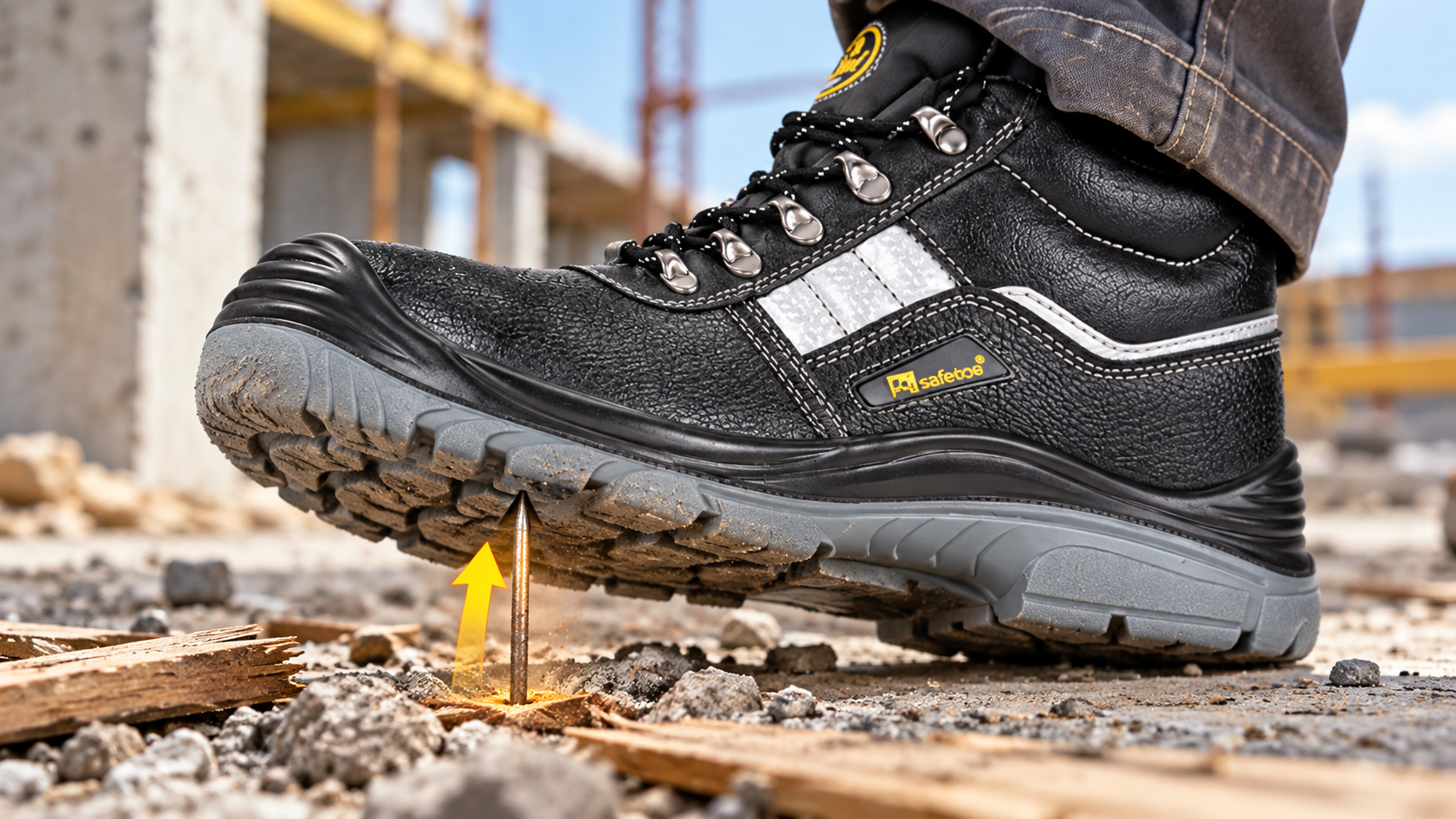
2. Nails, Screws & Sharp Construction Debris
Exposed nails, screws, metal offcuts, reinforcement wire and broken construction materials can penetrate footwear from underneath. This creates a different hazard from objects falling onto the toes.
Protection needed: A suitable puncture-resistant midsole
Toe protection and puncture protection address different hazards. A boot with a protective toe cap does not automatically provide protection against sharp objects penetrating the sole.Penetration-resistant construction may use steel plates or non-metallic inserts, depending on the model. Buyers should consider the required protection, coverage, flexibility and applicable certification.
Safetoe's FlexBarrier™ Anti-Penetration Protection Technology covers footwear solutions designed to address underfoot penetration hazards.When selecting boots for construction work, verify the puncture-protection specification of the exact model rather than assuming all safety footwear provides the same level of protection.
3. Slippery, Loose & Uneven Surfaces
Construction workers may move between wet concrete, mud, loose gravel, ramps, ladders and uneven ground. These surfaces can affect traction and stability in different ways.
Protection needed: Slip resistance, suitable outsole design and stability
Outsole performance depends on factors such as tread pattern, outsole material, surface conditions and contamination. A tread design that works well on one surface may not be ideal for another.For example, loose gravel and wet concrete create different traction challenges. Buyers should consider the surfaces workers actually encounter rather than selecting footwear based on tread depth alone.
For models equipped with advanced traction systems, PlumaShield™ Slip-Resistant Outsole Technology is designed to improve grip on wet, oily and slippery surfaces.No slip-resistant outsole can eliminate every fall. The footwear must match the working conditions, and workers must follow appropriate site-safety procedures.
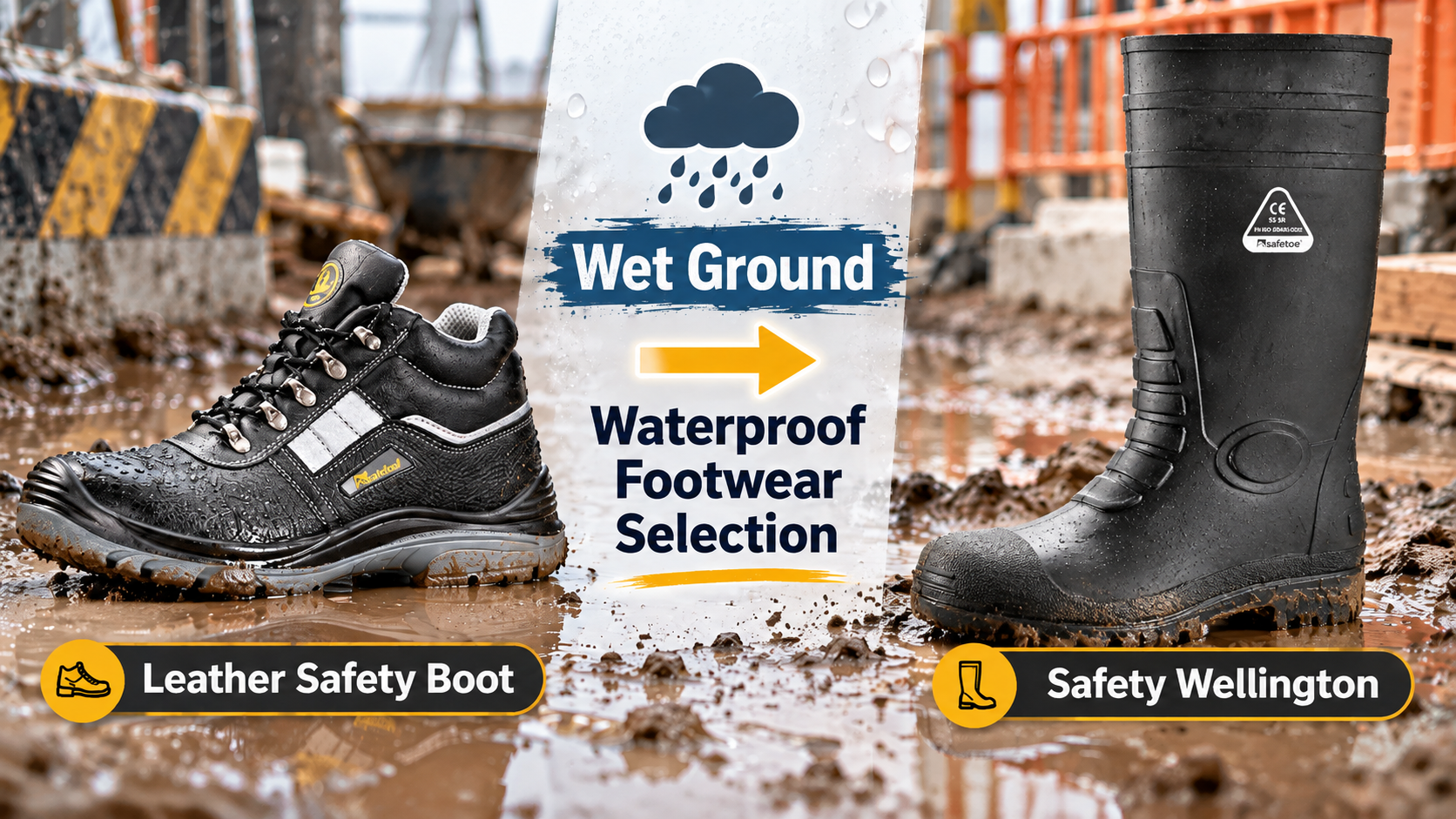
4. Water, Mud & Wet Construction Environments
Excavation, foundation work, drainage, utility installation and rainy outdoor construction can expose workers to water and mud throughout the working day.
Protection needed: Waterproof construction appropriate to the exposure
For occasional wet conditions, water-resistant or waterproof safety boots may be suitable, depending on the task and project requirements.For work involving standing water, deep mud or persistently wet ground, safety Wellington boots may be a more appropriate option than conventional leather safety boots.
Buyers should also check the required toe protection, puncture resistance and slip performance. Waterproof construction alone does not guarantee protection against every construction hazard.
Safetoe's Construction Safety Wellington Boots are designed for wet, muddy construction and infrastructure environments.
5. Hot Surfaces & Road Construction
Road paving, asphalt work and some infrastructure repairs can expose footwear to elevated surface temperatures. Ordinary construction footwear should not automatically be assumed suitable for these applications.
Protection needed: A heat-resistant outsole appropriate to the application
Buyers should check the required heat-resistance performance and the footwear's applicable markings and test documentation. HRO is a relevant outsole marking for contact-heat resistance under the applicable footwear standard, but suitability still depends on the actual task and working conditions.
Safetoe's HeatVanta™ Heat-Resistant Outsole Technology addresses footwear applications involving elevated temperatures.
For specialized roadwork, Asphalt Paving Safety Footwear Solutions provides a more relevant starting point than a general construction footwear category.The M-8565PV Asphalt Paving Safety Boot is one example of footwear designed for paving applications. Buyers should verify its current technical specifications against their project requirements.
6. Electrical Hazards on Construction Sites
Some construction projects involve temporary electrical systems, utility installation, electrical maintenance or work around energized equipment. These tasks introduce hazards that ordinary mechanical protection may not address.
Protection needed: Footwear with the specific electrical-protection evidence required by the project
Standard construction safety boots should not automatically be assumed to provide electrical hazard protection. Buyers must verify the exact model's applicable certification and electrical-protection claims.Electrical hazard footwear is not a substitute for safe working procedures or other required electrical PPE.
For relevant applications, explore Electrical Safety Footwear Solutions.
7. Match Safety Boots to the Construction Hazard
The following table summarizes how common jobsite hazards translate into footwear requirements.
| Construction Hazard / Worksite | Main Protection Need | Footwear Direction |
| Falling materials | Toe protection | Certified safety boots |
| Nails and sharp debris | Puncture resistance | Puncture-resistant safety boots |
| Wet or uneven ground | Grip and stability | Suitable slip-resistant construction boots |
| Standing water and deep mud | Waterproof protection | Safety Wellington boots |
| Asphalt and hot surfaces | Heat-resistant outsole | Specialized paving safety boots |
| Electrical work | Electrical hazard protection | Model-specific footwear with appropriate evidence |
The correct choice depends on the risk assessment, applicable project requirements and verified performance of the specific footwear model.
8. Do Construction Workers Need the Same Safety Boots for Every Job?
No. Residential construction, civil engineering, road paving and utility installation can involve different combinations of hazards.
General building work may require certified toe and puncture protection. Wet excavation may call for waterproof Wellington boots, while asphalt paving can require an outsole designed for elevated surface temperatures. Electrical work may require additional, model-specific protection.
The practical approach is to match the footwear to the task, the hazard and the required protection—not simply to buy the most heavily protected boot available.
Related Safetoe Construction Footwear
FAQ: Construction Site Safety Boots
1. What are the most common foot hazards on construction sites?
Common hazards include falling objects, nails and sharp debris, slippery or uneven surfaces, water and mud, and specialized risks such as hot surfaces or electrical hazards. The risks vary by task, so footwear should be selected according to the actual worksite conditions.
2. Do all construction workers need puncture-resistant safety boots?
Not necessarily. Puncture-resistant footwear is important where nails, screws, metal offcuts or other sharp objects may penetrate the sole. The need depends on the jobsite risk assessment and project requirements.
3. What safety footwear is best for muddy construction sites?
For deep mud, standing water and persistently wet conditions, safety Wellington boots may be more appropriate than conventional leather safety boots. Buyers should also verify the required toe protection, puncture resistance and slip performance.
4. Do road construction workers need different safety boots?
Some roadwork tasks, particularly asphalt paving, expose footwear to elevated temperatures and loose aggregate. Specialized paving boots with appropriate outsole heat resistance may be needed. Buyers should verify the required markings and technical documentation for the specific model.
5. Can regular construction safety boots protect against electrical hazards?
Not necessarily. General construction boots should not be assumed to provide electrical hazard protection. Where electrical protection is required, buyers must verify the specific model's supporting evidence and follow the project's electrical safety procedures.
Conclusion
Construction footwear requirements change with the jobsite. Falling materials call for appropriate toe protection, sharp debris may require a puncture-resistant midsole, slippery surfaces demand suitable traction, and wet, hot or electrical environments may require specialized footwear.
The most reliable selection process is straightforward:
Identify the Hazard → Determine the Required Protection → Verify the Footwear → Match It to the Jobsite.
By matching footwear to the actual work environment, buyers can make more informed decisions and avoid assuming that one construction boot is suitable for every application.
Explore Safetoe Construction Safety Footwear Solutions to find options for different construction hazards.

 English


