Mining Safety Boots Are Not One-Size-Fits-All
Mining operations differ significantly in terrain, weather exposure, moisture levels and daily work activities. Underground mines, open-pit mines and quarries can expose workers to different combinations of loose rock, sharp debris, uneven ground, heavy equipment and long working hours.
For this reason, mining safety boots should be selected according to the actual worksite risk profile—not simply because a product is described as a “mining boot.”
Underground operations may place greater emphasis on grip, moisture protection and puncture resistance. Open-pit workers may require durable footwear suitable for rough outdoor terrain and extended movement. Quarry workers often need protection suited to abrasive surfaces, loose stone and repeated exposure to impact hazards.
This article compares the footwear priorities of these three mining environments and explains what buyers should review before choosing mining work boots for a specific project.
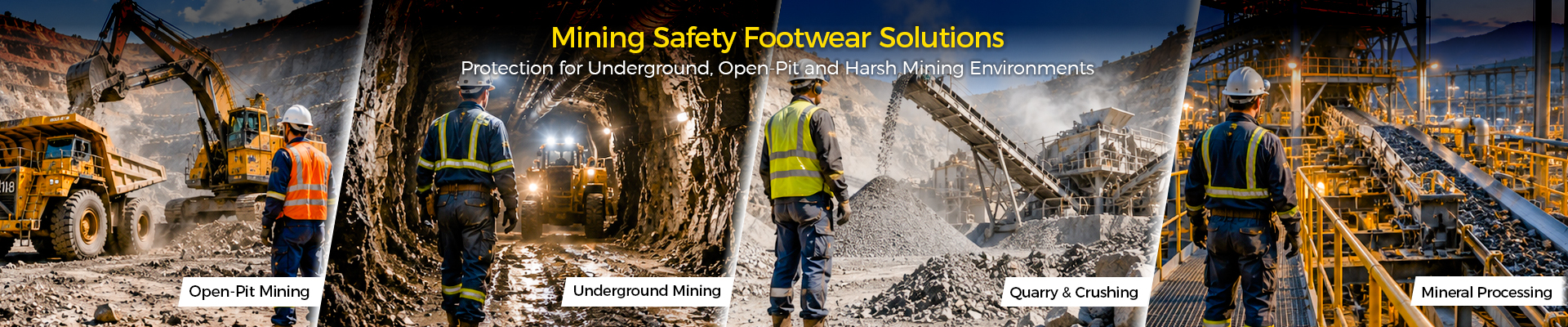
For a broader overview, visit Mining Safety Footwear Solutions.
Underground vs Open-Pit vs Quarry: Why Mining Footwear Requirements Differ
See Mining Safety Boots in Real Work Environments & Test
Watch how Safetoe mining safety footwear is designed for demanding industrial environments, with protective features for impact, puncture and long-shift wear.
The right configuration should still be selected according to the specific hazards, certification requirements and working conditions of each mining site.
Mining environments can be grouped by their working conditions, but individual sites may still have different hazards and PPE requirements.
Underground mining takes place in enclosed or partly enclosed environments where damp ground, loose debris, uneven walking surfaces and prolonged wear may be important footwear considerations.
Open-pit mining involves large outdoor sites, rough terrain, heavy mobile machinery, changing weather and frequent movement over long distances.
Quarry operations are surface extraction environments commonly associated with loose stone, abrasive ground, sharp debris and heavy material handling.
These differences affect the relative importance of toe protection, puncture resistance, outsole grip, upper durability, weather protection and long-shift comfort.
1. Underground Mining Safety Boots
Underground mining environments may include wet or damp ground, uneven surfaces, loose debris and sharp objects. Workers may also spend long periods wearing their footwear in confined or demanding conditions.
The main priorities for underground mining safety boots commonly include:
Toe protection helps address hazards involving falling or rolling objects, while a suitable puncture-resistant insert can help protect against sharp objects underfoot. The required protection level should always be confirmed against the mine’s risk assessment and purchasing specification.
Outsole performance is particularly important where ground conditions are wet, muddy or uneven. However, no outsole can prevent every slip. Surface contamination, wear, maintenance and worker movement can all affect traction.
Safetoe technologies such as VortiGard™ Toe Protection, FlexBarrier™ Puncture Protection and PlumaShield™ Slip Resistant Outsole are designed to address different footwear protection needs. Availability and verified performance depend on the selected model and configuration.
For general mining applications, M-8552 Mining Safety Boots provide a metal-free configuration with a composite toe, non-metallic puncture-resistant insert and PU/rubber outsole. Buyers should review the product datasheet and applicable test documents before confirming its suitability for a particular underground site.
2. Open-Pit Mining Safety Boots
Open-pit mines are large outdoor operations where workers may travel across rough terrain and work near haul trucks, loaders and other heavy machinery. Heat, rain, dust and changing ground conditions can also influence footwear selection.
The main priorities for open pit mining safety boots may include:
Unlike underground mining, moisture protection may not always be the main consideration. The more consistent challenge is often the combination of outdoor exposure, rugged terrain, mobility and heavy equipment.
A durable outsole can be important on coarse or uneven ground, while a stable fit helps keep the footwear secure during repeated movement. Comfort should also be evaluated carefully because workers may walk long distances or remain on their feet throughout an extended shift.
M-8025NB Mining Safety Boots are a slip-on option with a composite toe, non-metallic puncture protection and PU/rubber outsole. The easy-access design may suit projects that prefer pull-on mining work boots, including operations in warm climates.
A slip-on design should still be checked for secure fit, ankle support and compatibility with the worker’s duties. Site conditions, required certification and individual fit remain more important than boot style alone.
3. Quarry Safety Boots
Quarry operations involve repeated contact with loose stone, sharp fragments, abrasive dust and rough working surfaces. Workers may move between extraction areas, crushing equipment, loading zones and stone-processing locations, placing continuous wear on both the footwear upper and outsole.
Unlike the large-scale mobility and changing weather exposure common in open-pit mining, quarry footwear selection often focuses more directly on resistance to repeated abrasion and contact with sharp stone debris.
Priority features for quarry safety boots commonly include:
The central footwear challenge in many quarry environments can be summarized as stone debris, abrasion and repeated wear.
Protective toe caps and puncture-resistant components help address impact and underfoot hazards. Durable upper materials and robust outsole construction are also important because repeated contact with rock can accelerate scuffing and material wear.
M-8577 Mining Safety Boots feature a steel toe, steel puncture-resistant plate, full-grain leather upper and PU/rubber outsole. The pull-on construction and side zipper provide an easy-access option for traditional mining, quarry and outdoor work applications.
Final suitability should be confirmed against the quarry’s risk assessment, required protection classification, applicable standard and product documentation.
What About Cold-Climate Mining?
Mining operations in Canada, northern Europe, Russia and other cold regions may introduce additional footwear requirements beyond standard impact and puncture protection.
Important considerations can include:
Insulation alone does not determine whether a boot is suitable for a cold mining environment. Activity level, exposure time, moisture, wind, ground temperature and sock selection can all affect thermal comfort.
H-9552 Winter Mining Safety Boots combine insulation, waterproof construction, a composite toe and non-metallic puncture protection for cold-region applications.
Buyers should not assign a specific minimum operating temperature unless that claim is supported by appropriate testing or verified technical documentation. Additional options can be found through Winter Safety Boots Solutions.
Quick Comparison: Mining Safety Boots by Work Environment
| Mining Environment | Main Conditions | Priority Footwear Features |
| Underground Mining | Moisture, debris and uneven ground | Toe protection, puncture resistance, grip and waterproofing |
| Open-Pit Mining | Rough terrain, machinery and weather exposure | Impact protection, durability, support and long-shift comfort |
| Quarry | Rock, abrasion and sharp debris | Toe protection, puncture resistance and outsole durability |
| Cold-Climate Mining | Snow, moisture and low temperatures | Insulation, waterproofing and suitable winter grip |
This table provides general guidance only. A worksite risk assessment may identify additional requirements, such as metatarsal protection, electrical properties, heat resistance or other project-specific features.
Recommended Mining Safety Boots by Worksite:
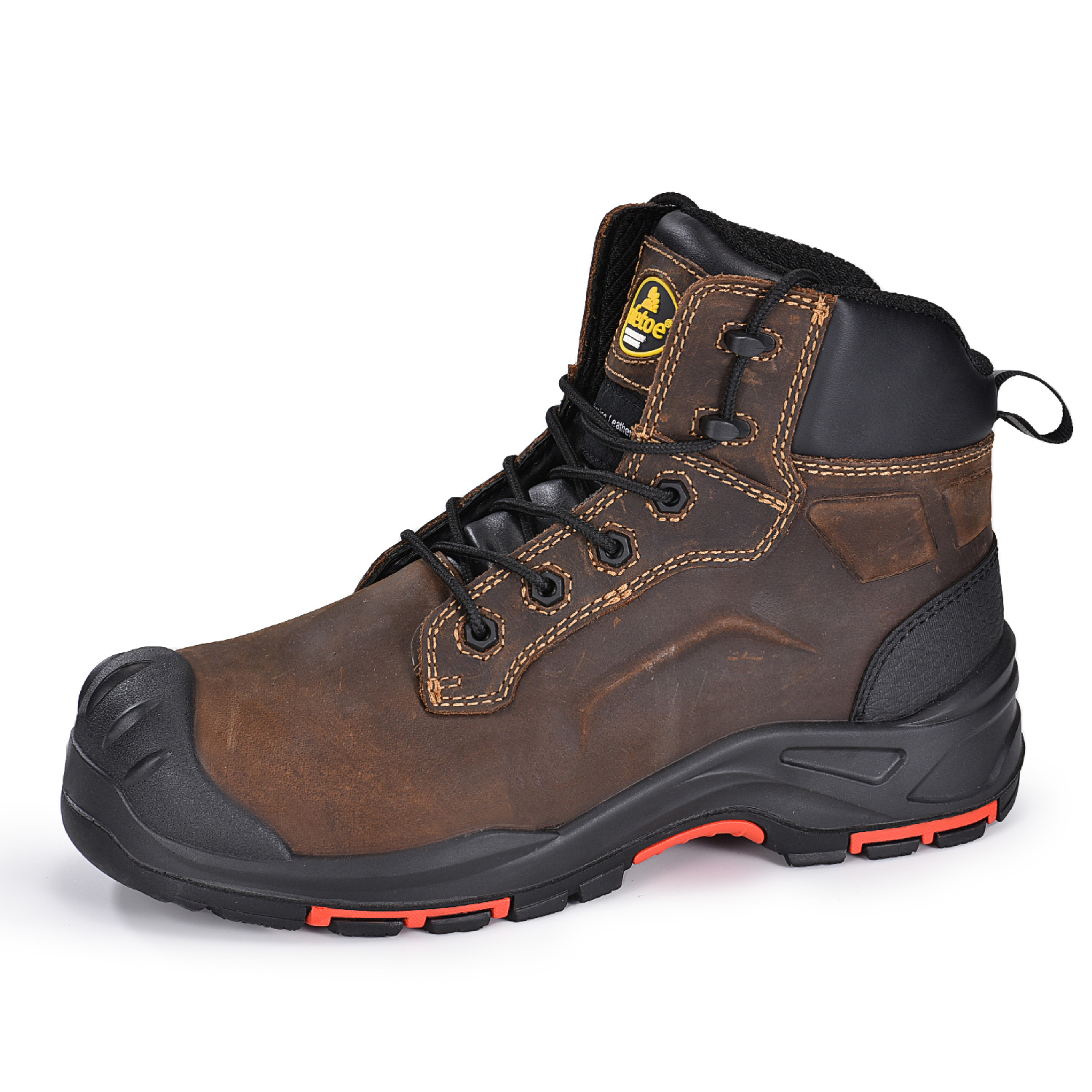
UNDERGROUND
M-8552
Metal-Free Mining Safety Boots
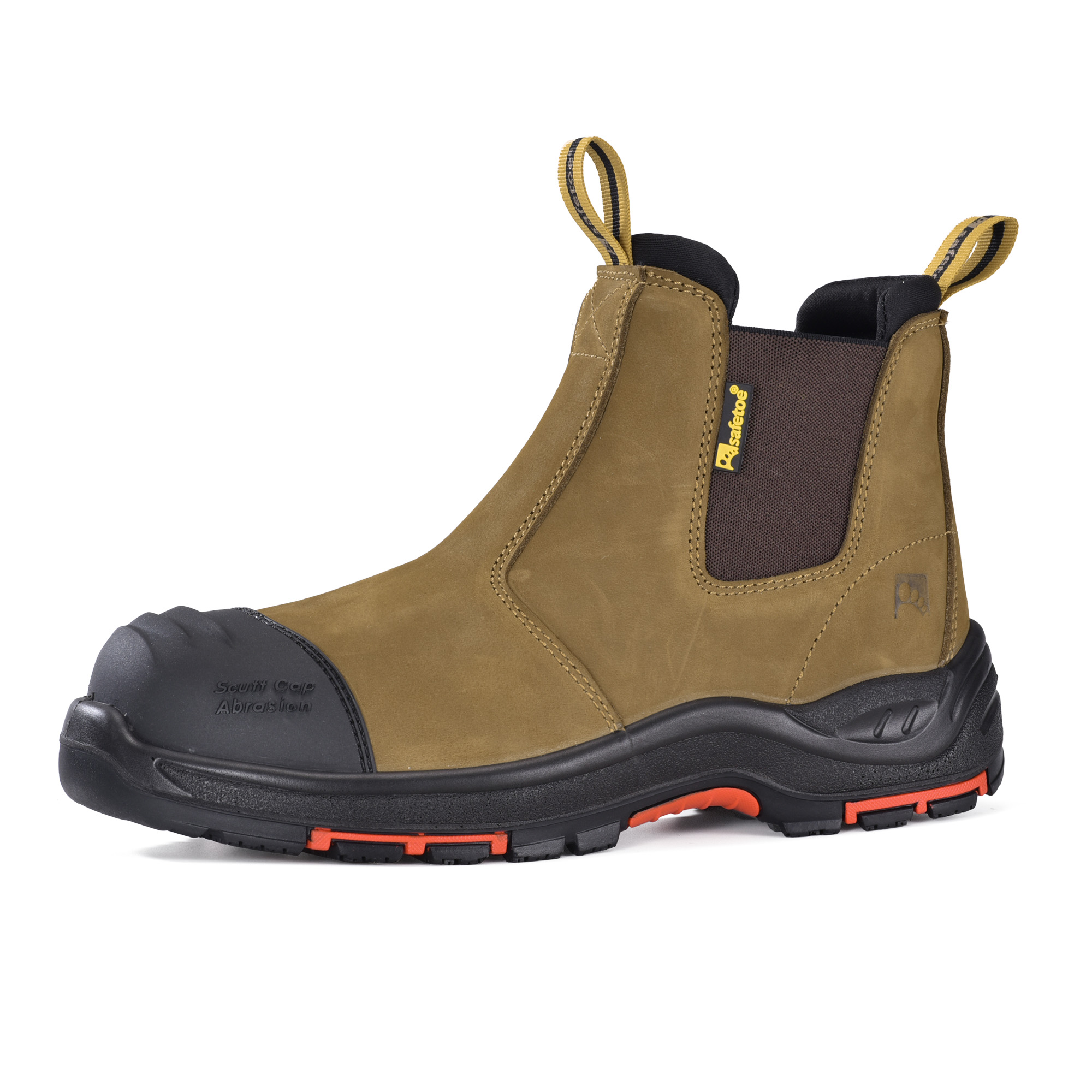 OPEN-PIT
M-8025NB
Slip-On Mining Safety Boots
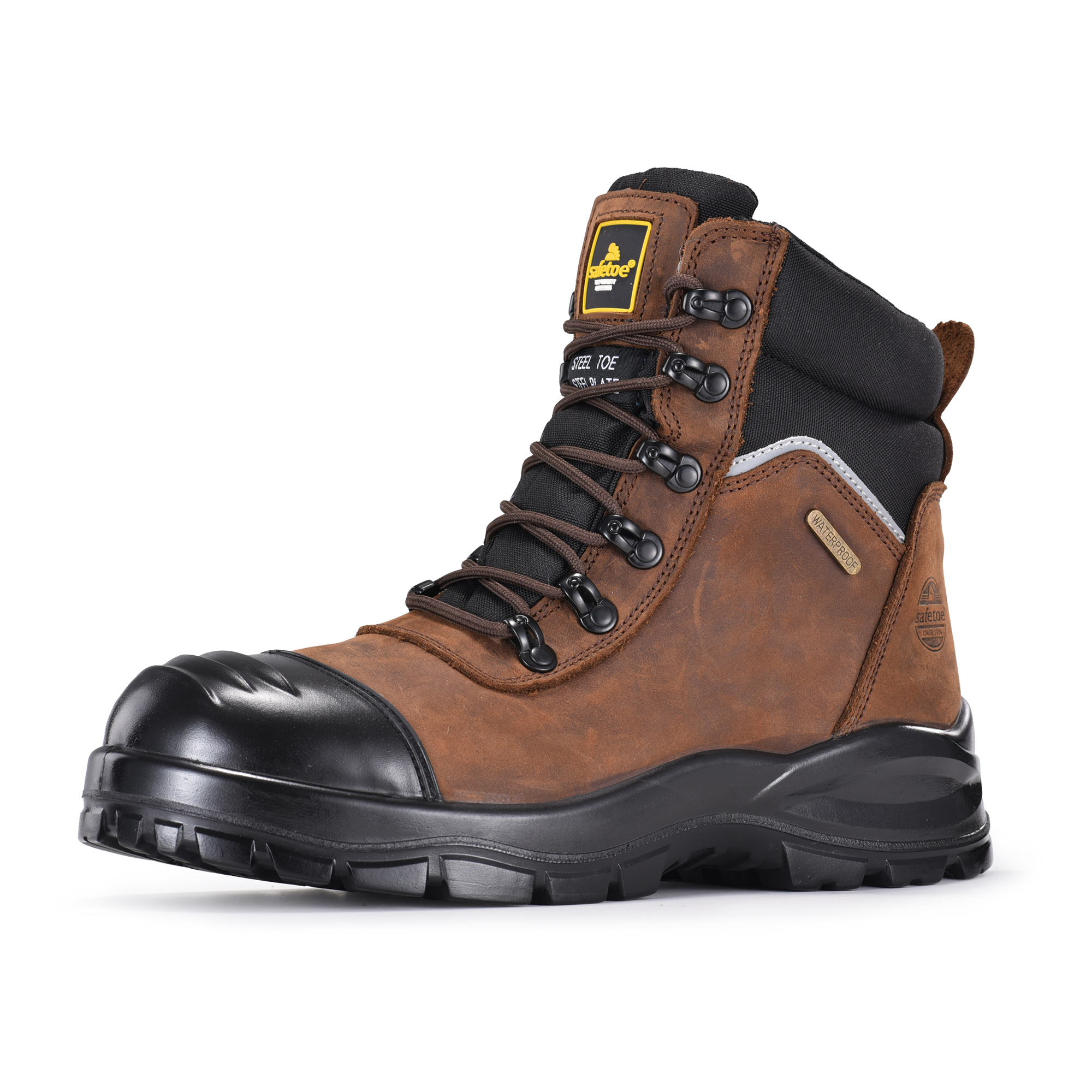
QUARRY
M-8577
Heavy-Duty Mining Safety Boots
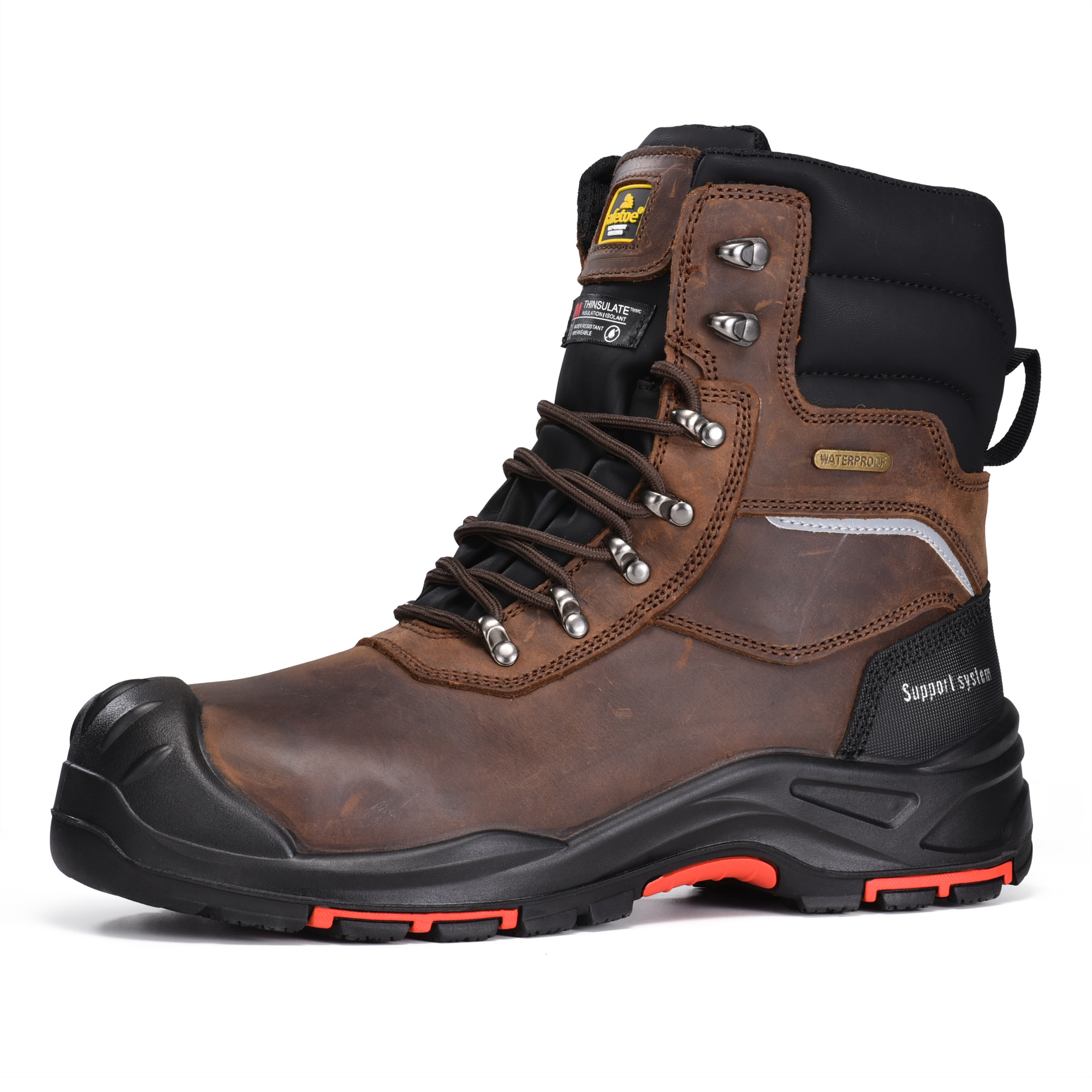
COLD CLIMATE
H-9552
Insulated Waterproof Mining Boots
View All Mining & Resources Work Boots →
Mining Safety Footwear Standards and Project Requirements
Mining footwear requirements vary by country, employer, mine operator and project specification. Buyers should verify both the applicable safety footwear standard and the exact protection classification required for the intended application.
Common frameworks include:
Compliance with one standard does not automatically mean that a product meets another standard or every mining project requirement. Protection categories, optional properties and test methods vary between markets.
Before bulk procurement, buyers should review the certificate or test report for the exact model, relevant technical datasheet, product construction and any site-specific PPE specification. Sample evaluation and controlled field trials may also help assess fit, comfort and practical performance.
Choosing Mining Boots by Worksite, Not by Label
There is no single safety boot configuration for every mining environment.
Underground mining may place greater emphasis on moisture protection, grip and puncture resistance. Open-pit operations often require durability, support and comfort across rough outdoor terrain. Quarry work can demand strong protection against rock, abrasion and impact, while cold-climate mining introduces insulation and waterproofing considerations.
The final selection should be based on the actual worksite risk assessment, required certification, verified product documentation and worker fit.
Explore Mining Safety Footwear Solutions or View Mining & Resources Work Boots.
Frequently Asked Questions
FAQ 1
What boots are best for underground mining?
The most suitable underground mining boots depend on the hazards identified in the worksite risk assessment. Important features may include protective toe caps, puncture-resistant components, slip-resistant outsoles and water-resistant or waterproof construction where required. Buyers should also verify the exact model’s certification, fit and suitability for the intended working conditions.
FAQ 2
What is the difference between underground and open-pit mining boots?
Underground mining boots often place greater emphasis on moisture protection, outsole grip and puncture resistance because workers may encounter wet ground, mud and sharp debris. Open-pit mining boots may prioritize durability, stable support, mobility and long-shift comfort across rough outdoor terrain. The final footwear configuration should always be selected according to the specific worksite risks and project requirements.
FAQ 3
What should quarry workers look for in safety boots?
Quarry workers may require safety boots with toe impact protection, puncture resistance, durable upper materials and robust outsoles suited to abrasive, rocky surfaces. Slip resistance may also be important on loose or dusty ground. Buyers should evaluate the actual quarry conditions and confirm the tested protective properties of the specific model before purchasing.
FAQ 4
Do all mining safety boots require the same certification?
No. Certification requirements vary by country, employer, mine operator and project specification. Depending on the target market, relevant standards may include EN ISO 20345, ASTM F2413, CSA Z195 or AS/NZS 2210.3. Buyers should verify the required standard, protection classification and supporting documents for the exact model being supplied.
Article Summary
Underground mines, open-pit operations and quarries expose workers to different footwear hazards. This article compares the protection priorities for each mining environment, helping safety managers and industrial buyers select suitable mining safety boots for real worksite conditions.
Author: Jay Yuan, Technical Marketing Director, Safetoe
Author Bio: Jay Yuan writes about industrial safety footwear, PPE standards and worksite protection solutions, helping global buyers understand footwear performance, compliance and application requirements across demanding industries.

 English


