Oil and gas projects across the Middle East expose workers to a combination of workplace hazards, including oily floors, wet metal platforms, sharp debris, falling equipment and demanding outdoor conditions. Selecting the right safety boots is essential for matching footwear protection to these specific working environments.
This guide explains the key features to consider when choosing oil and gas safety boots and compares three Safetoe models: M-8552, H-9437 and H-9552. Each model offers a different combination of protection, construction and workplace suitability for oilfield, refinery, maintenance and cold-weather applications.
Explore Safetoe's Oil & Gas Safety Footwear Solutions for additional product and worksite information.
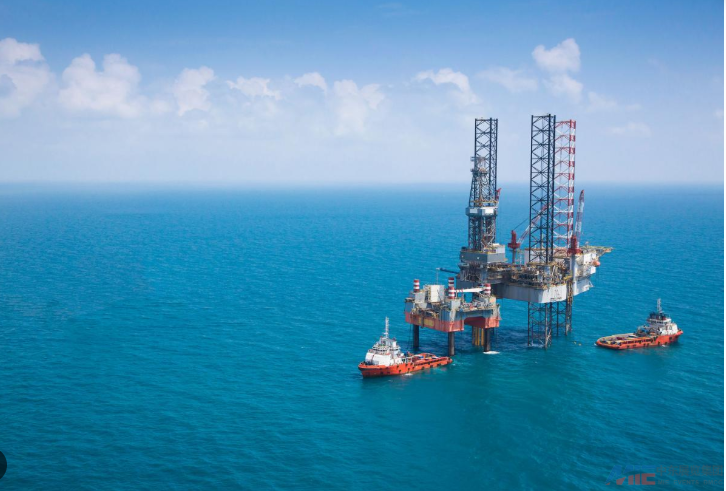
1. Oil & Gas / Middle East Projects: Who Needs Safety Boots and Where Are They Used?
Safety boots in the oil & gas industry are commonly worn by:
● Oil drilling and natural gas rig workers
● Refinery and LNG site maintenance teams
● Pipeline installation, welding, and repair crews
● EPC contractor on-site construction teams
● Equipment installation workers, warehouse staff, and forklift operators
Typical high-risk zones in Middle East oil & gas projects include:
● Metal walkways / steel structure platforms
● Oily ground and wet areas
● Areas with falling tools or heavy equipment
● Environments with rebar, metal chips, sharp debris
● Long shifts and extended walking routes
2. Key Risks in Oil, Heat, and Metal Platforms: What Features Must Oil & Gas Safety Boots Have?
Oil & gas worksites have intense conditions and multiple hazards. The best way to choose boots is to match Risk → Required Function:
✅ 1)Oily Surfaces: Must Be Oil-Resistant + Slip-Resistant
When choosing safety boots for oily industrial environments, buyers should check:
● Documented oil and fuel resistance of the outsole
● Tested slip-resistance performance for the specific footwear model
● Outsole design and tread pattern suitable for the expected surface conditions
✅ 2) Metal Platforms / Debris Areas: Must Be Puncture-Resistant
Metal scraps, sharp edges, and debris are common in oil & gas projects, making puncture injuries a serious concern:
● Choose safety footwear with a certified puncture-resistant midsole and a classification that matches the project specification. Verify the specific puncture-resistance marking and supporting test documentation for each model.
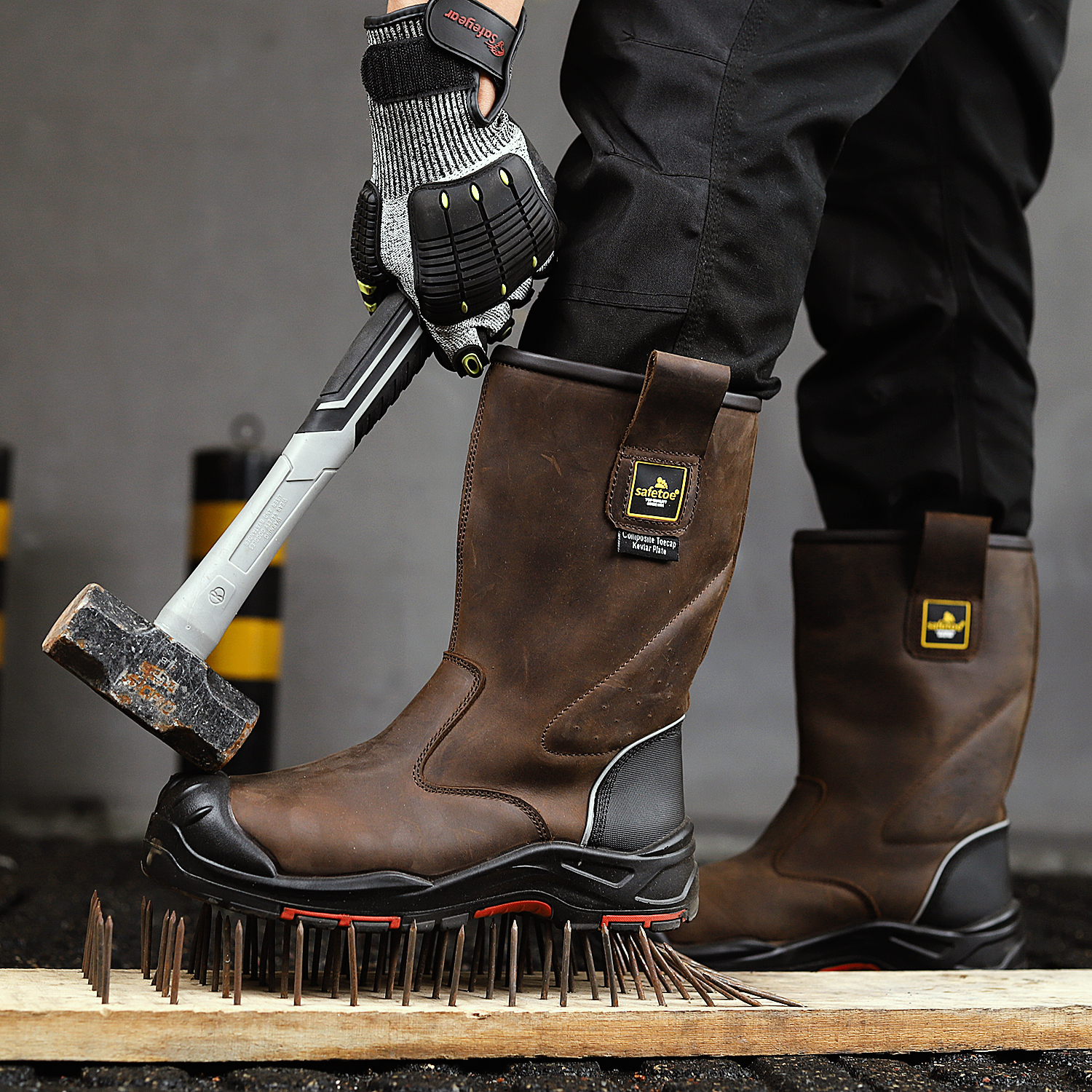
● Non-metallic puncture-resistant midsoles can provide underfoot protection against nails, metal fragments and sharp industrial debris. Safetoe's FlexBarrier™ Puncture Protection Technology is used in compatible safety footwear models.
✅ 3) Falling Objects, Heavy Equipment & Hot-Work Hazards
Welding and heavy equipment installation are frequent operations in oil & gas zones:
● Certified safety toe protection should match the impact and compression hazards identified at the worksite.
● High-cut footwear can provide additional ankle coverage, although boot height alone does not guarantee prevention of ankle injuries.
● Where workers are exposed to hot surfaces, verify whether the footwear has the required HRO-rated outsole performance and supporting test documentation.
✅ 4) Long Working Hours: Must Have Shock Absorption + Anti-Fatigue Comfort
In Middle East projects, workers often wear boots 8–12 hours per day, so comfort directly impacts productivity:
● Look for shock-absorbing midsoles + memory foam insoles
● Choose lining, cushioning and moisture-management features according to the climate and working conditions. Waterproof construction is important where water exposure is expected, while breathability and fit should also be considered in hot working environments.
3. Three Recommended Safetoe Oil & Gas Safety Boots for Middle East Projects
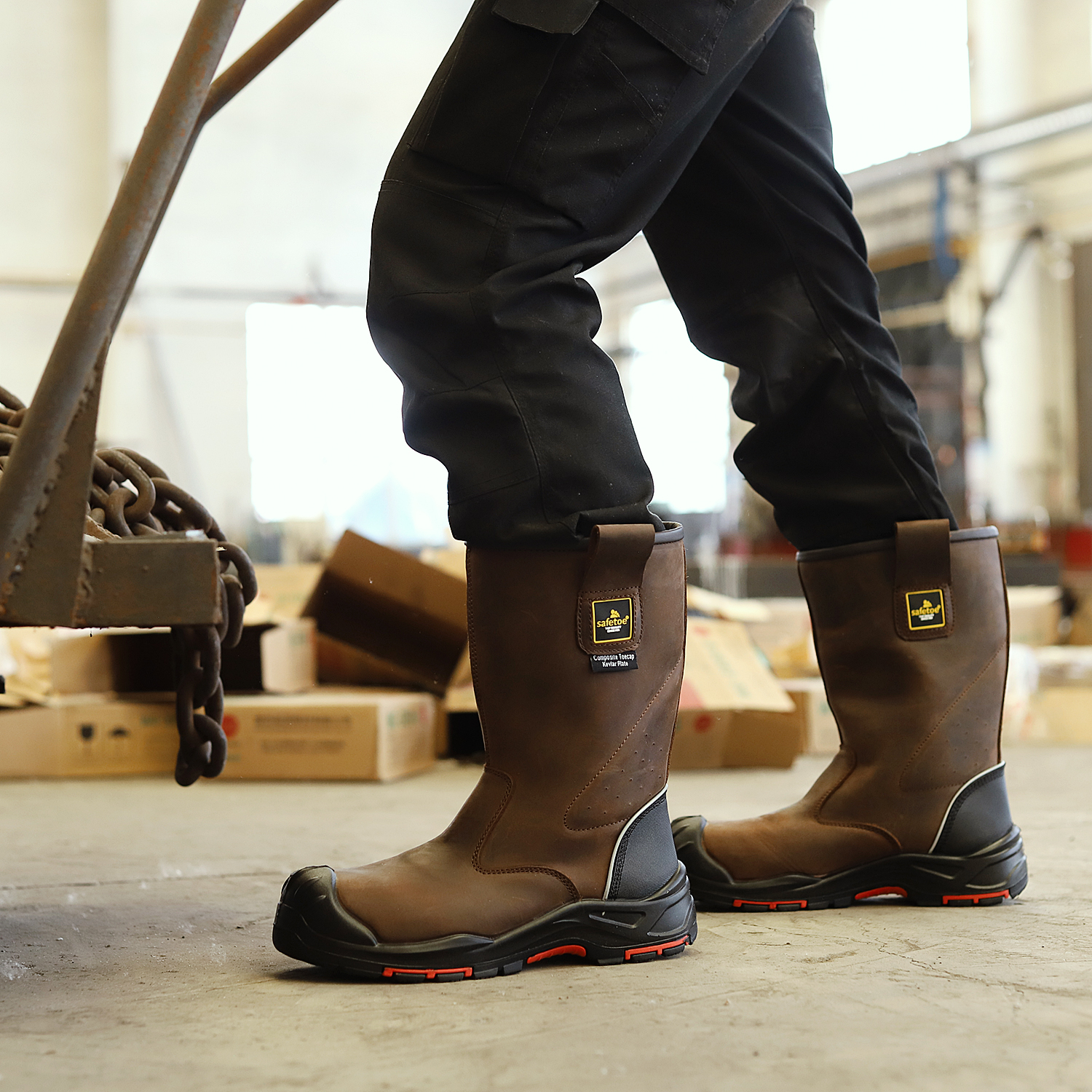
The three Safetoe models below offer different protection configurations for oil and gas applications. M-8552 and H-9552 are listed as S7S models, while H-9437 is listed as S3S under EN ISO 20345:2022+A1:2024. Their suitability depends on the specific worksite hazards, project requirements and applicable certification documents.
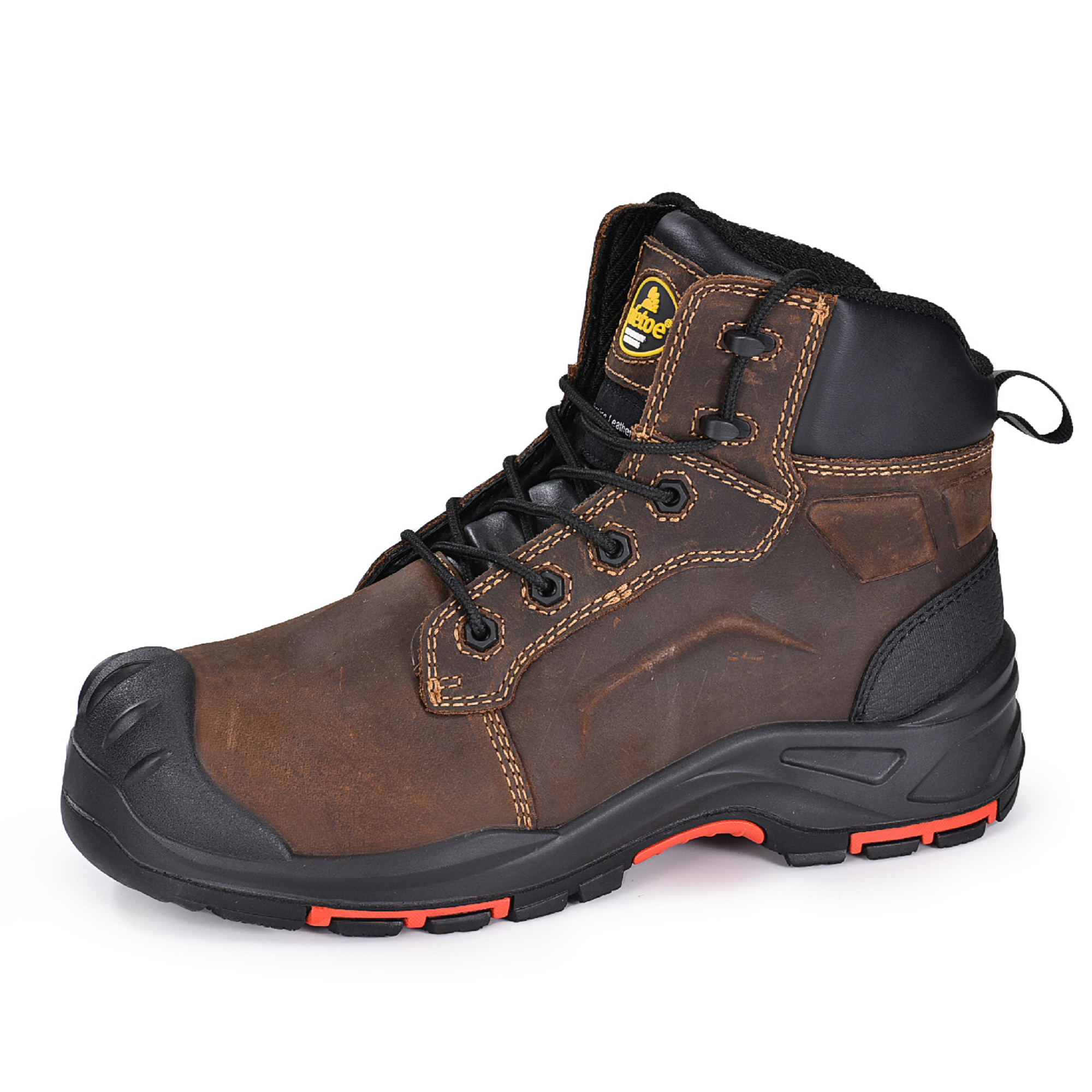
Recommendation #1: M-8552 — Waterproof Metal-Free Safety Boots for Oil & Gas
Best for: Oilfield drilling / refineries / offshore facilities / pipeline maintenance / demanding industrial environments
Key Benefits
1. Oil-Resistant and Slip-Resistant Outsole
M-8552 features an oil- and slip-resistant PU/rubber outsole designed for demanding industrial environments where surface contamination and wet conditions may affect footing.
2. Composite Toe and Puncture Protection
The boot combines VortiGard™ composite toe protection with a FlexBarrier™ puncture-resistant midsole to address common impact and underfoot penetration hazards.
3. Waterproof Construction and Long-Shift Comfort
M-8552 uses full-grain crazy horse cow leather, a Sanvlar-Tex™ waterproof membrane and an anti-fatigue memory foam insole to support protection and wearing comfort in demanding working conditions.
Primary Role: Waterproof Multi-Hazard Oil & Gas Protection
M-8552 is a versatile option for oil and gas applications where waterproof construction, toe protection and puncture resistance are required.
➡️ View M-8552 Waterproof Oil & Gas Safety Boots
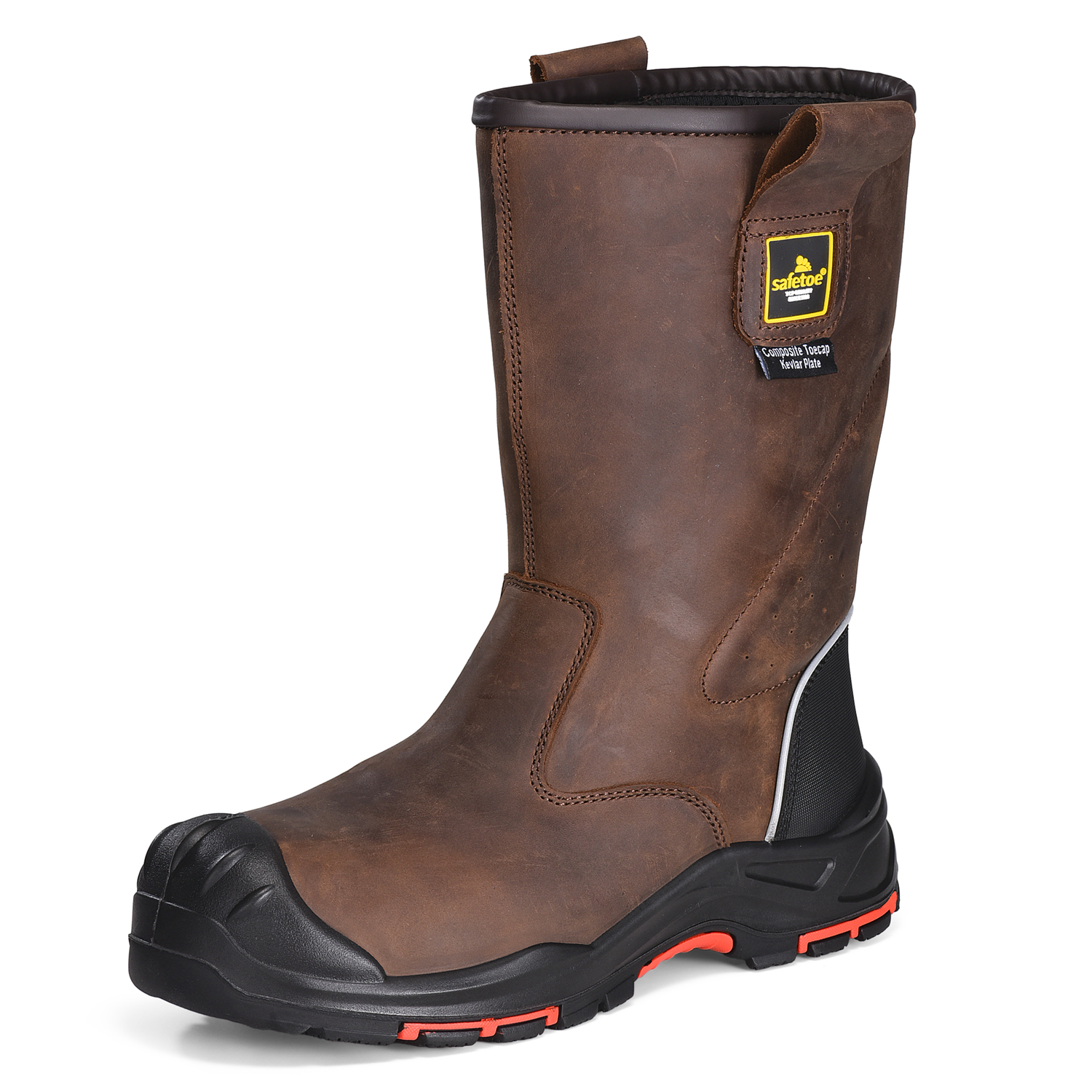
Recommendation #2: H-9437 — S3S Rigger Safety Boots for Traditional Oilfield Work
Best for: Traditional oilfield work / petrochemical maintenance / natural gas operations / industrial equipment handling
Key Benefits
1. Oil- and Slip-Resistant Outsole
H-9437 features a PU/nitrile rubber injection outsole designed for demanding industrial environments where oil exposure and slippery surfaces may be present.
2. Pull-On Rigger Design
The rigger-style construction offers practical coverage and convenient wearing for workers who need durable footwear during long industrial shifts.
3. Full-Grain Leather and Breathable Lining
The full-grain crazy horse cow leather upper is combined with BactiVoid™ breathable sandwich mesh lining to support everyday industrial wear and moisture management.
4. Composite Toe and Puncture Protection
VortiGard™ composite toe protection and the FlexBarrier™ puncture-resistant midsole provide protection against workplace impact and underfoot hazards.
Primary Role: Rigger-Style Industrial Protection
H-9437 is a practical option for traditional oilfield and industrial applications where a pull-on design, mechanical protection and breathable lining are required.
View H-9437 S3 Rigger Safety Boots
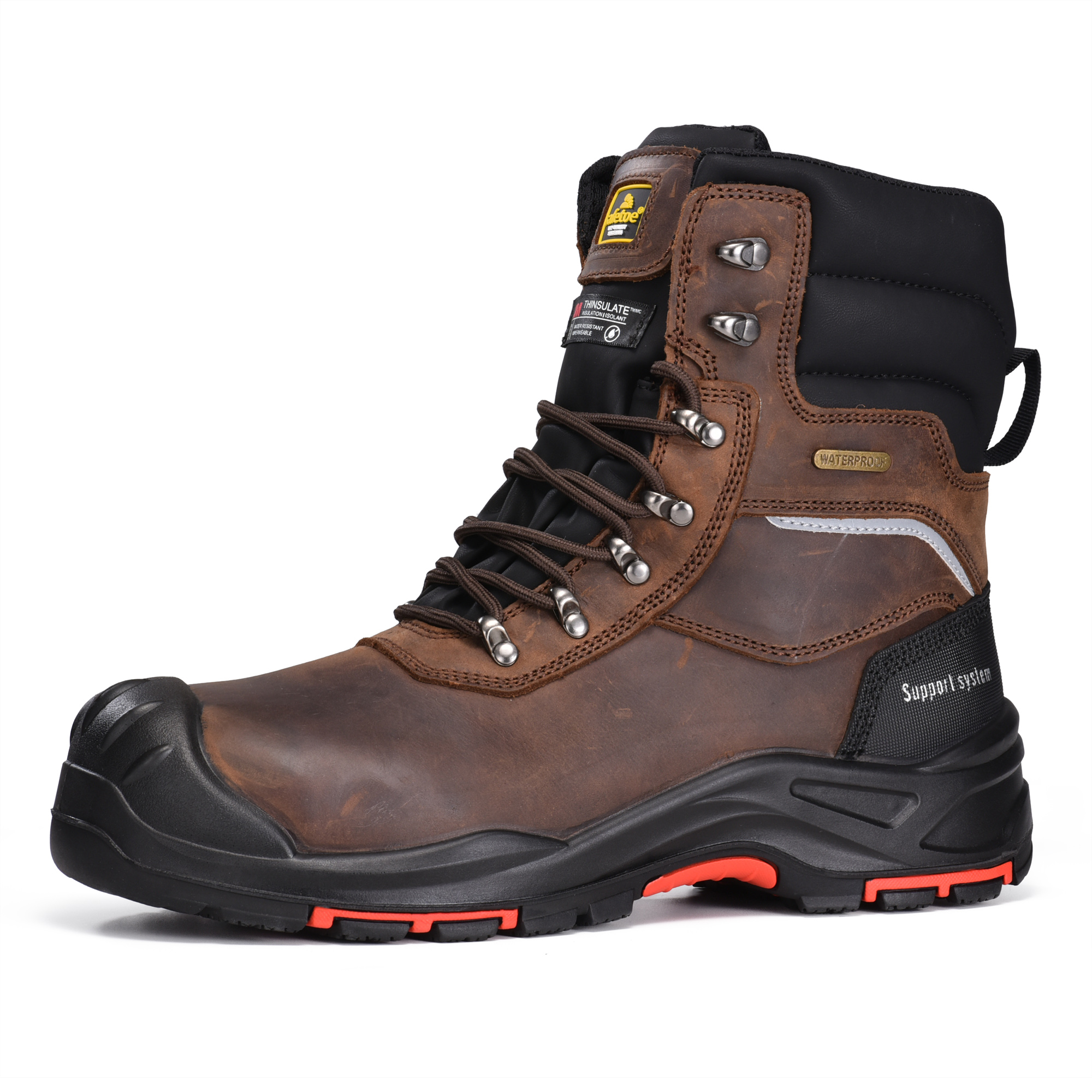
Recommendation #3: H-9552 — Insulated S7S Safety Boots for Cold-Weather Oil & Gas Work
Best for: Cold-weather oilfield operations / winter outdoor work / cold storage / low-temperature industrial environments
Key Benefits
1. 3M Thinsulate™ Thermal Insulation
H-9552 features 3M Thinsulate™ insulation designed for cold-weather industrial applications. The product specification lists -30°C cold resistance and provides a supporting cold-test document.
2. Waterproof Construction and Comfort
The boot combines a leather upper, Sanvlar-Tex™ membrane construction and an anti-fatigue memory foam insole for cold and wet working environments.
3. S7S Safety Protection
H-9552 combines VortiGard™ composite toe protection, FlexBarrier™ puncture-resistant midsole construction and an oil- and slip-resistant PU/rubber outsole.
Primary Role: Insulated Protection for Cold Environments
H-9552 is intended for cold-weather applications where thermal insulation and waterproof footwear construction are important considerations.
View H-9552 Insulated Oil & Gas Safety Boots
4. Standards & Certifications: What Documents Do Oil & Gas Projects Usually Require?
Safety footwear classification should be selected according to the project specification and workplace risk assessment. There is no single classification that is automatically suitable for every oil and gas application.
For example, the current Safetoe product specifications list:
M-8552: S7S
H-9437: S3S
H-9552: S7S
Buyers should verify the complete model-specific certification and performance markings before approving footwear for a project.
Common certification systems include:
See the EN ISO 20345 Safety Footwear Certification Guide for more information.
5. Quick Selection Checklist
Before selecting safety boots for an oil and gas project, check:
☐ Does the footwear classification match the project specification (e.g. S3S or S7S where applicable)?
☐ Is the outsole suitable for the expected oil and wet-surface exposure?
☐ Does the model have documented slip-resistance performance?
☐ Does it include a certified puncture-resistant midsole where required?
☐ Does the toe protection meet the required impact and compression rating?
☐ Is waterproof construction necessary for the working environment?
☐ Is additional thermal insulation required for cold-weather operations?
☐ Does the footwear provide a suitable fit and comfort level for extended shifts?
☐ Are the certificates and technical documents available for the exact model?
6. FAQ: Oil & Gas Safety Boots Questions
Q1: Do oil & gas workers really need S3 boots?
A: Not automatically. The required footwear classification depends on the actual hazards and project specifications. Buyers should check toe protection, puncture resistance, water protection, slip performance and the specific certification of each model before making a selection.
Q2: What matters most on oily floors?
A: Check both the outsole's documented oil or fuel resistance and the footwear model's slip-resistance performance. The outsole material, tread design and tested performance should all be considered according to the workplace conditions.
Q3: Are composite toe caps safe enough?
A: Yes, provided the composite toe cap meets the applicable safety footwear requirements. Composite toe caps are non-metallic, but this does not automatically make the complete boot electrically insulating or EH-rated. Electrical protection must be verified through the certification and testing of the complete footwear model.
Q4: Who should wear high-cut boots?
A: High-cut or rigger-style boots may be suitable for workers who need additional ankle coverage, such as certain oilfield, maintenance and industrial workers. The appropriate boot design should be determined by the worksite hazards and required footwear specification.
Q5: Will boots feel too hot in Middle East conditions?
A: Consider breathable lining, moisture management, suitable sizing and underfoot comfort. Waterproof construction should be selected where water exposure requires it, while additional insulation should be reserved for genuinely cold working environments.
Q6: Which Safety Boots Are Suitable for Cold-Weather Oil & Gas Work?
A: Insulated models such as H-9552 are designed for cold-weather applications, with 3M Thinsulate™ insulation and waterproof construction. Buyers should review the product's cold-test documentation and select footwear according to the actual temperature and working conditions.
7. Contact & Purchase
Looking for Safety Boots for Your Middle East Oil & Gas Project?
Safetoe provides professional safety footwear for oilfields, refineries, offshore operations and industrial maintenance teams.
Explore our product range:
Oil & Gas Safety Boots: https://www.safetoe.net/oil-gas-safety-boots
Oil & Gas Safety Footwear Solutions: https://www.safetoe.net/worksite-solutions/oil-gas-safety-boots
Contact Safetoe: https://www.safetoe.net/contactus.html
For wholesale inquiries, project quotations, product samples and technical documentation, contact the Safetoe team directly.
WhatsApp: +86 181 1626 8656




 English


