Electrical Safety Footwear Requirements Change by Jobsite
Electrical work takes place in very different environments, from outdoor utility networks and substations to power plants, factories and indoor maintenance areas. Electrical hazard protection may be a primary requirement, but it is rarely the only footwear consideration. Workers can also face sharp ground debris, wet or uneven surfaces, heavy equipment, long walking distances, climbing and changing weather.
For buyers, this means electrical safety footwear should match both the electrical requirement and the physical work environment. A boot designed for outdoor power distribution may not be the best choice for a technician working long shifts inside a warm factory.
This guide compares utility and distribution, substations, power plants and industrial electrical work, and indoor maintenance to show how footwear priorities change by jobsite.
→ Electrical Safety Footwear Solutions
Why Electrical Footwear Requirements Vary by Worksite
Electrical hazards may be shared, but secondary worksite hazards differ.
Utility and power distribution work is commonly performed around outdoor electrical infrastructure, where workers may encounter changing terrain, weather exposure and frequent movement.
Substations combine electrical equipment with industrial walking surfaces, inspection routes and maintenance activities. The environment may be more controlled than field utility work, but slip, impact and long-standing requirements still matter.
Industrial electrical work takes place inside factories, power plants and other industrial facilities where workers may operate around heavy equipment, hard floors, tools and maintenance debris.
Therefore, “electrical work” should not be treated as one single footwear application. The electrical requirement may be similar, while the physical hazard profile and working conditions can be very different.
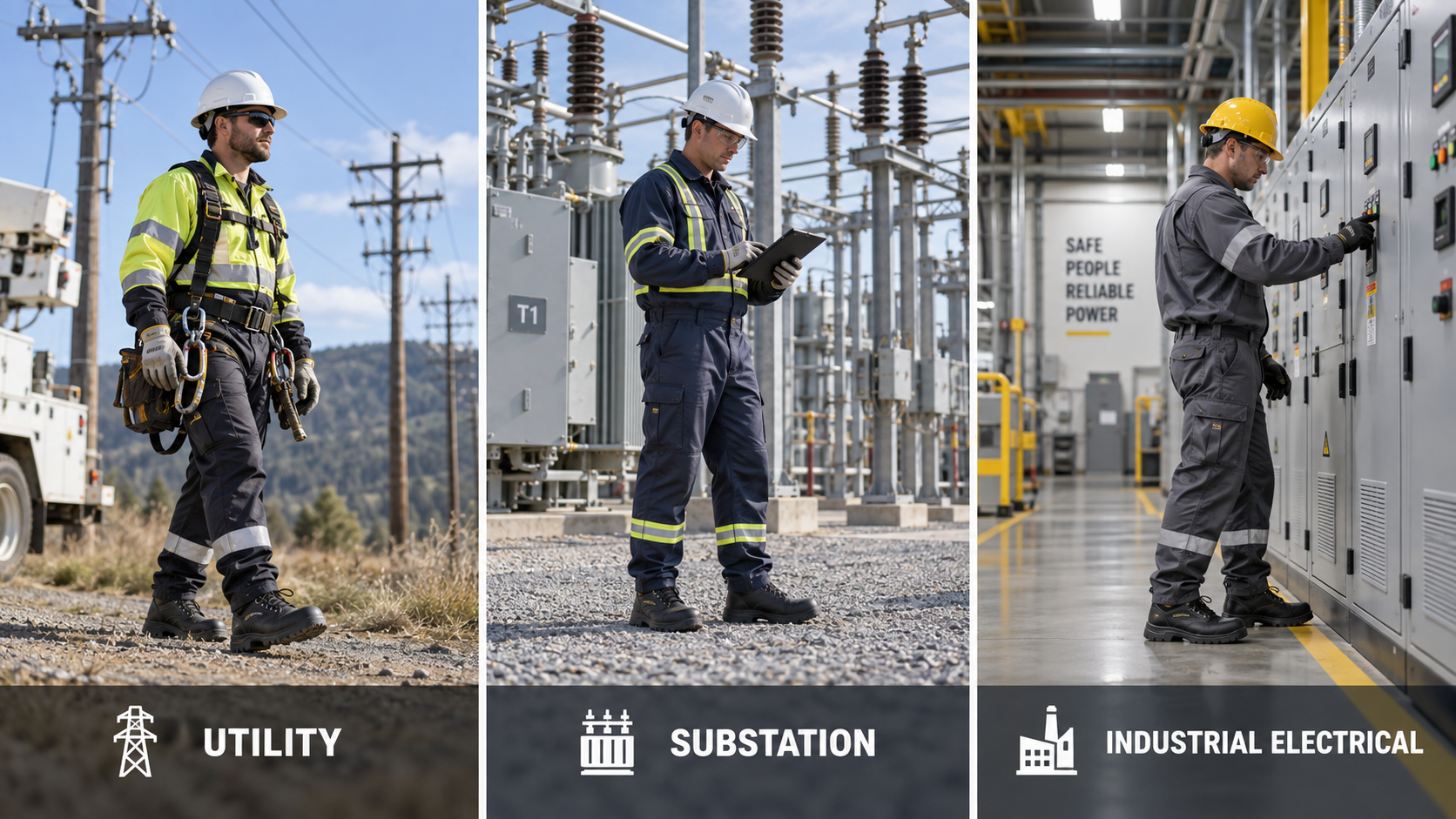
1. Utility & Power Distribution Safety Boots
For utility and power distribution crews, one of the biggest footwear challenges is the combination of electrical work, outdoor mobility and variable terrain.
Workers may move between poles, distribution equipment, service areas and construction sites while walking across gravel, mud, wet ground or uneven surfaces. Rain and changing weather can add further demands during long outdoor shifts.
Priority footwear features may include:
Puncture protection is particularly relevant where workers may encounter nails, metal fragments or other sharp debris around installation and maintenance areas. Reliable outsole grip is also important when moving between different surfaces or climbing during field work.
However, heavier footwear is not automatically better. Utility boots should provide the required protection while maintaining enough stability and mobility for frequent walking and movement.
For this application, Safetoe's M-8356RB EH Safety Boots are positioned for electrical contractors and electrical work where protective performance must be combined with practical worksite support.
2. Substation Safety Boots
Substation work creates a different footwear requirement from outdoor power distribution.
Instead of constantly changing terrain, workers generally operate around electrical equipment, industrial walking surfaces, inspection routes and maintenance areas. This shifts the footwear focus toward stable footing, slip performance and long-shift wearability.
Priority features may include:
Toe protection may be important where tools, components or maintenance materials create impact risks. Puncture resistance should also be considered where sharp debris is present, but it should not automatically be treated as a requirement for every substation.
Comfort is another important procurement consideration. Technicians may spend long periods standing or walking on hard industrial surfaces. Fit, cushioning and support can therefore affect how practical the footwear is over an entire shift.
For buyers, the key selection logic is:
Electrical Equipment + Industrial Surfaces + Maintenance Activities
The exact footwear configuration should still be determined by the site's risk assessment and project requirements.
3. Power Plant & Industrial Electrical Safety Boots
Power plants, factories and other industrial electrical facilities can combine electrical maintenance with significantly heavier physical hazards.
Workers may operate around industrial machinery, tools, steel structures, hard walking surfaces and maintenance debris. As a result, electrical hazard protection is only one part of the overall footwear requirement.
Priority features commonly include:
EH Protection
Toe Impact Protection
Puncture Resistance
Slip Resistance
Long-Shift Comfort
Impact protection becomes particularly important where tools, components or equipment may fall or roll onto the foot. Puncture protection may also be required in maintenance zones where sharp industrial debris is present.
On hard or potentially contaminated walking surfaces, outsole grip and stable contact with the ground should also be considered.
Comfort should not be treated as an optional feature. Workers may wear their safety footwear for extended shifts, so excessive weight, poor fit or inadequate cushioning can reduce long-term wearability.
Safetoe positions the M-8552EH Pro Industrial EH Safety Boots for heavier industrial electrical applications, helping establish a clearer role for the model in industrial and premium EH work environments.
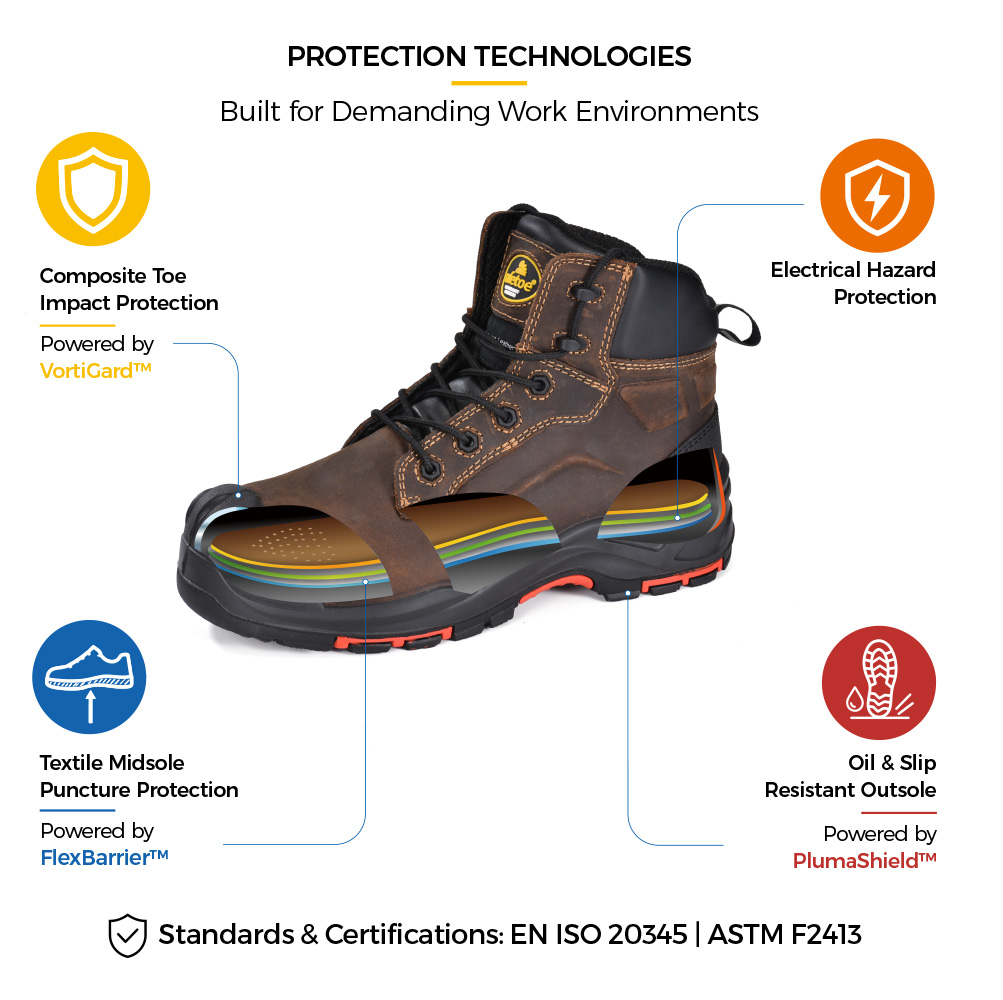
The key principle illustrated here is:
Electrical safety footwear needs more than electrical protection alone.
What About Indoor Electrical & Maintenance Work?
Not every electrical job requires a heavy, high-cut safety boot.
For indoor electrical maintenance, electrical assembly and warm factory environments, terrain and weather exposure may be limited. Workers may instead spend long periods walking or standing indoors.
In these conditions, buyers may prioritize:
A lighter safety shoe can provide a more suitable balance when heavy outdoor protection is unnecessary.
Safetoe's L-7536EH Lightweight Electrical Safety Shoes focus on lightweight performance, while the L-7296EH Breathable Electrical Safety Shoes are positioned for breathable performance and warmer electrical work environments.
The principle is simple: electrical safety footwear does not become better simply by becoming heavier. The footwear should match the actual jobsite.
Quick Comparison: Electrical Safety Footwear by Jobsite
| Electrical Worksite | Main Conditions | Priority Footwear Features |
| Utility / Distribution | Outdoor terrain, weather, frequent movement | EH + Puncture + Grip + Support |
| Substation | Electrical equipment, industrial surfaces | EH + Slip + Toe + Comfort |
| Power Plant / Industrial | Heavy equipment, maintenance, hard surfaces | EH + Impact + Puncture + Comfort |
| Indoor Electrical Work | Long wear, warm indoor conditions | EH + Lightweight + Breathability |
This comparison should be used as a selection framework rather than a universal specification. Final footwear requirements should always reflect the workplace risk assessment, employer requirements and applicable project standards.
EH Rating, Metal-Free Construction & Safety Standards
EH protection and metal-free construction are not the same concept. Metal-free describes the material or component configuration of the footwear, while electrical protection must be verified according to the applicable test and certification requirements.
Before bulk procurement, buyers should confirm the electrical protection required by the market, employer, end user or project specification and review certification or test documentation for the actual model.
For North American projects, buyers may need to review ASTM F2413 or CSA Z195. Other markets may specify EN ISO 20345 or AS/NZS 2210.3 requirements.
The applicable requirement should always be confirmed before footwear selection.
Match Electrical Safety Footwear to the Jobsite
Electrical protection may be the common starting point, but the right footwear configuration depends on the physical work environment.
For utility work, terrain, weather and mobility deserve greater attention. Substation work combines electrical requirements with industrial surfaces and maintenance activities. Power plants and industrial facilities may require stronger impact and puncture protection, while indoor electrical work can place greater emphasis on lightweight construction and breathability.
For procurement teams, the most reliable approach is to evaluate the jobsite first, confirm the required electrical protection, and then select footwear that matches the complete risk profile.
→ Explore Electrical Safety Footwear Solutions
→ View Electrical Safety Boots

 English


