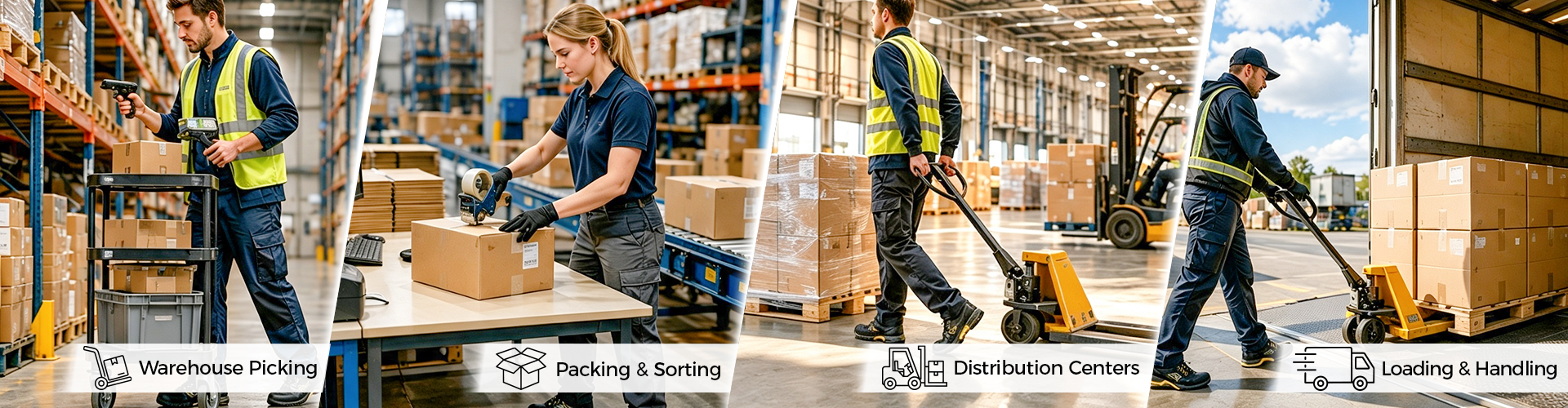
Warehouse and logistics workers perform different tasks throughout the day. Order pickers may walk continuously, packing workers may spend long periods standing, while supervisors often move between offices and warehouse floors. Some workers may also need to change footwear when entering different work areas.
These differences influence which warehouse safety shoes are most practical for each role.
Safety sneakers, slip-on safety shoes and lace-up safety shoes offer different advantages in mobility, convenience, fit and comfort. However, footwear style alone does not determine protective performance.
The right choice depends on the job—not simply the footwear style.
Explore Logistics & Warehousing Safety Footwear for footwear options designed for different warehouse and logistics applications.
Common Foot Hazards in Warehousing & Logistics Operations
Before comparing footwear designs, buyers should understand the workplace conditions that influence safety footwear requirements.
Although warehouse operations differ by facility and job role, several common hazards may affect footwear selection.
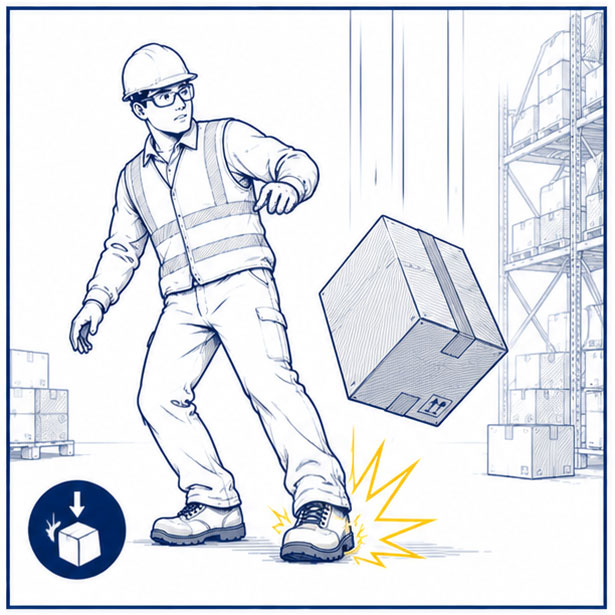 | 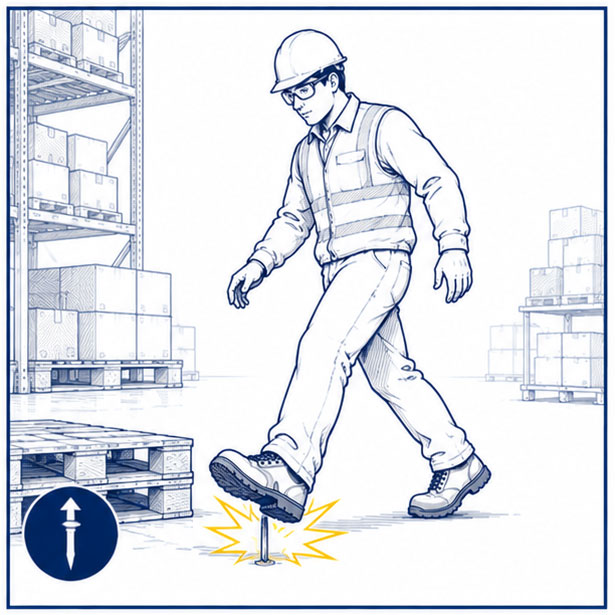 | 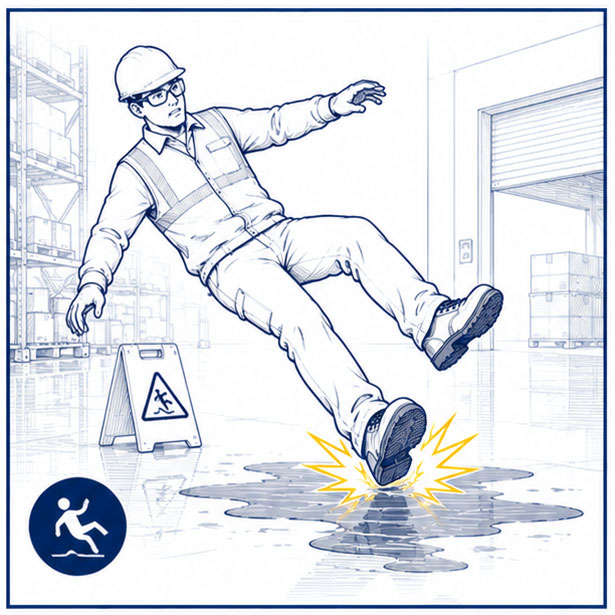 | 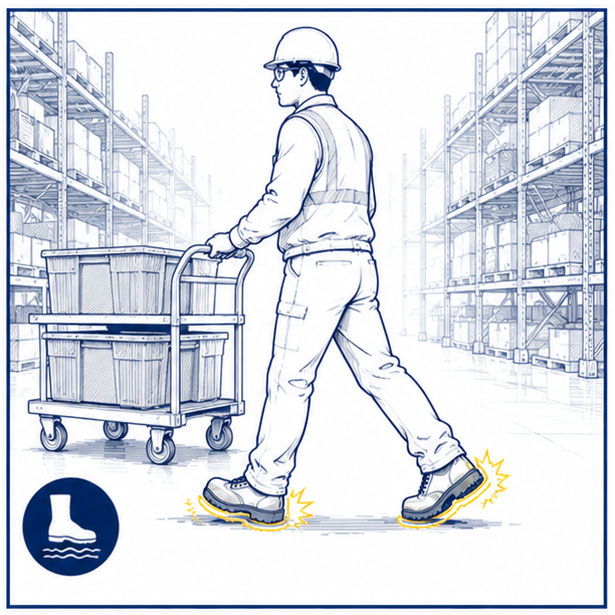 |
Falling Objects & Impact Hazards | Sharp Objects & Puncture Hazards | Slippery Warehouse Floors | Long Working Hours & Foot Fatigue |
What Matters Most in Warehouse Safety Footwear?
Before comparing footwear designs, buyers should identify the protection requirements and daily activities associated with each warehouse role.
Several factors can influence footwear selection:
Protection: Toe protection, penetration resistance and slip resistance where required by the worksite risk assessment.
Weight: Footwear weight may influence how the shoes feel during repeated movement.
Mobility: The design should accommodate the walking, bending and movement involved in daily tasks.
Fit & Stability: Proper sizing and secure foot retention are important for comfortable movement.
Ease of Entry: Some roles may benefit from footwear that is easier to put on and remove.
Long-Shift Comfort: Cushioning, fit and breathable materials may contribute to wearing comfort during extended shifts.
The required protection level should always come first. Footwear style can then be evaluated according to the worker's movement, tasks and working environment.
Safety Sneakers: A Practical Option for High-Mobility Warehouse Roles
Safety sneakers combine athletic-inspired footwear styling with protective features that vary by model.
They may be considered for warehouse roles involving frequent walking and movement, including order picking, fulfillment, inventory handling and certain delivery activities.
Potential Advantages
Lightweight Construction
Some safety sneakers use lightweight materials and components. However, actual footwear weight depends on the model, size and protective construction.
Flexible Movement
Athletic-inspired designs may support comfortable movement during tasks involving frequent walking and changes in direction.
Breathable Materials
Mesh or other breathable upper materials may help improve airflow, depending on footwear construction and working conditions.
Walking Comfort
Cushioning, fit and sole flexibility can influence comfort during extended walking periods.
What Should Buyers Consider?
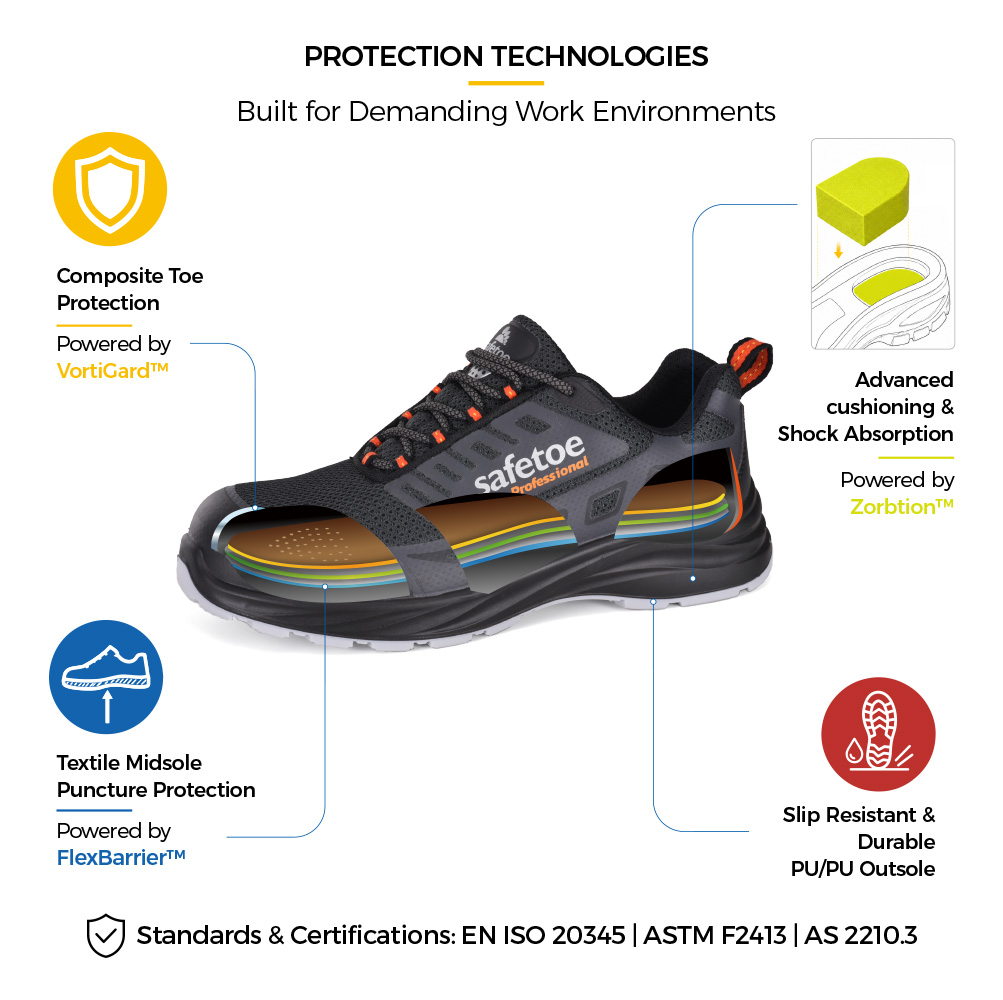
A sneaker-style appearance does not determine the level of protection.
Buyers should verify the protective toe cap, penetration resistance, slip-resistance performance and applicable certification where required.
For example, the SAFETOE L-7571 Lightweight Safety Sneakers are a product option for buyers evaluating sneaker-style safety footwear for warehouse and logistics work.
The model's actual protection features and suitability should be confirmed against the intended workplace requirements.
Slip-On Safety Shoes: A Convenient Option for Frequent Footwear Changes
Slip-on safety shoes are designed without conventional lace-up fastening, allowing wearers to put them on and remove them more conveniently.
This design may be useful for certain inspection, supervisory, light maintenance and other warehouse roles where footwear changes are frequent.
Potential Advantages
Easy On and Off
Slip-on construction can simplify footwear changes compared with traditional lace-up designs.
No Loose Shoelaces
The absence of conventional laces eliminates the need to tie or retie them during use.
Convenient Everyday Use
For appropriate tasks, slip-on footwear may offer a practical balance between convenience and workplace protection.
What Should Buyers Consider?

Convenience should not come at the expense of secure fit.
Slip-on safety shoes should provide appropriate heel retention and a secure fit during the movements required by the job.
Buyers should consider sizing, foot shape, walking requirements and the protective features of the specific model.
The SAFETOE L-7561 Slip-On Safety Shoes are one option for buyers considering slip-on safety footwear for suitable warehouse applications.
Before selection, buyers should review the model's confirmed specifications and determine whether its fit and protection meet the intended worksite requirements.
Lace-Up Safety Shoes: A Practical Choice for Adjustable Fit
Lace-up safety shoes remain a common footwear design for warehouse and industrial applications.
Their main advantage is the ability to adjust fastening tension across the upper, helping wearers achieve an appropriate fit.
Potential Advantages
Adjustable Fit
Laces allow wearers to adjust tightness according to foot shape and personal fit requirements.
Secure Foot Retention
When properly fitted and fastened, lace-up footwear can provide secure foot retention during regular workplace movement.
Versatile Design
Lace-up safety shoes are available in different upper materials, sole constructions and protective configurations.
Suitable for General Warehouse Tasks
Depending on the model, lace-up footwear may be considered for picking, packing, stock handling and general warehouse activities.
What Should Buyers Consider?

Lace-up footwear generally takes longer to put on and remove than slip-on designs.
Shoelaces should also be properly fastened and maintained to avoid loose or trailing laces.
For buyers considering traditional lace-up footwear, the SAFETOE Logistics & Warehousing Safety Footwear Collection includes options such as the L-7296.
As with other footwear styles, the exact model specifications should be verified before procurement.
Safety Sneakers vs Slip-On vs Lace-Up: Quick Comparison
The following table compares general design characteristics of the three footwear styles.
| Factor | Safety Sneakers | Slip-On Safety Shoes | Lace-Up Safety Shoes |
| Mobility | Athletic-inspired designs | Depends on fit and construction | Depends on fit and construction |
| Quick On/Off | Depends on fastening | Generally convenient | Usually requires lace adjustment |
| Fit Adjustment | Depends on closure design | Often more limited | Adjustable lace tension |
| Lightweight Options | Available | Available | Available |
| Long Walking | May suit high-mobility roles | Depends on fit and comfort | Depends on fit and comfort |
| Frequent Shoe Changes | Depends on closure | Often convenient | Less convenient |
| Typical Warehouse Applications | Picking, fulfillment, logistics | Inspection, supervision, suitable maintenance tasks | General warehouse and stock handling |
These are general design characteristics. Actual protection, weight, fit and comfort depend on the specific footwear model.
No footwear style should be considered universally superior without evaluating the intended tasks and working conditions.
Protection Still Comes Before Footwear Style
Whether choosing safety sneakers, slip-on shoes or lace-up footwear, protective performance should remain the first consideration.
Warehouse and logistics operations may involve falling materials, moving equipment, sharp debris or slippery surfaces.
Depending on the identified hazards, relevant footwear features may include:
Protective toe caps
Penetration-resistant inserts
Tested slip resistance
Suitable outsole construction
Applicable safety footwear certification
SAFETOE provides information about protective footwear technologies, including VortiGard™ Toe Protection and PlumaShield™ Slip-Resistant Technology.
These technologies should not be assumed to be present in every SAFETOE model. Buyers should check the specific product's technical information and supporting documentation.
Footwear style is a matter of design and usability, while protective performance must be verified separately.
Frequently Asked Questions (FAQs)
1. Are safety sneakers suitable for warehouse work?
Yes, safety sneakers may be suitable for warehouse work when the specific model meets the required workplace protection standards. Buyers should verify protective features, fit and certification rather than relying on the sneaker-style appearance alone.
2. Are slip-on safety shoes safe for warehouse workers?
Slip-on safety shoes can be suitable for certain warehouse roles when they provide the required protection and a secure fit. Heel retention, sizing and movement requirements should be evaluated before selection.
3. Are lace-up safety shoes better than slip-on safety shoes?
Neither style is universally better. Lace-up safety shoes offer adjustable fastening, while slip-on designs generally provide greater convenience when putting footwear on or removing it. The appropriate choice depends on fit, job tasks and required protection.
4. What safety shoes are best for warehouse workers who walk all day?
Workers who walk frequently may benefit from appropriately fitted footwear with suitable cushioning, weight, flexibility and breathable construction. Safety sneakers and lightweight lace-up shoes are possible options, but comfort and protection should be evaluated for the specific model and wearer.
5. Do all warehouse workers need steel toe safety shoes?
No. The required toe protection depends on the workplace risk assessment, employer requirements and applicable standards. Where protective toe caps are required, steel, composite or aluminum options may be available, provided the selected model meets the necessary performance requirements.
Final Recommendation: Which Type Should Buyers Choose?
There is no single best footwear style for every warehouse worker.
Safety sneakers may be practical for walking-intensive roles. Slip-on safety shoes can offer convenience where frequent footwear changes are needed. Lace-up safety shoes provide adjustable fastening for workers who prefer greater control over fit.
For industrial buyers, the best approach is to confirm workplace protection requirements first, then compare footwear design, fit and comfort.
Explore our Logistics & Warehousing Safety Footwear Worksite Solutions, learn more about SAFETOE's Safety Footwear Technologies, or Contact SAFETOE to discuss your requirements, request product specifications, or receive a quotation.
Author: Jay Yuan
Author Bio:
Jay Yuan writes about industrial safety footwear, PPE standards, and workplace protection solutions, helping global buyers understand product features, safety requirements, and footwear selection for different working environments.

 English


