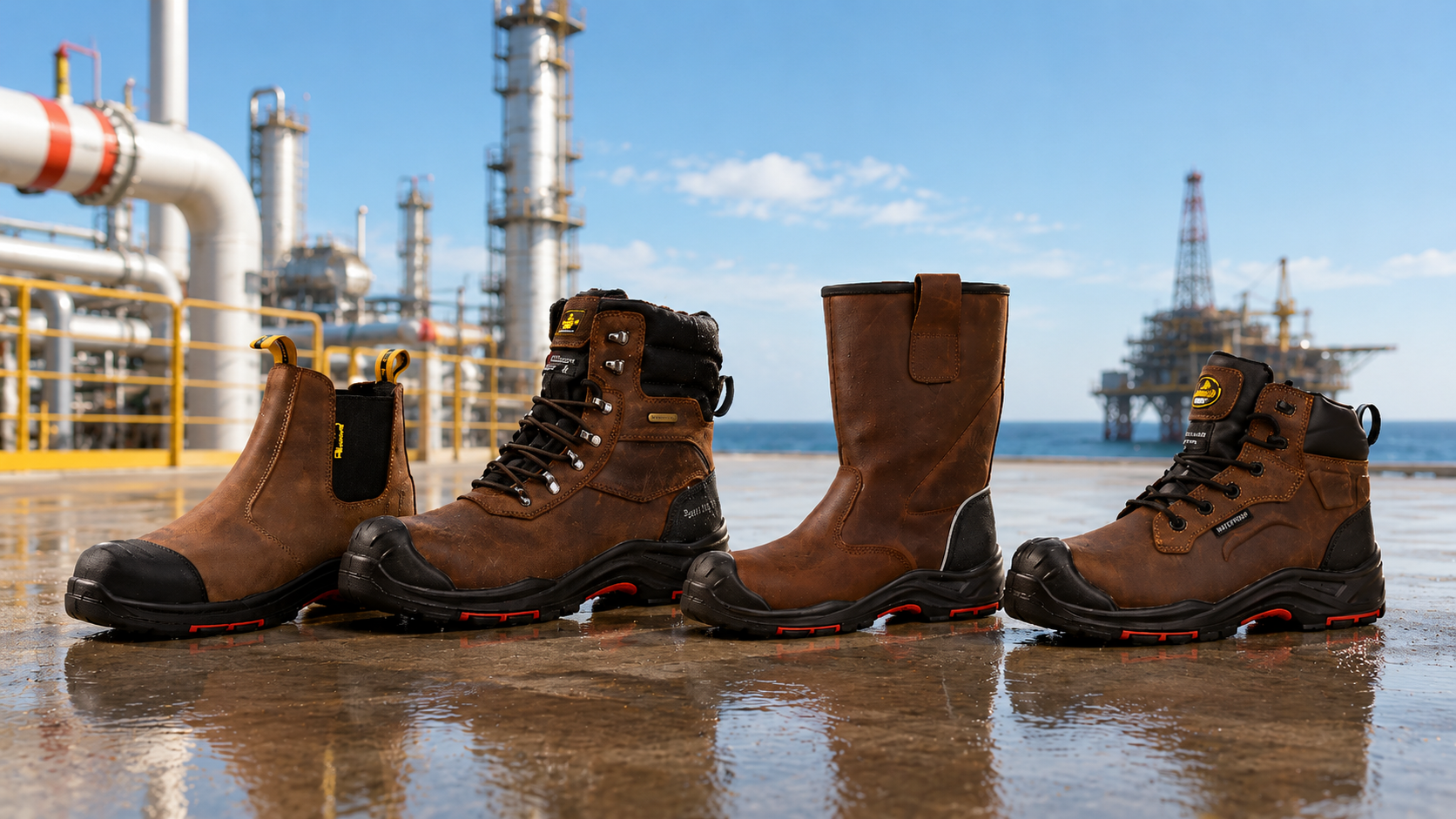
Oil and gas extraction involves specialised machinery, pipes, tools, vehicles and potentially hazardous materials. OSHA identifies struck-by and caught-between incidents, falls, hazardous energy, machinery and chemical exposure among the industry’s major hazards.
Tools, valves, pipe components and machine parts may fall or shift during lifting, maintenance and installation.
A certified safety toe helps reduce impact and compression injuries. Where the risk extends above the toe area, buyers should also consider metatarsal protection.
Safety footwear cannot replace lifting controls, exclusion zones or correct material-handling procedures.
Oil, Water and Slippery Surfaces
Oil, drilling fluids, rain and condensation can reduce traction on concrete, ladders and steel platforms.
PlumaShield™ combines specialised tread design with rubber outsole materials to support traction on oily and wet surfaces. It should be used together with spill control, housekeeping and marked walkways.
Nails and Sharp Industrial Debris
Cut metal, damaged grating, nails and maintenance waste may penetrate an ordinary outsole.
A certified puncture-resistant midsole such as FlexBarrier™ helps protect the underside of the foot while maintaining flexibility. The product’s puncture marking and test standard should be checked before purchase.
Heat and Hot Work
Refineries, pipelines and maintenance zones may expose footwear to hot surfaces, welding sparks and elevated temperatures.
HeatVanta™ supports heat-contact resistance at the outsole. However, work involving molten metal or severe welding splash may require specialist footwear certified for those specific hazards.
Water and Chemical Exposure
Sanvlar-Tex™ helps prevent external water penetration in rain, mud and wet working areas. Waterproof footwear is not automatically chemical-resistant.
Oil and gas operations may involve hazardous chemicals capable of causing burns or other exposure effects. Chemical footwear must therefore be selected using the safety data sheet, substance concentration and site risk assessment.
Fatigue During Long Shifts
Long periods of standing and walking may increase discomfort and affect movement. Cushioning, correct sizing and supportive insoles can improve wearing comfort, but fatigue management also requires suitable breaks, staffing and work organisation.
What Safety Footwear Can and Cannot Do
Safety boots can help reduce impact, puncture, slip, water and heat-related foot risks. They cannot prevent vehicle collisions, eliminate chemical exposure or replace engineering controls, training and safe operating procedures.
Suitable SAFETOE examples include M-8552 for wet refinery and pipeline work, H-9437 for offshore and oily areas, H-9552 for cold outdoor sites and M-8025NB for maintenance work. Product selection must still follow the workplace risk assessment.
Frequently Asked Questions
Can slip-resistant boots prevent every fall? No. They reduce footwear-related slip risk but cannot replace clean floors, safe access routes and fall-prevention controls.
Are leather oilfield boots chemical-resistant? Not automatically. Chemical resistance requires specific material compatibility and test evidence.

 English