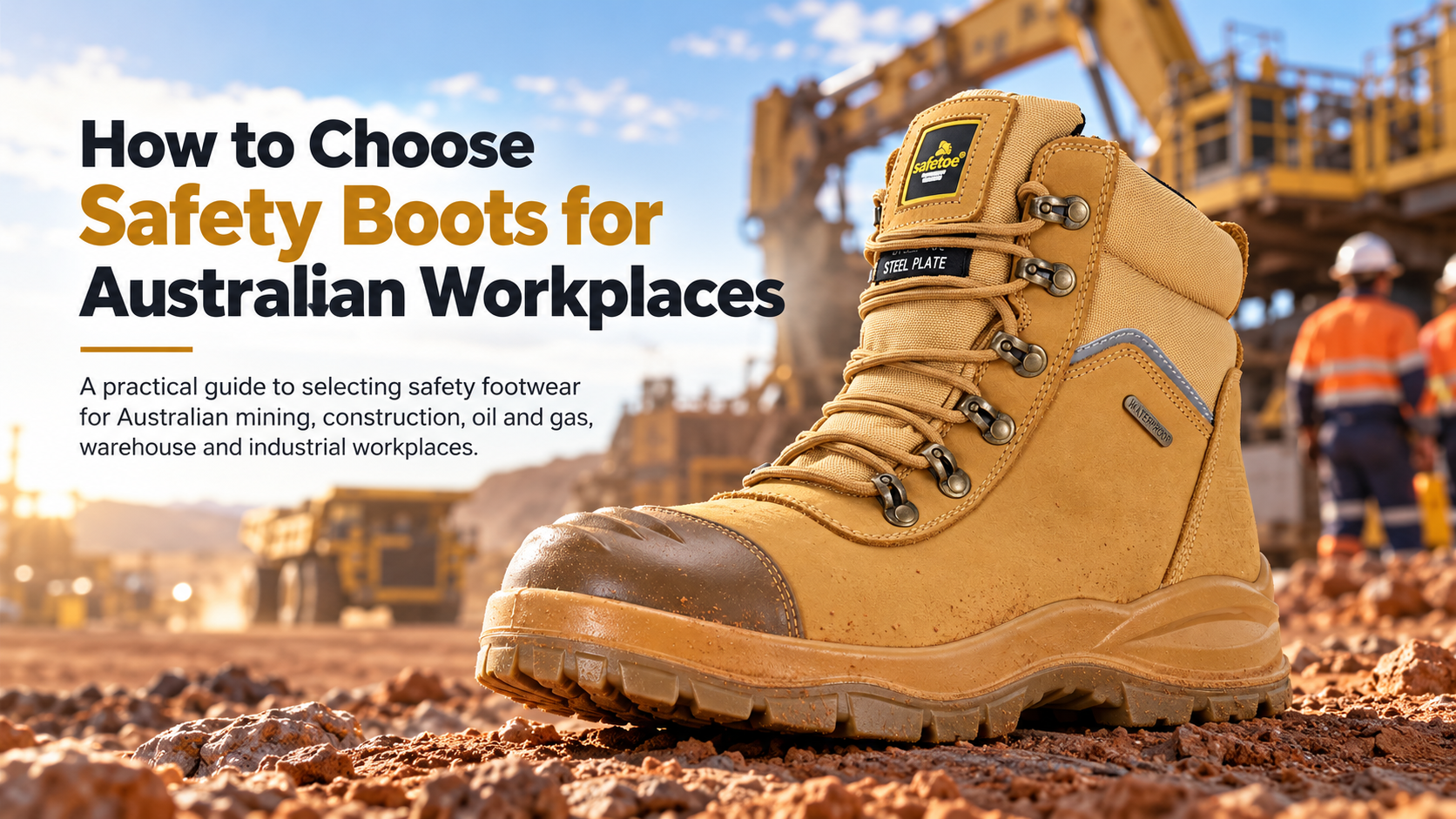
How to Choose Safety Boots for Australian Workplaces
Australian workplaces range from mines and construction sites to oil and gas operations, warehouses and manufacturing facilities. These environments do not require exactly the same footwear. Selection starts with jobsite hazards: falling materials, sharp debris, slippery surfaces, heat, oil exposure, ladder work and long-shift mobility. Match the required protection to the applicable standard and footwear design.
The best Australian safety boot is not the one with the most features, but the one matching the task. Explore Australian Standard Safety Footwear to compare Safetoe's Australian-market range.
What Safety Footwear Standard Do Australian Buyers Look For?
Australian buyers commonly specify AS 2210.3:2019, which sets basic and additional requirements for safety footwear. It superseded the earlier joint AS/NZS 2210.3:2009 standard.
Check the exact model, classification, protective properties and supporting certification or test documentation. A product-family name does not establish that every material, outsole or regional variant has identical coverage. Confirm the standard and edition required by the buyer, workplace or tender. Additional site requirements may apply beyond the standard's basic protection. For supporting information, review AS 2210.3 Certification.
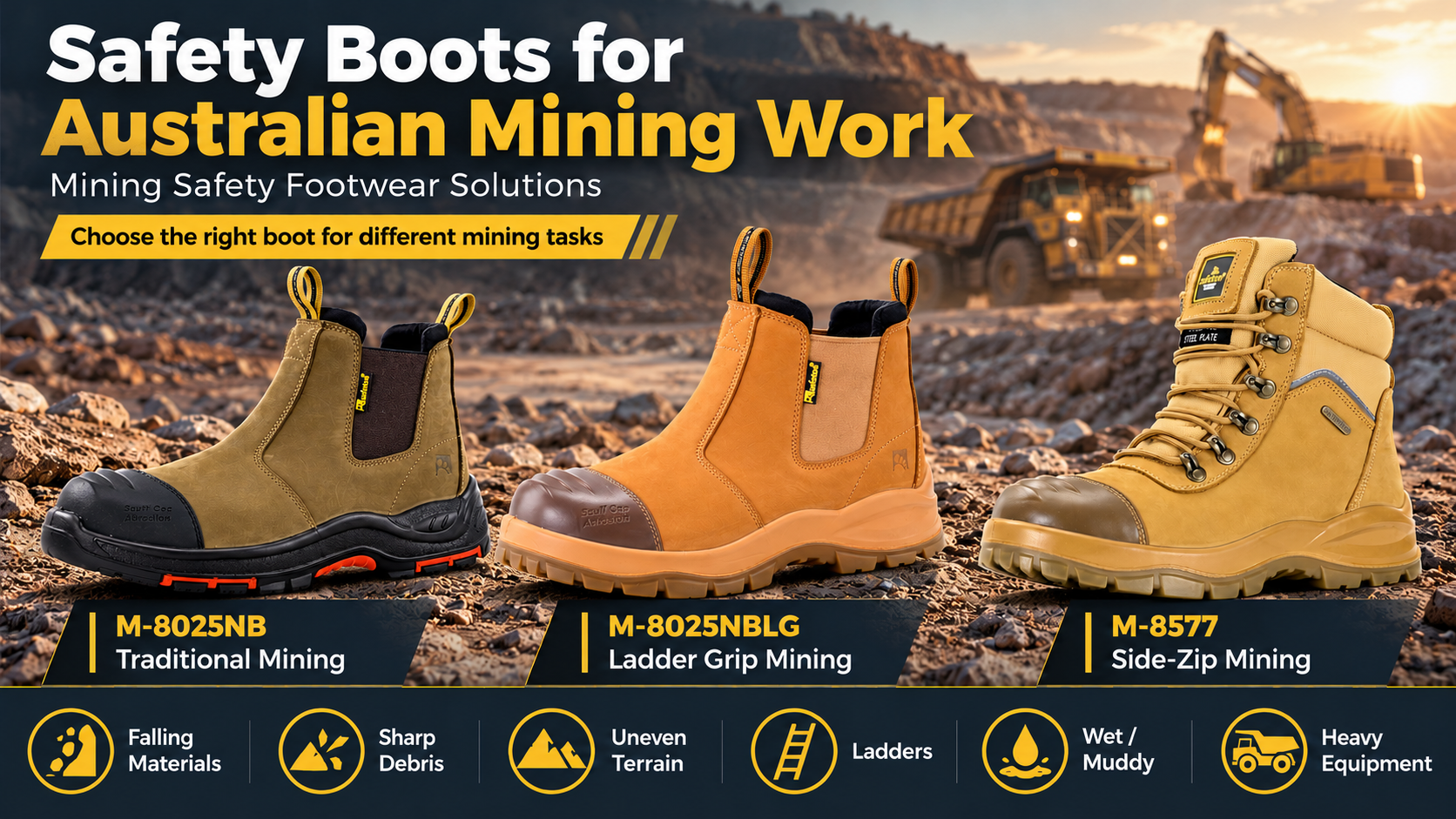
Safety Boots for Australian Mining Work
Mining can combine falling materials, sharp debris, uneven terrain, ladders, wet conditions and heavy equipment. Assess toe protection, puncture protection, traction, water exposure and fit together.
Three models offer distinct starting points:
M-8025NB: A traditional dealer-style mining boot direction.
M-8025NBLG: A ladder-grip option where outsole engagement with ladder rungs matters.
M-8577: A side-zip mining boot option for easier fitting and removal.
Ladder-grip features should be assessed against the actual ladder and site requirements. Side zips support convenience but do not establish protection or replace a secure fit. Use Mining Safety Footwear Solutions for application guidance, then verify the Australian version of each shortlisted model.
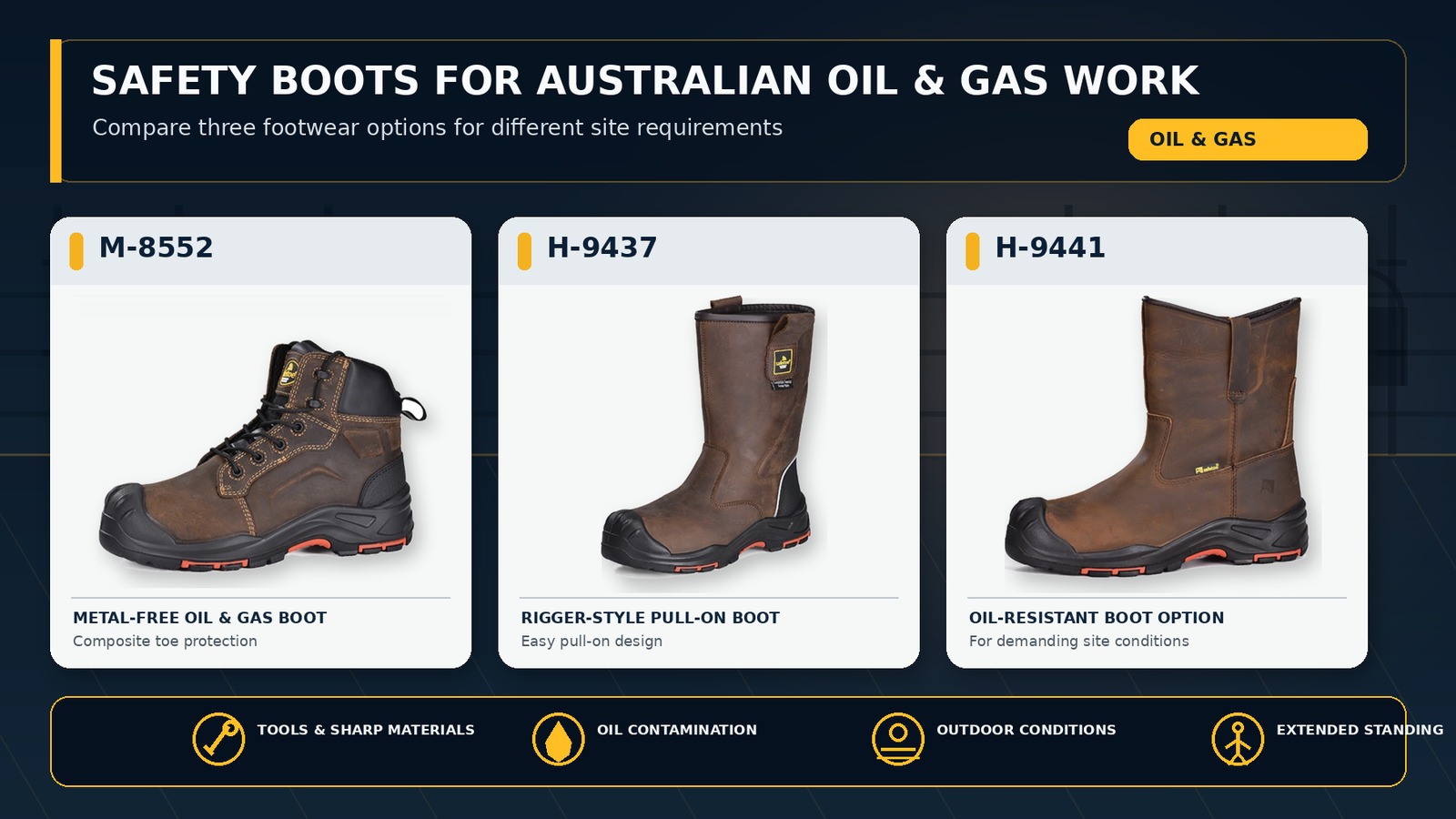
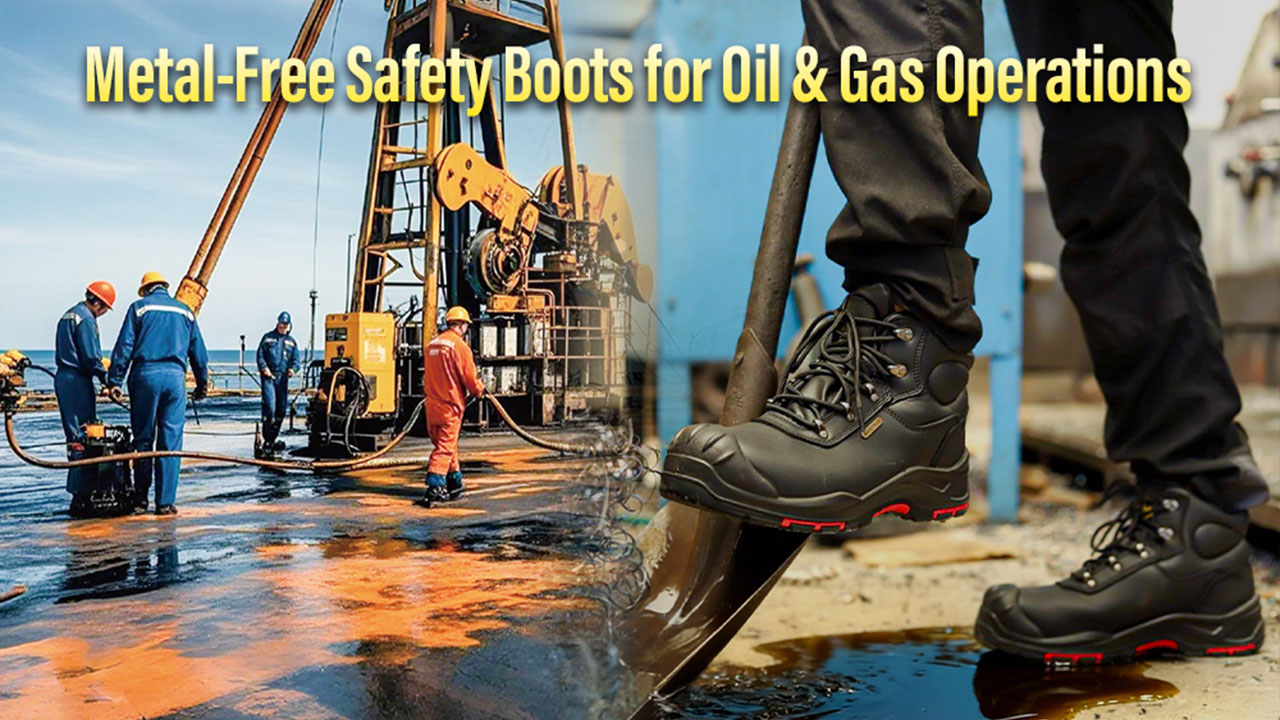
Safety Boots for Australian Oil & Gas Work
Oil and gas tasks can involve tools, sharp materials, oil contamination, outdoor conditions and extended standing.
Compare these product directions:
M-8552: Metal-free oil and gas safety boots with composite toe protection.
H-9437: Rigger-style, pull-on safety boots.
H-9441: An oil-resistant safety boot option.
Metal-free construction does not establish electrical insulation. Similarly, oil resistance describes material performance and should not be treated as proof of slip resistance on oily floors. Review Oil & Gas Safety Footwear Solutions and the exact model's documentation before specifying a boot.
Safety Boots for Construction & Heavy-Duty Work
Construction and industrial maintenance can combine impact, puncture, outdoor exposure and abrasive surfaces. M-8565 is Safetoe's Australian composite-toe, heavy-duty work boot direction. Evaluate its documented protective properties, outsole construction, durability and fit against the task. Construction Safety Footwear Solutions provides broader application guidance.
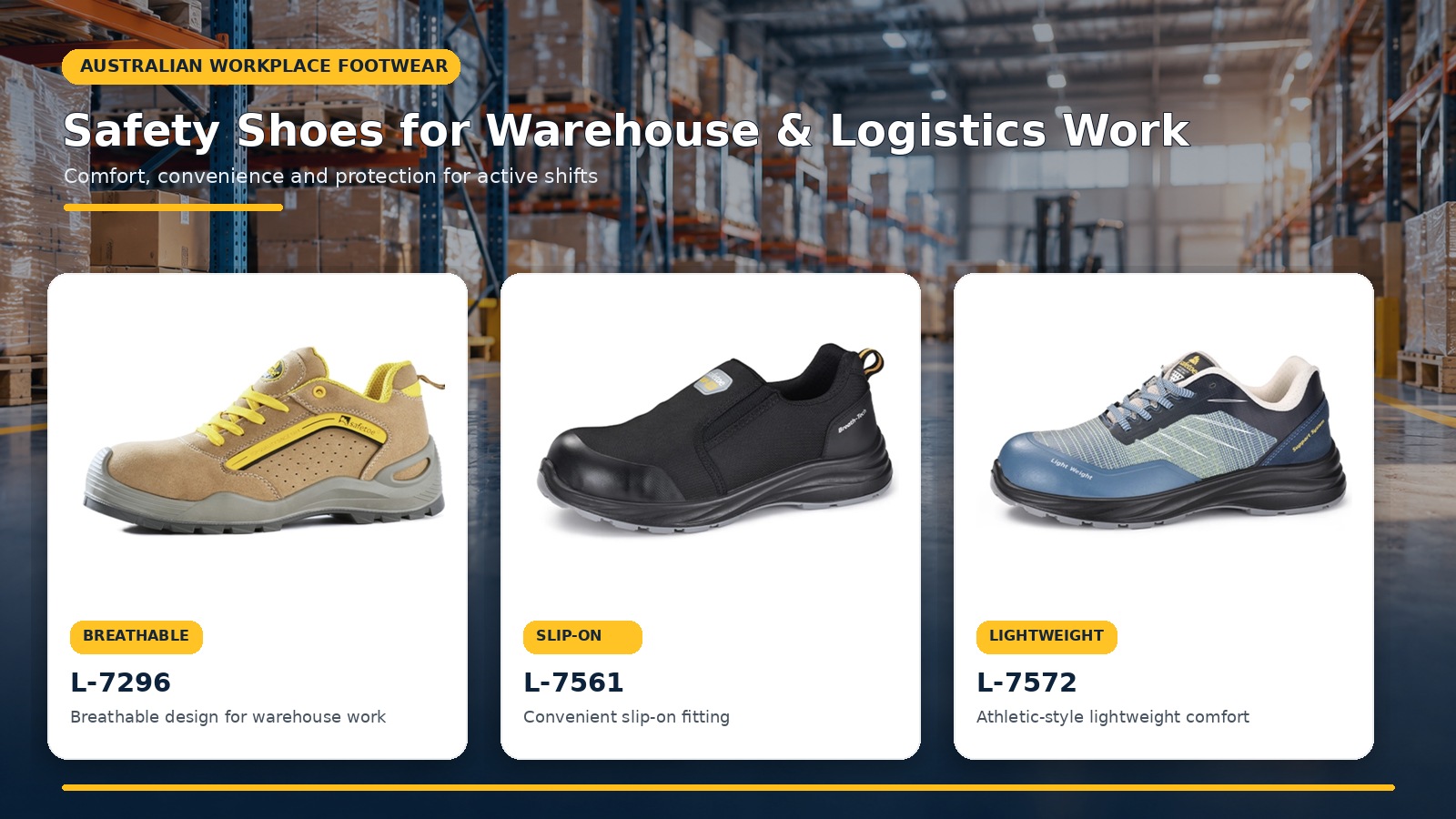
Safety Shoes for Warehouse & Logistics Work
Warehouse and logistics employees may walk, stand, pick orders and move between workstations throughout a shift. Where the assessment permits low-cut footwear, consider weight, breathability, cushioning and fitting convenience alongside protection.
L-7296: Breathable warehouse safety shoes.
L-7561: Slip-on safety shoes for convenient fitting.
L-7572: Lightweight, athletic-style safety sneakers.
Check toe and puncture requirements, floor conditions and any required ankle coverage. Explore Warehouse & Logistics Safety Footwear to compare the appropriate formats.
Heat-Resistant Safety Boots for Welding & Hot Work
Welding, fabrication and metalworking require assessment of sparks, spatter and hot surfaces. M-8387 is the Australian heat-resistant welding boot direction. Check the upper, closure, coverage and relevant outsole performance for the actual exposure. HRO describes tested outsole contact-heat performance, not permission to use the entire boot continuously at 300°C. Review Welding Safety Footwear Solutions and HeatVanta™ Heat Resistant Outsole Technology for related guidance.

Side-Zip and Chelsea Safety Boots for Australian Workers
Closure choice affects fitting convenience and retention; it does not determine certification.
| Work Preference | Product Direction |
| Traditional Mining | M-8025NB |
| Ladder Grip | M-8025NBLG |
| Chelsea / Slip-On | M-8025NBKLG |
| Side-Zip | M-8577 |
| Yellow Side-Zip | M-8577YE |
| Black Side-Zip | M-8577BK |
Which Safety Boot Fits Which Australian Workplace?
Use this matrix to shortlist products, then confirm task suitability and Australian-model documentation.
| Australian Workplace | Main Selection Need | Safetoe Product Direction |
| Mining | Heavy-duty protection | M-8025NB |
| Mining / Ladder Work | Ladder grip | M-8025NBLG |
| Mining / Fast On-Off | Side zip | M-8577 |
| Oil & Gas | Metal-free | M-8552 |
| Oil & Gas | Rigger / pull-on | H-9437 |
| Oil & Gas | Oil resistance | H-9441 |
| Construction | Heavy-duty composite toe | M-8565 |
| Warehouse | Breathability | L-7296 |
| Warehouse | Slip-on convenience | L-7561 |
| Logistics | Lightweight / athletic | L-7572 |
| Welding | Heat-resistant outsole | M-8387 |
Does CE or ASTM Certification Automatically Meet Australian Requirements?
No—not automatically. CE conformity supported by EN ISO 20345 evidence, or testing to ASTM F2413, does not by itself establish AS 2210.3 certification.
Check the exact model, Australian-standard evidence, required classification and target buyer's specifications. International versions sharing a model number can differ in construction, markings or certification scope. Request the applicable certificate, relevant test information and technical datasheet. Match them to the offered Australian version before ordering. Do not rely solely on a brand's general certification list or a certificate covering another model.
What Should Australian Buyers Check Before Ordering?
Workplace hazards and tender specifications
Required Australian standard and edition
Exact model and supplied configuration
Toe and puncture protection
Slip resistance and outsole requirements
Ladder-grip features, where required
Heat resistance, where required
Relevant certificate and test documentation
Technical datasheet and product markings
Size range, fit and expected wearing time
FAQ:
Q: What safety boots are suitable for mining work in Australia?
A: Compare M-8025NB for traditional mining use, M-8025NBLG for ladder-grip design and M-8577 for side-zip convenience. Final suitability depends on hazards, fit and Australian-model documentation.
Q: What safety boots are suitable for Australian oil and gas work?
A: Consider M-8552 for metal-free construction, H-9437 for a pull-on rigger format and H-9441 for oil resistance. Verify the required protection for the specific operation.
Q: Are side-zip safety boots suitable for mining?
A: They can be, where the model meets the required protection and site specification. M-8577 is an option to evaluate. Check closure condition, secure fit and applicable documentation.
Q: What safety shoes suit warehouse and logistics work?
A: Compare breathable, slip-on or lightweight options such as L-7296, L-7561 and L-7572. Selection depends on floor conditions, walking demands and the role's required protection.
Q: Does EN ISO 20345 or ASTM evidence mean a boot meets Australian standards?
A: No. Confirm the exact model's Australian-standard evidence and buyer requirements. Compliance with one standard should not automatically be presented as certification to another.
Author: Jay Yuan, Technical Marketing Director, Safetoe
Source: Safetoe Academy




 English


