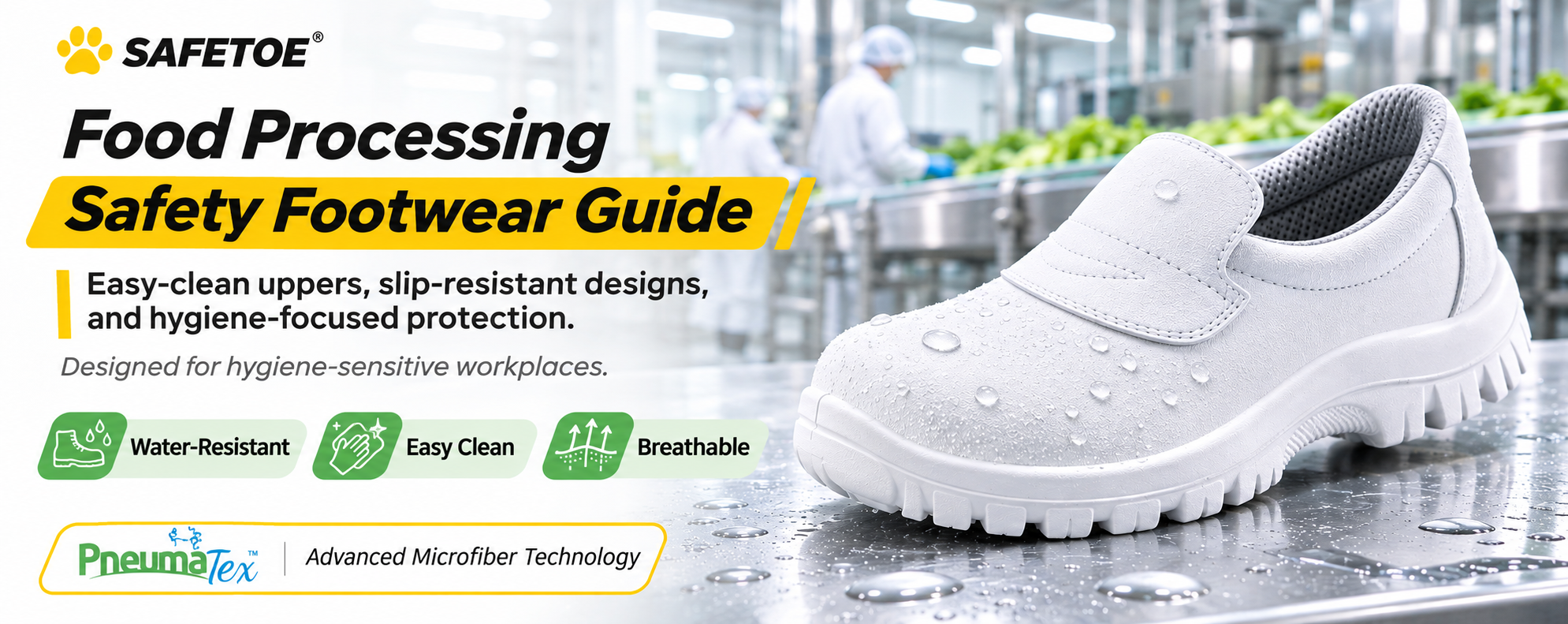
How to Choose Safety Shoes for Food Processing & Food Industry Work
Food processing combines workplace protection with hygiene demands. Water, oils, food residues, repeated cleaning, falling containers and prolonged standing can all influence footwear selection. Buyers should assess each production zone rather than choose one shoe for every worker. Review cleaning routines, floor contamination, water exposure and mechanical hazards alongside fit.
Food industry safety footwear must balance workplace protection with hygiene, cleanability and wet-floor performance. Explore Food Industry Safety Footwear Solutions for related applications.
1. What Are the Main Footwear Challenges in Food Processing?
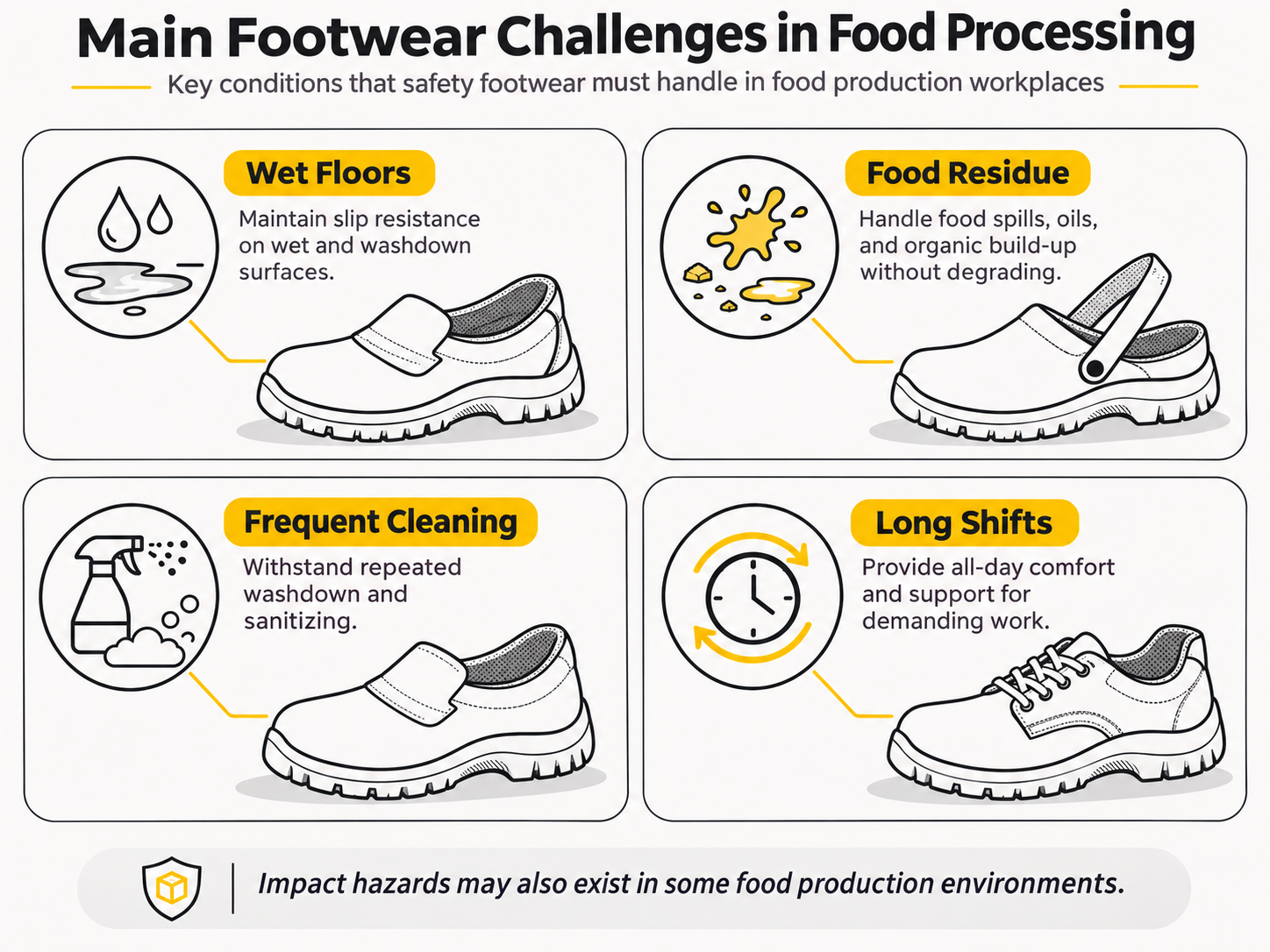
Four challenges shape selection:
Wet floors: Water, grease and food residues affect traction.
Frequent cleaning: Repeated moisture and cleaning-agent exposure challenge materials.
Hygiene: Uppers, tread and interiors require appropriate maintenance.
Long shifts: Standing, walking and repetitive movement place demands on fit and cushioning.
Falling crates, containers and equipment may add impact hazards. Identify these separately rather than assuming every food-production job has identical risks.
2. Why Easy-to-Clean Upper Materials Matter
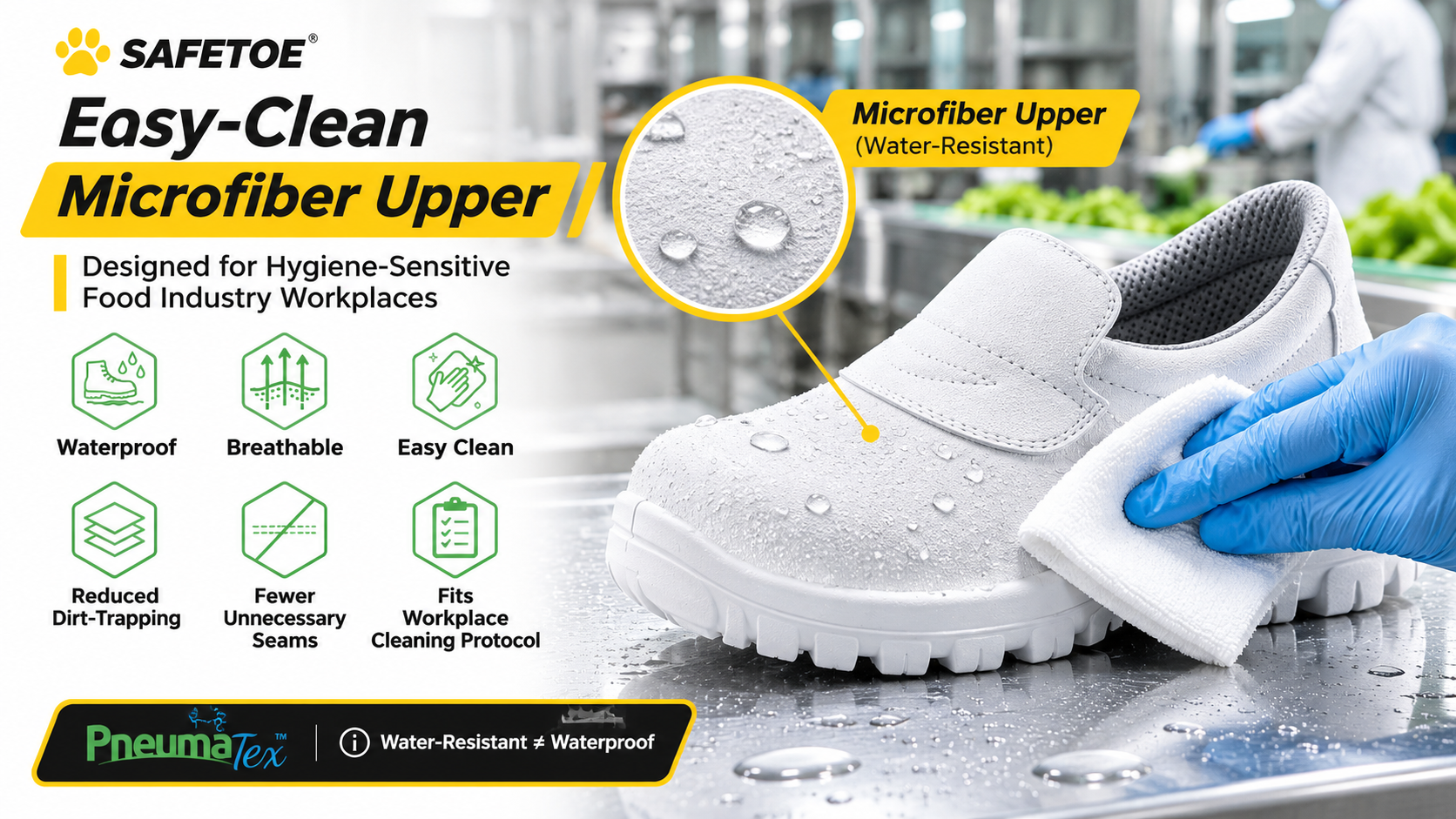
Look for smooth surfaces, accessible cleaning areas and limited dirt-trapping details. Compare seams, openings and closures against the workplace sanitation procedure.
PneumaTex™ Microfiber Technology provides background on Safetoe's microfiber materials. A water-resistant microfiber upper can be practical for light moisture exposure, but its properties do not establish whole-shoe waterproofing. Confirm suitable detergents, concentrations, temperatures and drying methods with the manufacturer. Do not assume that machine washing, pressure washing or chemical disinfection is permitted.
3. Slip Resistance Is Critical on Wet and Contaminated Floors
Outsole compound, tread geometry and drainage channels all matter. Request relevant test evidence and consider controlled workplace trials. Slip-resistant footwear can help reduce risk, but no outsole eliminates slipping under every contaminant and floor condition.
PlumaShield™ Slip Resistance provides related technology information; verify the selected model's tested performance. A slip marking does not guarantee traction on every grease or food spill. Footwear must support—not replace—effective floor cleaning, drainage and spill control. Keep tread clear and replace worn soles.
4. Water-Resistant Shoes or Waterproof Safety Boots?
Water-resistant uppers are not equivalent to waterproof footwear.
Workplace
| Footwear Direction |
| Dry Food Production | Safety shoes |
| Light Wet Processing | Water-resistant safety shoes |
| Commercial Kitchen | Slip-resistant easy-clean shoes |
| Frequent Washdown | Waterproof footwear may be preferred |
| Heavy Wet Processing | Safety Wellington boots |
| Meat / Seafood Processing | Waterproof + easy-clean footwear depending on risk |
Assess splash height, duration and possible entry through shoe openings. Waterproof construction does not establish resistance to cleaning chemicals or hot liquids. Explore Safety Wellington Boots when sustained water exposure calls for a different footwear type.
5. Hygiene Is More Than Just a White Shoe
White footwear may make dirt easier to see or support site colour-coding. Colour alone does not establish hygiene performance. Check cleanability, moisture management and the site's footwear segregation rules. BactiVoid™ Antibacterial Fabric Technology concerns treated materials; it does not prove prevention of food contamination. Antibacterial results apply to the tested material and conditions. They do not replace cleaning, drying or workplace sanitation procedures.
6. When Is Safety Toe Protection Needed?
Handling ingredients, crates, trolleys or heavy equipment may create toe-impact and compression risks. VortiGard™ Toe Protection Technology explains this protection function. Select the required footwear through the workplace risk assessment and employer requirements.
Not every food worker needs identical mechanical protection. Where puncture or other hazards exist, assess those separately rather than assuming a toe cap covers them.
7. Comfort Matters During Long Production Shifts
Compare fit, weight, cushioning, flexibility and moisture management. Trial footwear with normal work socks and the actual standing and walking tasks. Zorbtion™ Shock Absorption Technology offers related cushioning information, but should not be presented as a feature of every food-industry model. Comfort must work with the required protection, cleanability and secure fit—not replace them.
8. Slip-On, Lace-Up or Wellington Boots?
Slip-on: Convenient access and fewer exposed laces, provided retention is adequate.
Lace-up: Adjustable fit, with additional external details to clean.
Wellington: Higher waterproof coverage for suitable wet tasks, with different weight and mobility considerations.
Choose around the hygiene zone, water exposure and task. Boot height alone does not prevent water entering through the top.
9. What Safety Standards Should Buyers Check?
Food-industry marketing is not itself a safety certification. EN ISO 20345 covers safety-footwear requirements; ASTM F2413 is relevant where specified for the destination market.
Check the exact model, standard edition, toe protection, slip evidence and required water performance. Anti-bacterial testing such as ASTM E2149 evaluates a different property. Food hygiene requirements and safety-footwear certification are separate considerations. Neither automatically establishes the other.
10. Match Footwear to the Food Industry Application
Application
| Main Footwear Need | Direction |
| Food Production Line | Hygiene + protection | Easy-clean safety shoes |
| Commercial Kitchen | Wet floor + mobility | Slip-resistant safety shoes |
| Beverage Production | Liquid exposure | Water-resistant / waterproof footwear |
| Meat Processing | Wet conditions + hygiene | Waterproof easy-clean footwear |
| Seafood Processing | Heavy wet environment | Safety Wellington boots |
| Food Packaging | Mobility + comfort | Lightweight safety shoes |
| Cold Food Storage | Cold + slip | Insulated safety footwear where required |
These are starting points, not prescribed PPE. Winter Safety Boots Solutions provides further cold-environment guidance.
11. Recommended Safetoe Food Industry Footwear Options
L-7019 CleanShield S2 — Easy-Clean Slip-On
A water-resistant microfiber upper, steel toe and BactiVoid™ lining provide a configuration to assess for suitable food-production roles. Do not describe upper water resistance as whole-shoe waterproofing.
L-7201 — Food Processing Shoe Option
Consider the L-7201 range for food-processing and kitchen tasks. Compare the supplied configuration, fit and documented performance; confirm the current version before ordering.
Safety Wellington Boots — Heavy Wet Processing
For frequent washdown, consider a verified waterproof safety Wellington configuration. Check sole compatibility with food residues and cleaning agents, plus required toe and puncture protection.
FAQ:
Q: What safety shoes are best for food processing workers?
A: Match cleaning, floor contamination, water exposure, mechanical hazards and fit to the job.
Q: Why are microfiber safety shoes used in food processing?
A: Suitable microfiber uppers offer cleanable surfaces; weight and water resistance depend on the specific construction.
Q: Do food industry safety shoes need to be waterproof?
A: Not always. Select water performance according to exposure rather than the industry label.
Q: Are white safety shoes more hygienic than black shoes?
A: Not inherently. Materials, maintenance and sanitation procedures matter more than colour alone.
Q: When should workers choose Wellington safety boots?
A: Consider them for substantial water exposure or frequent washdown, after checking protection, fit and cleaning compatibility.
uthor: Jay Yuan, Technical Marketing Director, Safetoe
Source: Safetoe Academy




 English


