Construction sites change continuously. Materials move, surfaces become wet or uneven, and nails or metal debris may appear in areas that were previously clear.
Safety footwear can reduce specific foot risks, but it cannot replace safe lifting, housekeeping, access control, training or other jobsite controls.
Construction PPE should be selected from a workplace hazard assessment and must fit the worker properly. OSHA specifically identifies falling or rolling objects and objects capable of piercing the sole as reasons for requiring protective footwear.
Falling Materials and Rolling Equipment
Bricks, tools, steel components, pipes and wheeled equipment can strike or compress the toes.
VortiGard™ toe protection helps reduce impact and compression injuries. Where heavy objects may strike above the toe cap, additional metatarsal protection may be required.
Safety toes cannot replace lifting plans, exclusion zones or correct material storage.
Nails, Rebar and Sharp Debris
Workers may step on exposed nails, screws, wire, damaged formwork or sharp metal offcuts.
FlexBarrier™ and other certified puncture-resistant midsoles create a protective layer beneath the foot. The required midsole type should reflect the size, shape and severity of the puncture hazard.
Wet, Muddy and Slippery Surfaces
Rain, concrete slurry, dust and mud can reduce traction on stairs, scaffolds and unfinished floors.
PlumaShield™ supports traction through specialised outsole materials and tread design. Waterproof technology such as Sanvlar-Tex™ can also help keep feet dry during outdoor work.
No outsole can prevent every slip. Footwear must be supported by drainage, cleaning, lighting and safe access routes.
Long Hours and Heavy Workloads
Construction workers may spend full shifts standing, walking, climbing and carrying materials. Excessive footwear weight, poor fit or insufficient cushioning can increase discomfort.
Shock-absorbing insoles, suitable boot weight and correct sizing can improve comfort. These features do not replace rest breaks, task rotation or safe manual-handling practices.
Recommended Safety Footwear by Role
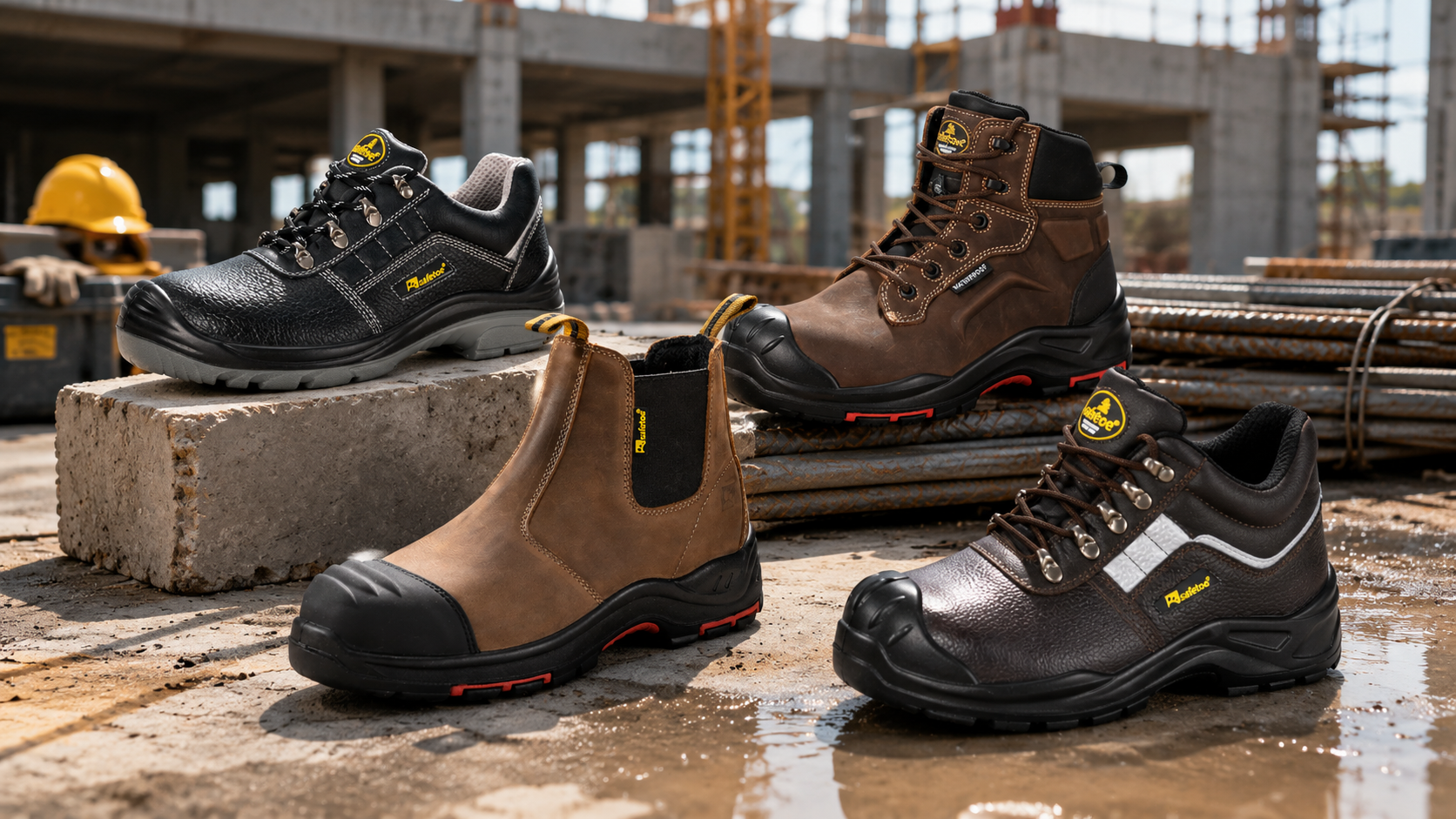
M-8552: wet, outdoor and demanding infrastructure projects.
M-8027: structural, mechanical and heavy building work.
M-8025NB: maintenance, contractors and mixed jobsite applications.
L-7571: site engineers, inspectors, finishing work and lower-risk urban construction tasks.
L-7571 is a lightweight S1PS-style product for engineers and technicians; it should not replace a heavy-duty waterproof boot where deep mud, severe puncture risks or heavy structural work are present.
ISO 9001 evaluates the supplier’s quality-management system. It does not prove that a specific boot has passed toe, puncture or slip tests.
Frequently Asked Questions
What causes foot injuries on construction sites? Common causes include falling materials, rolling equipment, sharp debris and slips on wet or uneven surfaces.
How often should construction safety boots be replaced? Replace footwear when the tread, upper, midsole, toe structure or cushioning shows significant damage or loss of performance.
Are composite-toe boots suitable for construction? Yes, provided the complete footwear meets the project’s impact, compression, puncture and other required standards.

 English