Many people think:
“I’m already wearing safety shoes—steel toe, impact-resistant. That should be enough, right?”
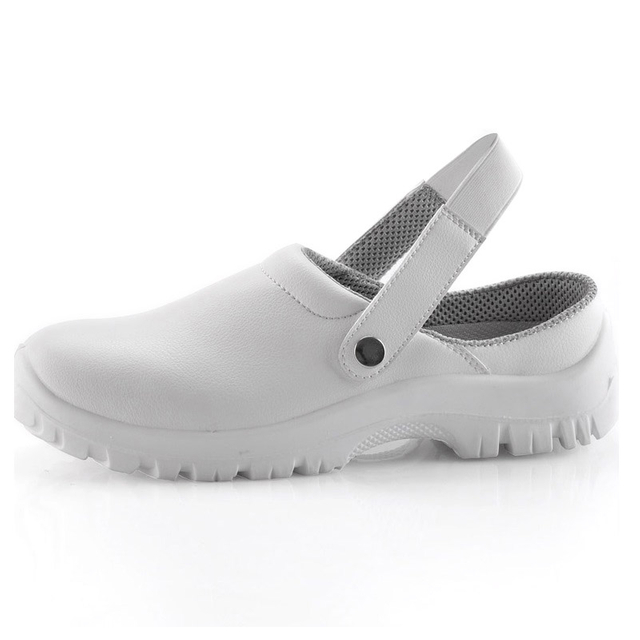
But anyone who has actually worked on welding, cutting, or smelting sites knows the truth:ordinary safety shoes are simply not designed for high heat and heavy sparks.
Welding slag falling on the instep, sparks slipping into the shoe opening, soles getting soft when the ground temperature rises…
If you’ve worn the wrong shoes before, you know exactly what this feels like.
That’s why in high-temperature environments, heat-resistant & spark-resistant safety shoes are not optional.
An ordinary pair of safety shoes just isn’t enough.
1. Common Problems with Ordinary Safety Shoes in High-Temperature Environments
Ordinary safety shoes are designed for general protection, not for high-heat applications.
In welding or smelting environments, common issues include:
● The outsole softens when exposed to heat and may start to delaminate over time
● Welding slag burns the upper, causing both shoe damage and foot injuries
● Standard stitching cannot withstand high temperatures and loosens with prolonged use
● Sharp metal debris + heat significantly reduce midsole protection
So to be realistic:
It’s not that the shoes are bad—they’re simply used in the wrong place.
2. Why Is the M-8387 “Weld Shield” Better Suited for High-Temperature Welding Work?
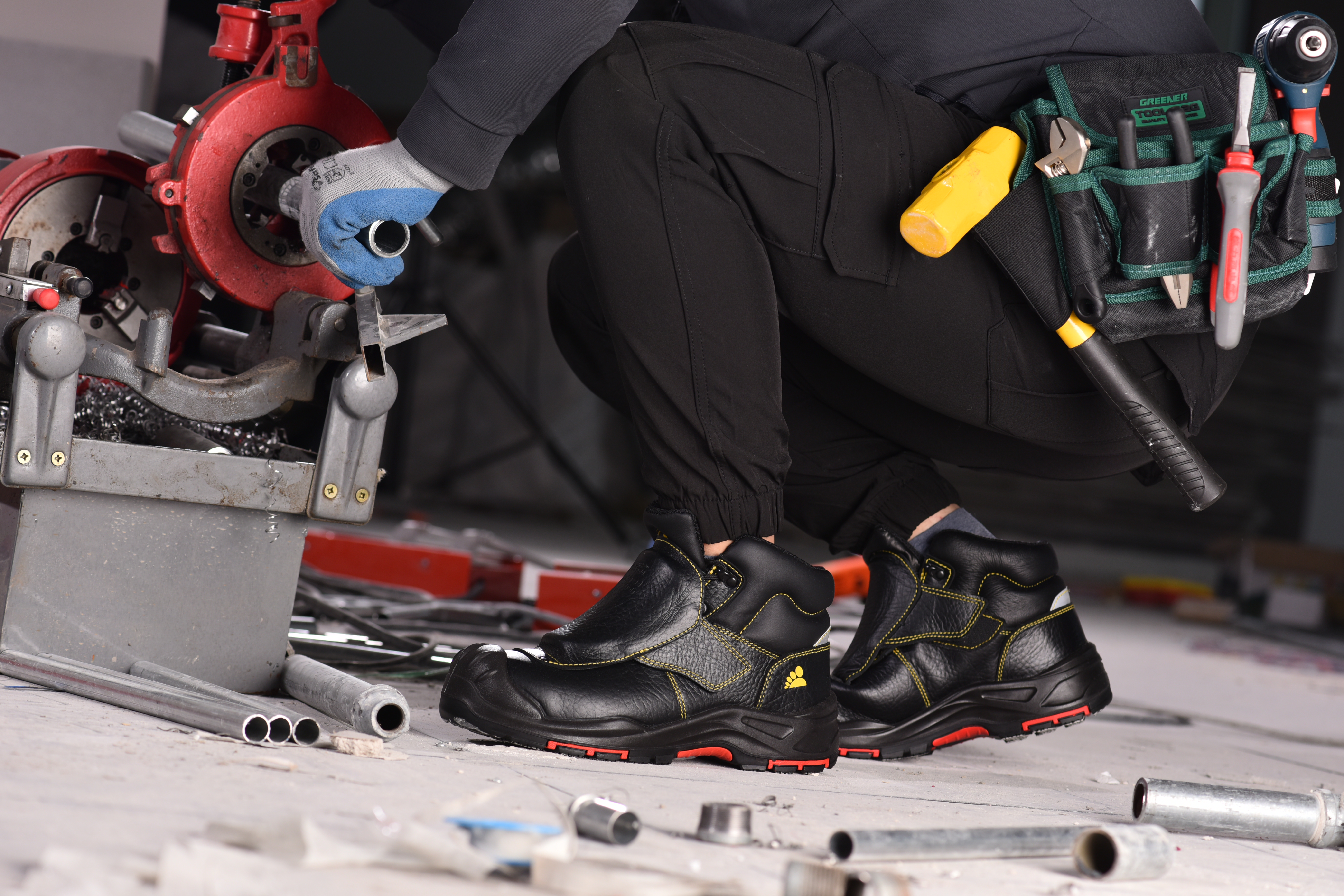
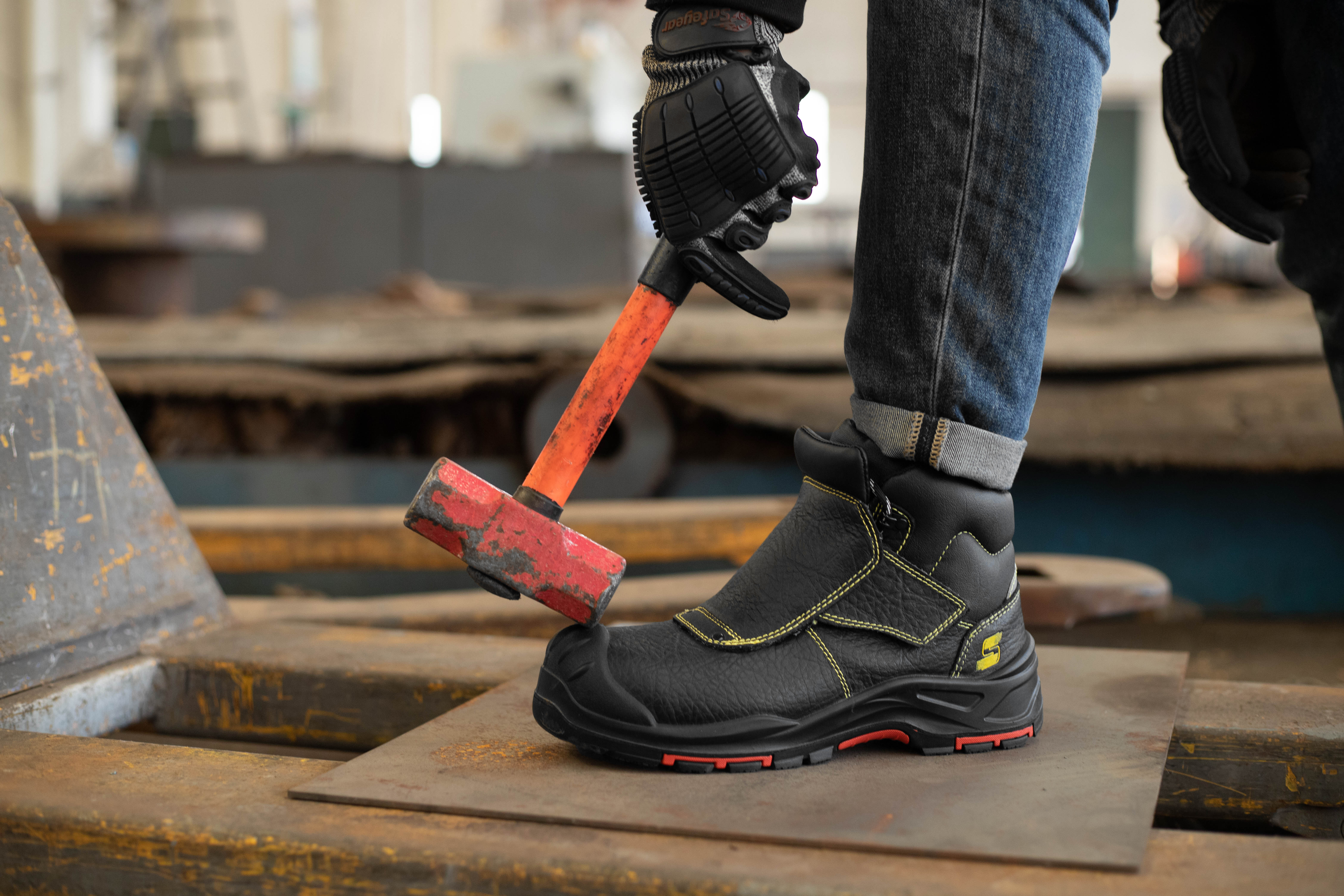
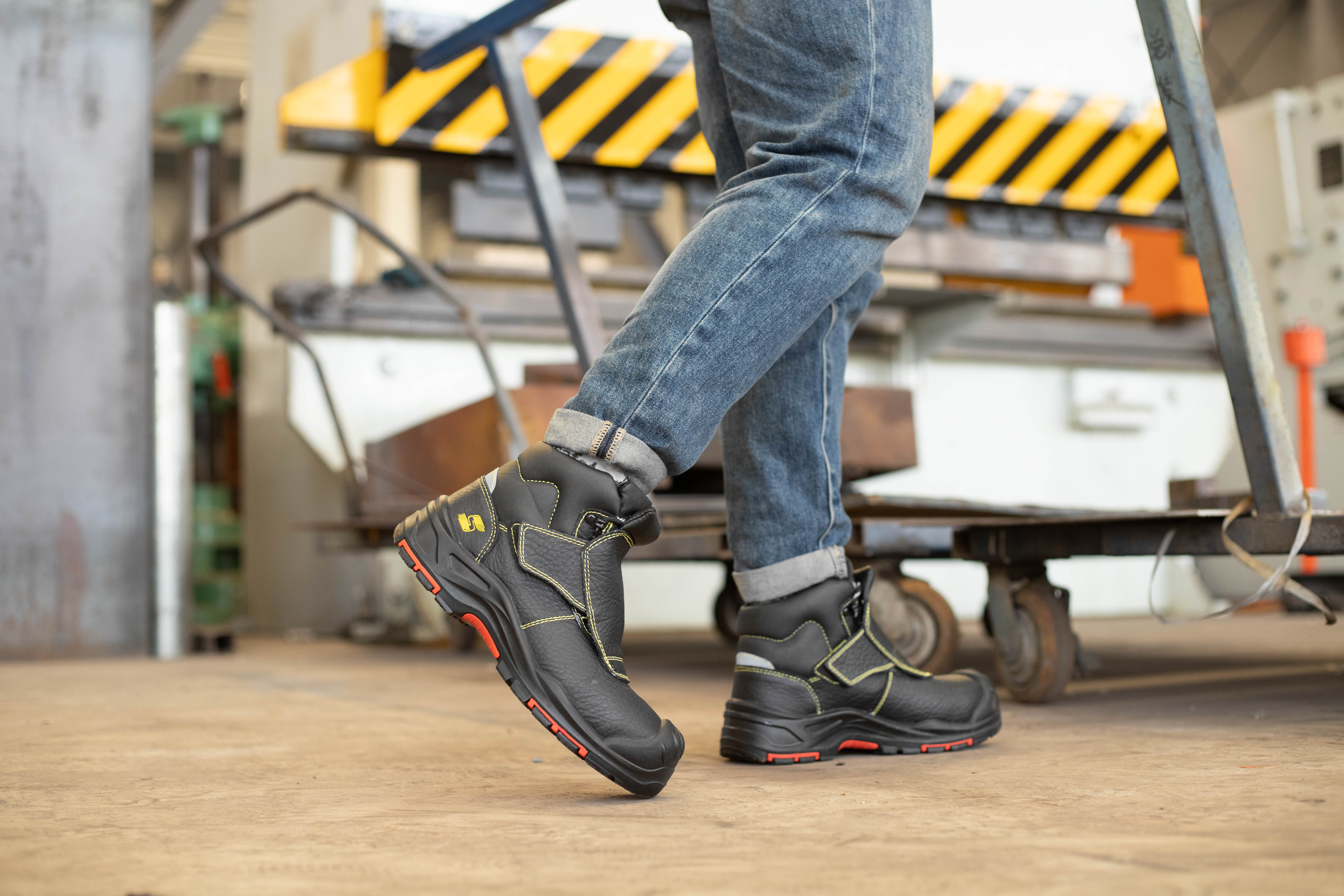
The M-8387 Weld Shield was designed specifically for welding, high heat, and heavy spark environments—it is not a modified version of an ordinary safety shoe.
Let’s break down its advantages clearly and simply.
First Level: The Core — Heat Resistance & Spark Protection
This is where ordinary safety shoes fall short:
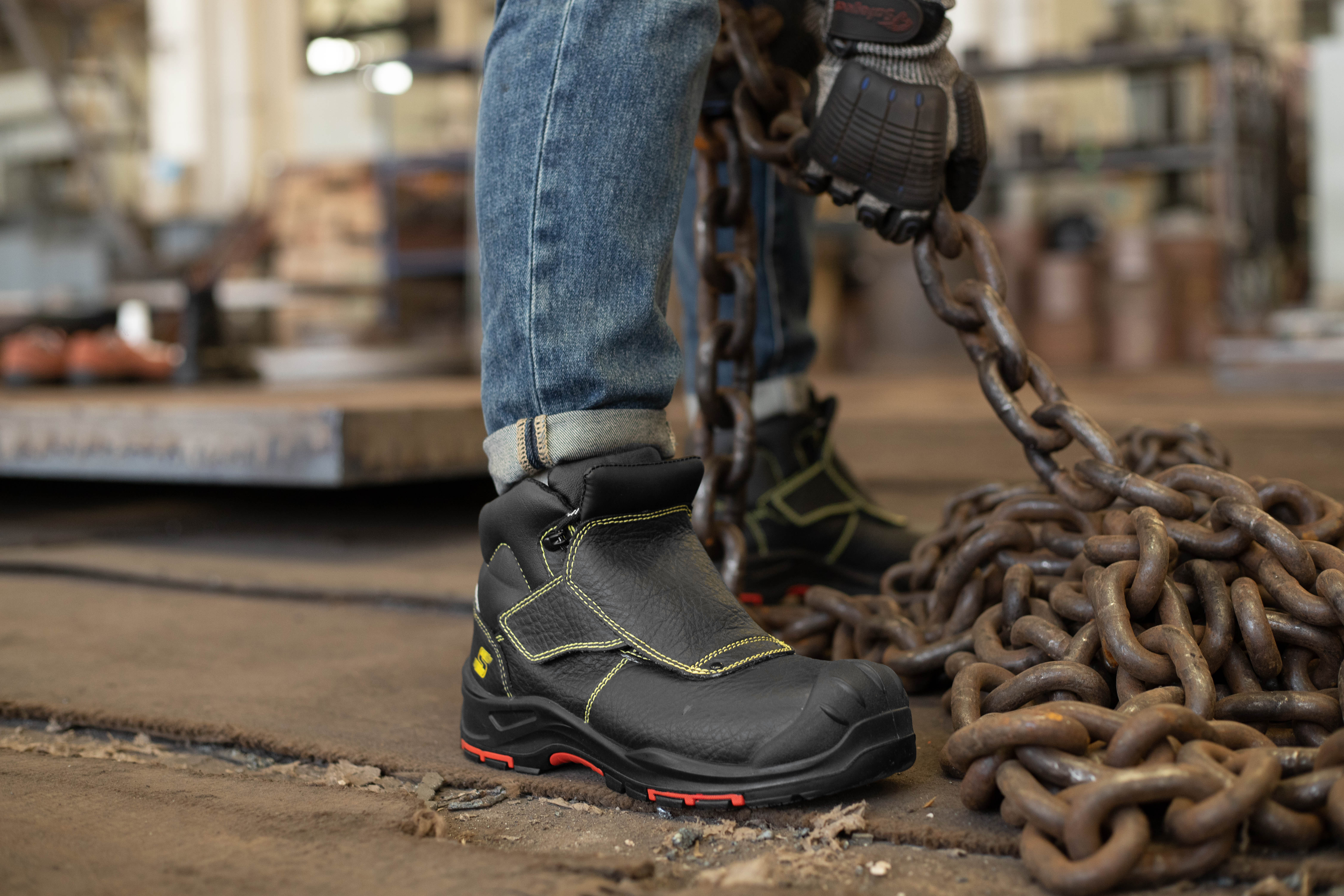
● Outsole withstands up to 300°C
Walking on hot surfaces or near heated metal without softening or rapid damage
● Spark-resistant protective cover
Welding slag and sparks are far less likely to enter the shoe, protecting the instep
● Kevlar flame-resistant stitching
Resistant to heat exposure, keeping the shoe structure stable and intact
This level determines whether the shoe can be worn long-term on welding sites.
Second Level: The Midsole — Where the Real Difference Is
Many people overlook the midsole, but in high-temperature environments, it’s a hidden critical factor.
With ordinary safety shoes, midsoles tend to:
● Lose performance when heated
● Provide weaker puncture resistance
● Cause discomfort when standing on hot surfaces for long periods
The M-8387 midsole stands out because:
● It maintains stable support even under high temperatures
● Puncture resistance lasts longer without “heat fatigue”
● Works together with the heat-resistant outsole without becoming a weak link
Third Level: Complete Basic Protection — Nothing Missing
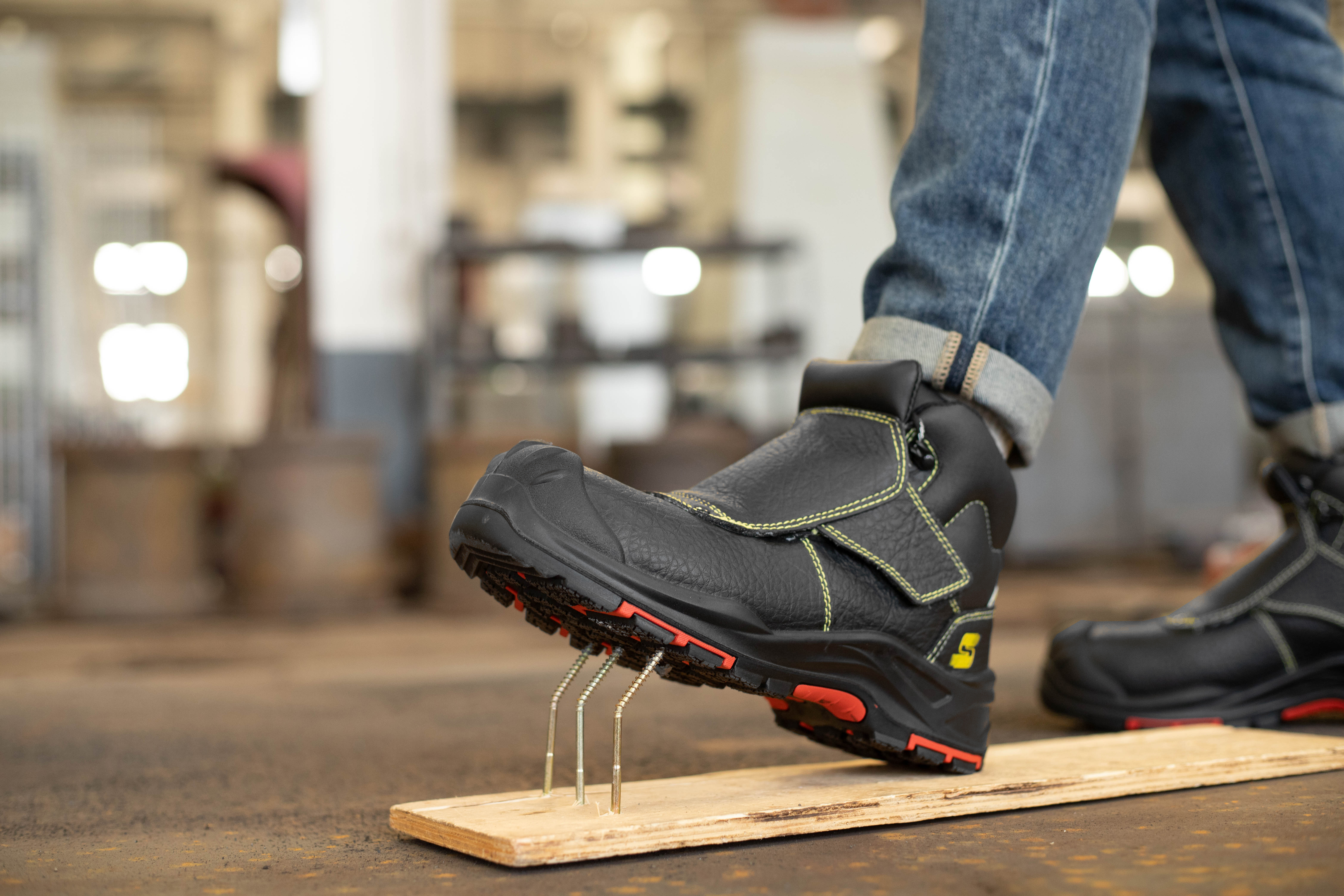
Beyond heat-related protection, all essential safety features are included:
● Impact protection for toes
● Puncture resistance against metal shards and sharp objects
● Slip-resistant, abrasion-resistant outsole for oily and complex surfaces
Everything you expect is there—not just heat resistance alone.
Fourth Level: Comfortable Enough for a Full Workday
Many high-protection safety shoes are extremely tiring to wear.
The M-8387 takes a more practical approach:
● Breathable sandwich mesh lining to reduce heat buildup
● Anti-fatigue memory foam insole for long hours of standing
● Antibacterial and odor-resistant, even in summer
3. Which Work Environments Should Not Use Ordinary Safety Shoes?
If you work in any of the following environments, ordinary safety shoes are strongly not recommended:
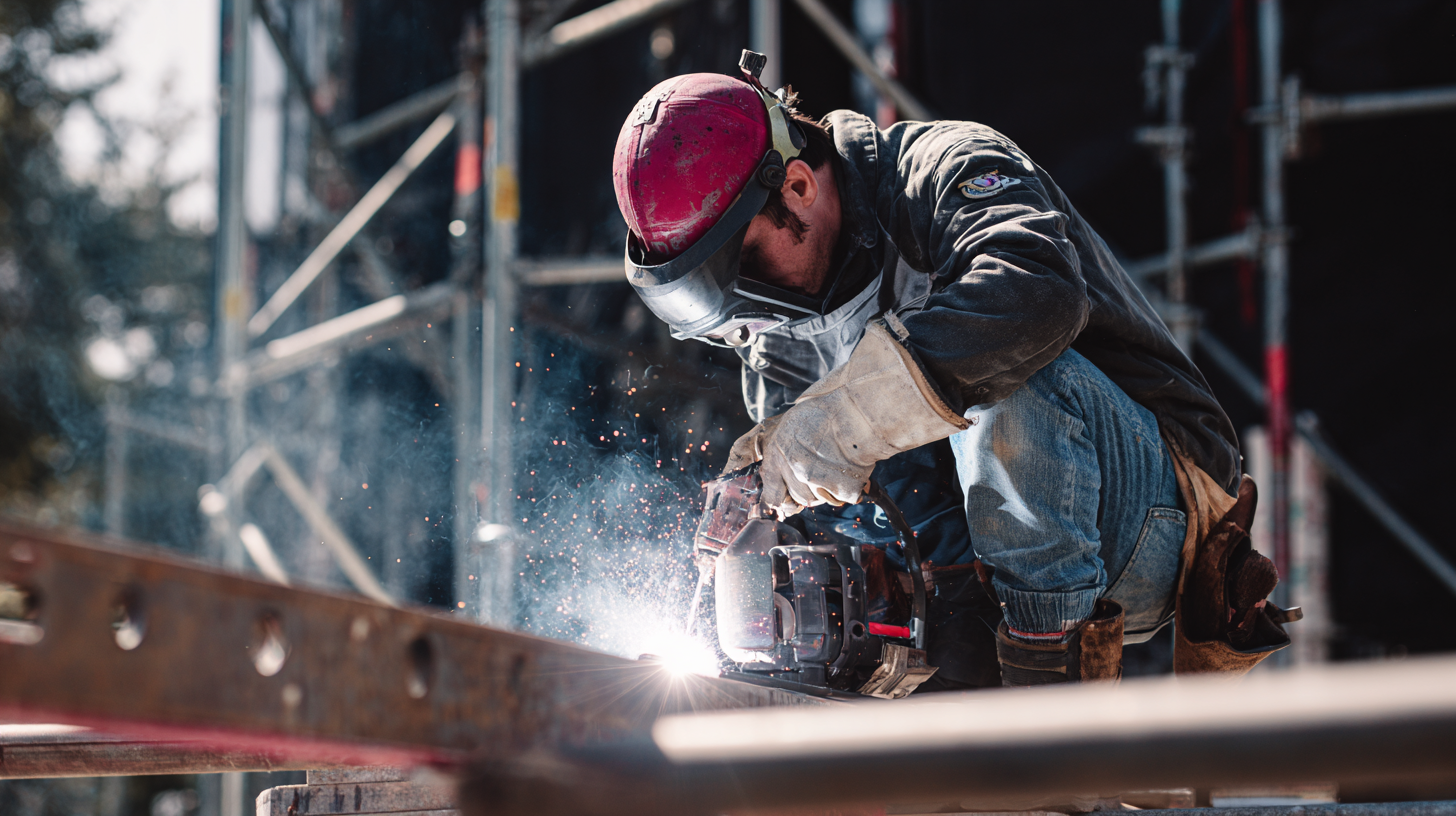
● Electric welding or argon arc welding
● Metal cutting and grinding
● Smelting and high-temperature workshops
● Workplaces with frequent sparks and welding slag
In these settings, heat- and spark-resistant safety shoes are not an upgrade—they are a necessity.
4. A Straightforward Truth
For welding, cutting, and high-temperature workplaces, ordinary safety shoes may not provide enough protection. Safetoe M-8387 Weld Shield features a 300°C heat-resistant outsole, spark-resistant cover, Kevlar stitching, toe protection, puncture resistance, and breathable comfort.
Whether you are looking for welding safety shoes, wholesale supply, distribution, or OEM/ODM cooperation, Safetoe offers reliable safety footwear solutions for demanding work environments.
Shop now: https://safetoework.com/
Wholesale: https://safetoe.net/
WhatsApp: +8615375354433
YouTube: @SAFETOE
Contact Safetoe today to explore M-8387 Weld Shield and protect workers from heat, sparks, impact, and puncture hazards.

 English