
Oil and gas workers handle heavy pipes, tools, machinery, oils, drilling fluids and industrial chemicals across demanding operations. These tasks can expose the hands to impacts, sharp edges, abrasion, slippery surfaces and chemical contact.
Choosing the right oil and gas work gloves therefore requires matching glove protection to the specific hazard and task rather than relying on a single glove for every application.
A glove suitable for drilling and pipe handling may not provide the chemical protection required in processing operations. Likewise, a chemical-resistant glove may not offer the impact protection, grip or dexterity needed for heavy mechanical work.
There is no single “best” glove for every oil and gas task. The right glove depends on the specific combination of impact, cut, grip, chemical and handling hazards.
This guide explains the main hand hazards in oil and gas operations, how different tasks affect glove selection, and which protection standards and glove features PPE buyers should consider.
What Are the Main Hand Hazards in Oil & Gas Work?
Oil and gas environments can expose workers to several hazards during the same shift. Glove selection should therefore begin with understanding what workers handle, how the hands may be injured and whether liquid or chemical exposure is involved.
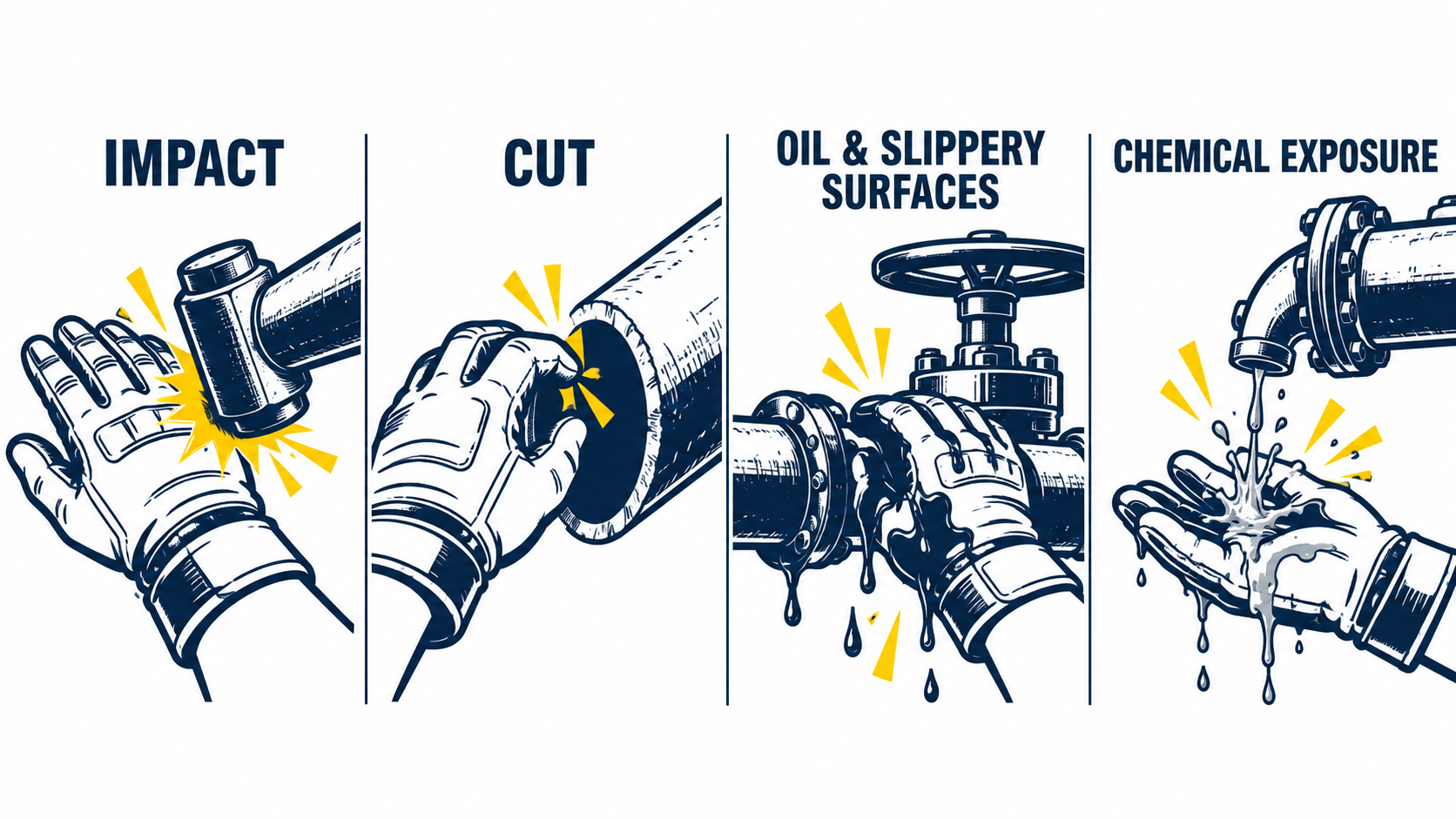
Impact & Crushing Hazards
Impact is one of the most important considerations in drilling and heavy oilfield operations.
Workers may handle:
These tasks can expose the fingers, knuckles and back of the hand to knocks, blows and crushing hazards.
Where this type of exposure is identified, buyers should consider whether additional back-of-hand protection is required.
Related Technology: TravMora™ Impact Protection
Cuts & Sharp Metal
Oilfield and maintenance work frequently involves sharp metallic surfaces.
Common sources include:
The required cut resistance depends on the sharpness of the material, frequency of contact and severity of the potential injury.
Higher cut resistance may be appropriate for sharp metal handling, but glove selection should still preserve enough grip and dexterity for the worker to perform the task safely.
Related Technology: VarioNova™ Cut Protection
Oil, Wet & Slippery Surfaces
Oil and gas workers frequently handle equipment affected by:
Oil and moisture can reduce friction between the glove and the handled surface, making grip and handling control important selection factors.
GripVanta™ is designed around grip and handling performance in dry, wet and light oily conditions. Specific performance, however, should always be evaluated at the individual glove-model level.
Related Technology: GripVanta™ Grip Technology
Chemical & Liquid Exposure
Some oil and gas operations involve more than light contact with oil or lubricants.
Workers may encounter:
Fuels
Process chemicals
Cleaning chemicals
Drilling fluids
Solvents
Acids or alkalis
Other industrial liquids
An important distinction must therefore be made:
Oil handling grip and chemical protection are not the same thing.
A glove that provides good handling around oily equipment is not automatically suitable for direct contact with industrial chemicals.
Where chemical exposure is expected, buyers should review the specific glove's chemical classification and compatibility information for the substance being handled.
Related Technology: LoraVex™ Chemical Protection
How to Choose Oil & Gas Gloves by Task
There is no single glove configuration that suits every oil and gas operation.
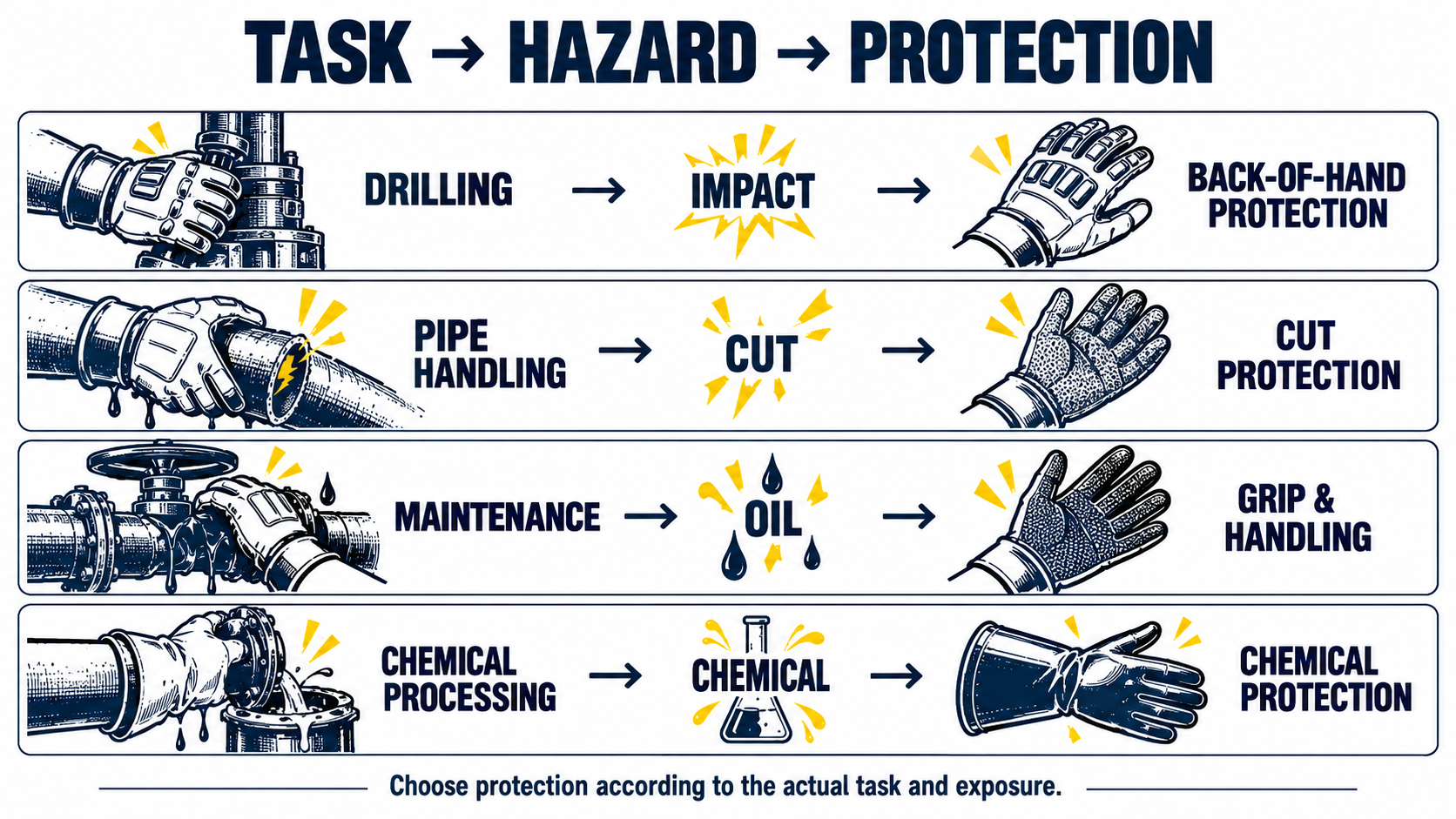
A drilling worker handling pipe joints may need impact and cut protection, while a maintenance technician working with oily equipment may prioritize grip and dexterity. Chemical processing tasks require a different level of protection again.
The most practical selection process is:
TASK → HAZARD → PROTECTION
| Oil & Gas Task | Main Hazards | What to Look For |
| Drilling & Rig Work | Impact / cut / grip | Back-of-hand protection + cut resistance + secure grip |
| Pipe Handling | Cut / abrasion / impact | Cut and mechanical protection + durability |
| Equipment Maintenance | Oil / grip / abrasion | Oil handling grip + dexterity |
| Refinery & Processing | Chemical / liquid / grip | Chemical compatibility + appropriate liquid protection |
| General Oilfield Handling | Impact / abrasion / grip | Durable multi-hazard protection |
Equipment maintenance and chemical handling should not be treated as the same application.
For example, a nitrile-coated industrial handling glove may provide reliable grip around light oil or lubricants, but this does not automatically make it a certified chemical-resistant glove.
The final selection should reflect the actual task, exposure conditions and required level of protection.
Why Is Impact Protection Important in Oilfield Work?
Oilfield work often involves large equipment, heavy components and frequent interaction with pipes, tools and machinery.
Typical impact hazards can occur during:
Back-of-hand protection can provide an additional protective structure across the knuckles, fingers and metacarpal area while allowing workers to continue handling tools and equipment.
However, buyers should distinguish between the presence of physical impact guards and tested impact performance.
TPR construction does not automatically mean EN 388 impact certification.
Where the optional EN 388 impact test has been passed, the final position of the marking may include:
P
For example, Safeyear TPR9004 carries an EN 388 rating of 4X44DP, which includes Level D ISO 13997 cut resistance and the optional impact “P” marking.
This makes it a useful example of a glove combining cut and impact protection for demanding industrial applications.
Related Technology: TravMora™ Impact Protection
How Important Is Grip in Oily Environments?
Grip is especially important in oil and gas work because oils and lubricants can reduce handling control.
Workers may need to operate or handle:
When selecting gloves for these tasks, buyers should consider:
Dry grip
Wet grip
Light oil exposure
Coating construction
Surface texture
Required dexterity
A glove that performs well in dry conditions may behave differently when exposed to oil or moisture.
Better grip can also reduce the amount of force workers need to apply when holding tools or equipment, helping improve handling control during repetitive tasks.
However, grip should always be evaluated according to the specific glove model and intended working environment, rather than assuming that every glove using the same coating material will perform identically.
Related Technology: GripVanta™ Grip Technology
When Do Oil & Gas Workers Need Chemical-Resistant Gloves?
One of the most important distinctions in oil and gas hand protection is the difference between handling oily equipment and direct chemical exposure.
Oil-handling gloves and certified chemical-resistant gloves are not necessarily the same thing.
A maintenance worker dealing with light oil or lubricant on tools may primarily require:
Grip
Abrasion resistance
Mechanical protection
Dexterity
A worker directly handling:
Solvents
Acids
Alkalis
Process chemicals
Chemical cleaning agents
may require a glove specifically tested for chemical resistance.
Where chemical contact is expected, PPE buyers should check:
The correct question is therefore not simply:
“Is this glove oil resistant?”
A more useful question is:
“Has this glove been tested for the chemical protection required for this task?”
Safeyear GSP0211R, for example, is a PVC chemical-resistant glove rated to EN ISO 374-1 Type B JKL and EN 388 4121X, and is intended for applications including chemical processing and petrochemical work.
Related Technology: LoraVex™ Chemical Protection
What Does EN 388 Mean for Oil & Gas Work Gloves?
EN 388 evaluates protective gloves against mechanical risks including abrasion, cut, tear and puncture resistance, with optional impact testing where applicable.
For oil and gas buyers, the important point is not to select the highest-looking rating automatically.
The rating should correspond to the actual hazards of the task.
For example:
4X44DP
Two positions are particularly relevant to many heavy oilfield applications:
D — ISO 13997 Cut Resistance
This indicates the glove's tested resistance under the ISO 13997/TDM cut method.
P — Impact Protection
This indicates that the glove passed the applicable optional impact test.
A combination such as this may be relevant for tasks involving both sharp metal and back-of-hand impact exposure.
However, EN 388 evaluates mechanical hazards.
It should not be treated as evidence of chemical resistance.
Chemical protection requires separate evaluation under the appropriate chemical-protection standard.
Read the Complete EN 388 Glove Rating Guide →
Recommended Safeyear Gloves for Oil & Gas Work
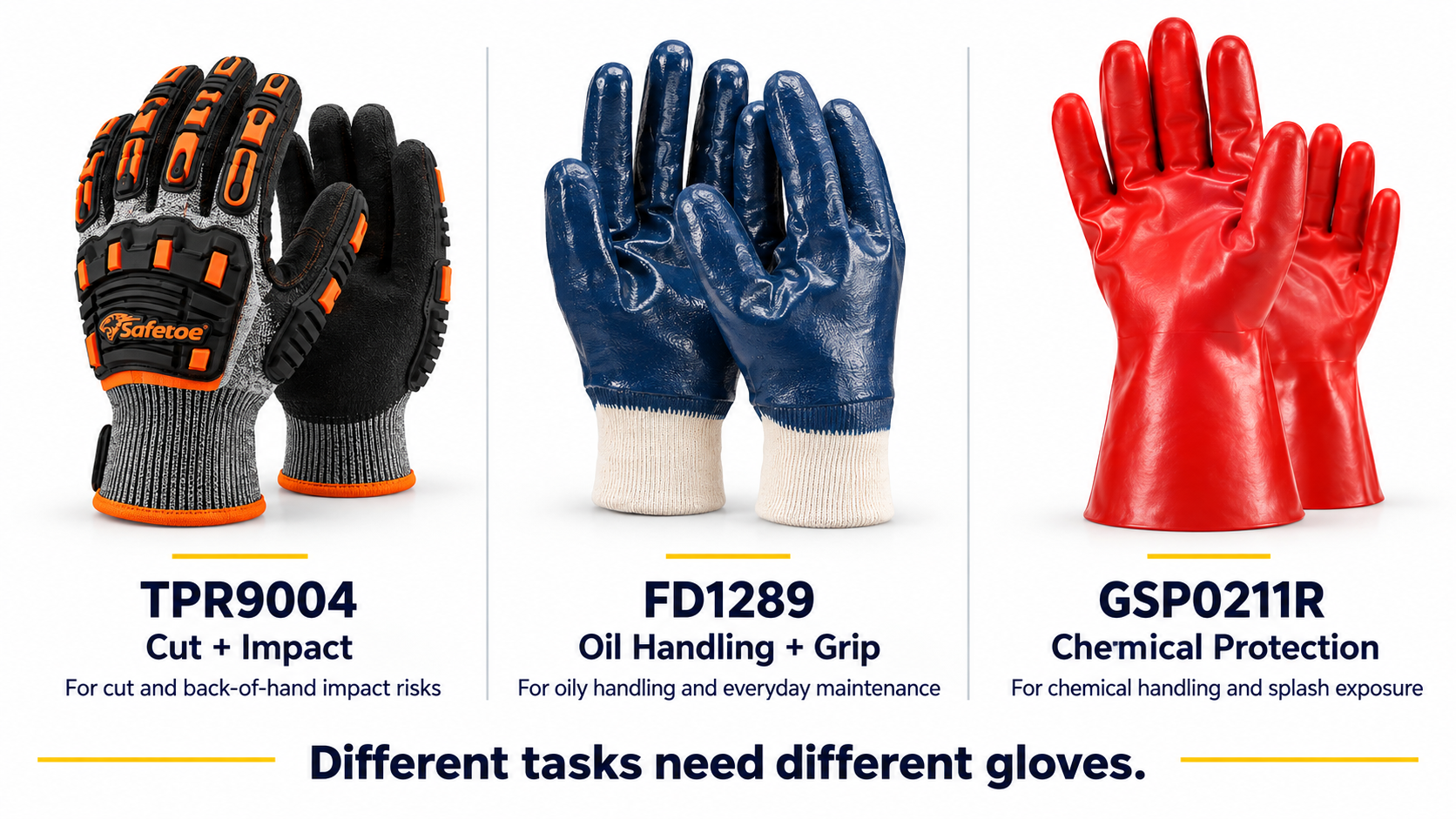
Different oil and gas tasks require different glove designs. The following three models illustrate how protection priorities can change according to the application.
TPR9004 — Cut & Impact Protection
TPR9004 is designed for demanding mechanical applications where workers may encounter both sharp materials and back-of-hand impact hazards.
Suitable for:
Drilling
Pipe handling
Heavy oilfield handling
Mechanical work
Sharp metal handling
Key Performance:
EN 388: 4X44DP
Cut Level D
Impact P
TPR back-of-hand guards
Nitrile-coated palm
Primary Role: Cut + Impact
TPR9004 combines Cut Level D protection, TPR impact guards and a nitrile-coated palm.
FD1289 — Oil Handling & Industrial Grip
FD1289 is a nitrile-coated handling glove intended for maintenance, everyday industrial work and tasks involving oil or grease handling.
Suitable for:
Key Performance:
Primary Role: Oil Handling + Grip
Safeyear describes FD1289 as a nitrile-coated glove for oil handling, maintenance and everyday industrial work.
GSP0211R — Chemical Protection
GSP0211R is intended for applications where workers may encounter direct chemical or liquid exposure.
Suitable for:
Key Performance:
Primary Role: Chemical Protection
GSP0211R provides a clearly different protection role from general oil-handling gloves and is supported by specific chemical-protection certification.
Oil & Gas Work Glove Selection Checklist
Before selecting oil and gas work gloves, check:
☐ What task will the worker perform?
☐ Is there a cut or sharp-metal hazard?
☐ Is back-of-hand impact protection required?
☐ Will workers handle oily or slippery equipment?
☐ Is direct chemical contact expected?
☐ Which chemicals will be handled?
☐ What EN 388 protection level is appropriate?
☐ Is EN ISO 374 chemical protection required?
☐ How much dexterity is needed?
☐ Does the glove fit the worker and task?
The final glove selection should reflect the complete hazard profile rather than one individual feature or performance rating.
Oil & Gas Work Gloves FAQ
1. What are the best gloves for oil and gas work?
There is no single best glove for every oil and gas task. Drilling and pipe handling may require impact and cut protection, equipment maintenance may require reliable grip around oily surfaces, while chemical processing may require certified chemical-resistant gloves. Selection should be based on the actual task, hazards and workplace risk assessment.
2. Do oilfield workers need impact-resistant gloves?
Impact protection may be appropriate for tasks involving pipes, drilling equipment, heavy tools, machinery or other back-of-hand impact hazards. The need for impact protection should be determined according to the specific job and risk assessment. Where EN 388 impact performance is claimed, buyers should check whether the glove carries the optional P marking.
3. Are oil-resistant gloves the same as chemical-resistant gloves?
No. A glove designed to provide grip or handling performance around oils and lubricants is not automatically a certified chemical-resistant glove. For direct chemical exposure, buyers should review the glove's applicable EN ISO 374 classification and chemical permeation data for the substance being handled.
4. What glove standards are important for oil and gas work?
EN 388 is commonly relevant where protection against mechanical risks such as abrasion, cut, tear, puncture or impact is required. Where chemical exposure is part of the task, EN ISO 374 may also be relevant. The applicable standards should always be determined according to the actual hazard and application rather than assuming that every oilfield glove requires the same certification.
Conclusion
The right oil and gas work glove is the one that matches the specific combination of hazards and tasks.
Impact protection, cut resistance, oily-surface grip and chemical protection should not be treated as interchangeable features.
A drilling worker, maintenance technician and chemical-processing operator may all work within the oil and gas industry but require very different glove designs.
A practical glove-selection process is:
Identify the task → Assess the hazard → Determine the required protection → Verify the performance evidence
Selecting hand protection in this way helps PPE buyers avoid treating one glove as a universal solution and makes it easier to match each worker with protection appropriate to the job.

 English


