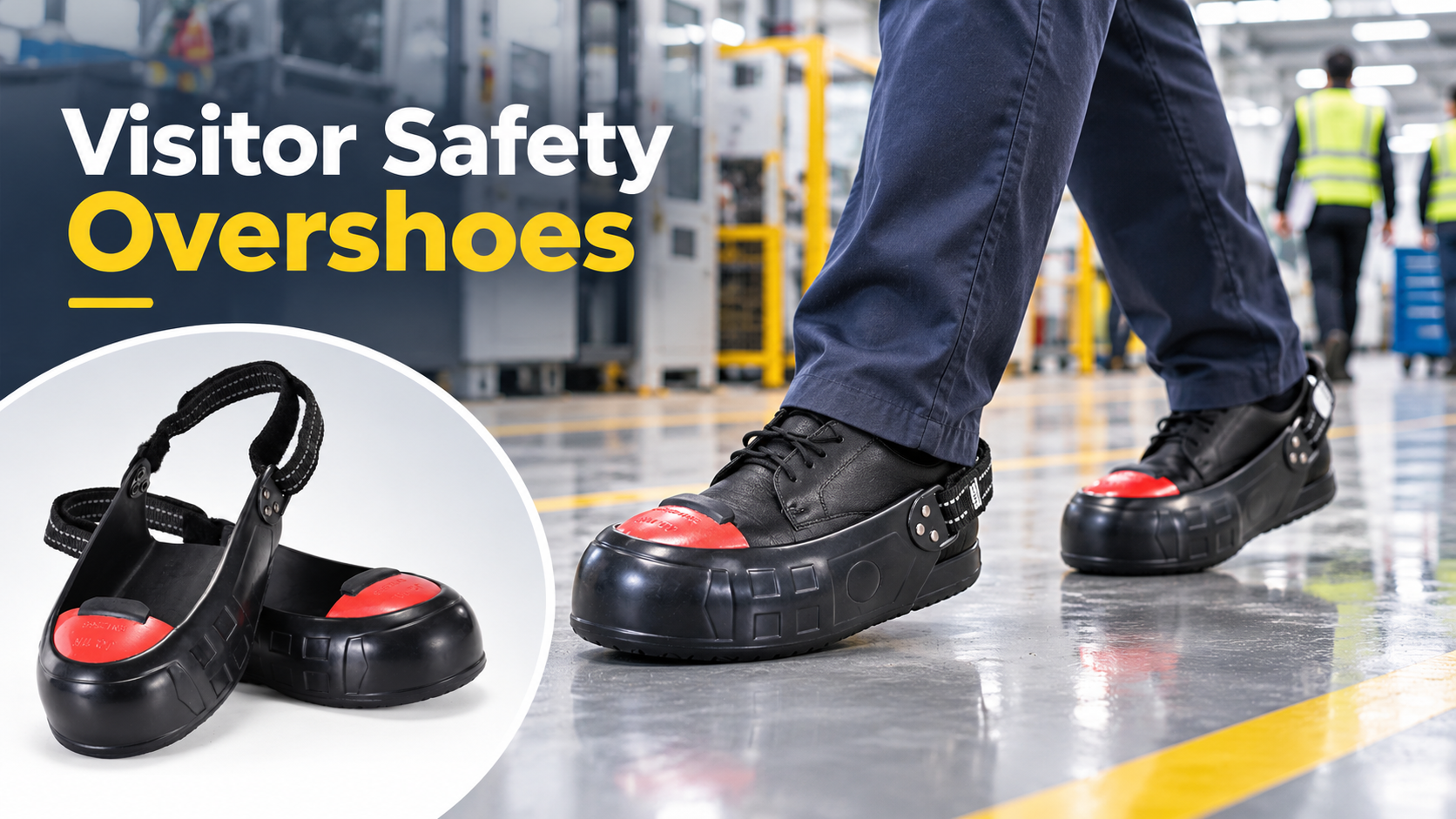
Factories, warehouses and industrial facilities regularly receive visitors who may need to enter areas where protective footwear is required. These visitors can include customers, suppliers, auditors, inspectors and temporary contractors.However, most visitors arrive wearing their own everyday footwear rather than industrial safety shoes. Providing a separate pair of safety shoes for every visitor can create challenges with sizing, storage, inventory and hygiene.
This is where visitor safety overshoes can provide a practical solution.
Designed to fit over existing footwear, reusable safety overshoes can offer temporary foot protection for visitors when their verified protection is suitable for the workplace requirements.
In this guide, we explain what visitor safety overshoes are, how they differ from disposable shoe covers, when they should be used and what buyers should consider before purchasing.
1. What Are Visitor Safety Overshoes?
Visitor safety overshoes are protective devices designed to fit over a person's existing footwear and provide specified temporary workplace protection without requiring the visitor to change into a dedicated pair of safety shoes.They are particularly useful for industrial facilities that receive occasional visitors.
Unlike conventional safety shoes, which replace everyday footwear, safety overshoes are worn over the shoes the visitor already has.
It is important to understand the difference between three types of footwear protection:
1.Visitor Safety Overshoes
Designed to provide specified protective features over existing footwear for temporary workplace access.
2.Disposable Shoe Covers
Primarily designed for hygiene and contamination control, such as preventing dirt from entering clean areas.
3.Safety Shoes
Dedicated occupational footwear designed for workers who require regular workplace foot protection.
A safety overshoe is not the same as a disposable shoe cover, and it is not automatically a substitute for safety footwear in every workplace.
2. Why Do Factories Use Safety Overshoes for Visitors?
Many industrial facilities need to maintain workplace safety requirements while allowing customers and other visitors to enter designated production or operational areas.
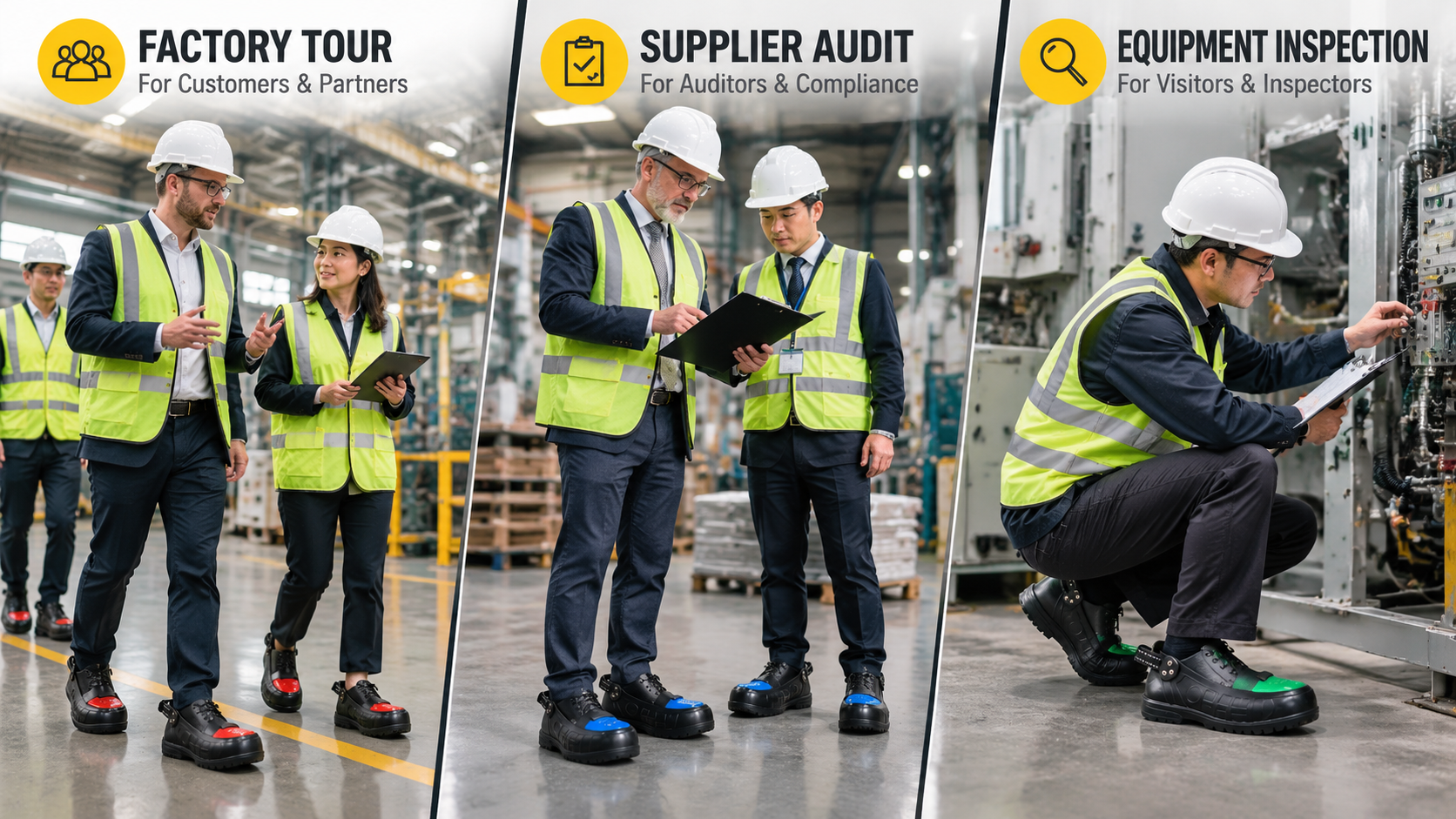
Common situations include:
Factory Tours: Customers visiting production lines or manufacturing facilities.
Customer Visits: Business partners entering designated industrial areas.
Supplier Audits: Suppliers participating in factory inspections and assessments.
Equipment Inspections: Engineers or technicians visiting to inspect machinery and installations.
Short-Term Contractors: Temporary personnel accessing areas with specific PPE requirements.
Warehouse Visits: Visitors entering storage and material-handling areas.
In many cases, visitors arrive wearing sneakers, leather shoes or other footwear that does not meet the site's required protection standards.Keeping multiple pairs of occupational safety shoes in different sizes can be inconvenient, particularly when visitor numbers fluctuate.
Reusable safety overshoes can help simplify visitor PPE management through:
Temporary footwear protection
Convenient distribution
Flexible visitor footwear arrangements
Reusable equipment management
Easier storage at designated PPE stations
The actual protection provided must always match the hazards and access requirements of the workplace.
3. What Protection Can Safety Overshoes Provide?
The protection offered by safety overshoes depends on their design, materials and verified test performance.When evaluating a visitor safety overshoe, buyers should pay attention to the following features.
1.Aluminum Toe Protection
An aluminum toe component can provide protection against toe impact when the product has been designed and tested for the relevant requirements.
The actual impact protection level should be confirmed through the manufacturer's technical documentation and applicable test evidence.
2.Upper Foot Coverage
A protective overshoe covers part of the visitor's existing footwear.
The design and coverage area determine which parts of the foot receive protection.
3.Reusable Construction
Unlike disposable shoe covers, reusable safety overshoes are intended for repeated use, subject to proper cleaning, inspection and maintenance.
4.Fit and Adjustment
The overshoe should fit securely over the visitor's existing footwear.
Buyers should check the adjustment or retention system, available sizes and compatibility with different shoe shapes.
Important: Toe protection does not automatically mean that an overshoe provides puncture resistance, electrical hazard protection, waterproofing, antistatic performance or slip resistance. These features should only be claimed when supported by the specific product's documentation.
4. Visitor Safety Overshoes vs Safety Shoes
Both products can play a role in workplace foot protection, but they address different PPE-management needs.
| Comparison | Visitor Safety Overshoes | Safety Shoes |
| Main Users | Temporary visitors | Regular workers |
| Wearing Method | Over existing footwear | Replaces everyday footwear |
| Short Visits | Suitable when protection matches the risk | Also suitable |
| Daily Industrial Work | Generally not the primary solution | Designed for occupational use |
| Size Management | Overshoe sizing | Individual shoe sizing |
| Distribution | Convenient for temporary access | Requires footwear allocation |
| Protection | Model-specific | Model-specific |
| Main Application | Factory tours, audits and inspections | Routine industrial work |
Neither option is universally better.
Visitor overshoes and safety shoes solve different PPE-management problems.
For employees who work in industrial environments every day, dedicated safety footwear is generally the more appropriate choice. For temporary visitors, protective overshoes may provide a more convenient solution when their verified protection meets the site's requirements.
5. When Should You Use Visitor Safety Overshoes?
Reusable visitor safety overshoes are particularly relevant in facilities where people occasionally enter designated areas requiring foot protection.
Typical applications include:
1.Factory Tours
Visitors can wear protective overshoes before entering approved production areas.
2.Supplier and Customer Visits
Business partners can access designated areas without necessarily requiring a separately allocated pair of safety shoes.
3.Audits and Inspections
Auditors and inspectors may need temporary access to manufacturing or warehouse facilities.
4.Warehouse Visitors
Visitors entering areas with material-handling activities may require additional foot protection according to the site's risk assessment.
5.Temporary Site Access
Short-term personnel may need temporary protective footwear while visiting specific operational areas.
The facility should determine whether overshoes provide sufficient protection for each access area before allowing entry.
6. When Are Safety Overshoes NOT the Right Choice?
Safety overshoes are not suitable for every industrial environment.
In particular, they should not be used as a substitute for dedicated occupational safety footwear when the workplace requires protection that the overshoe cannot provide.
Examples include:
Long-term daily industrial work.
Work involving significant puncture hazards without corresponding verified protection.
Electrical work requiring specific electrical hazard protection.
Welding and high-temperature operations.
Heavy mining activities.
Uneven outdoor terrain where the overshoe cannot provide suitable stability.
Applications requiring specialized certified footwear.
The workplace risk assessment and PPE requirements should determine whether visitor overshoes provide sufficient protection.
If the required protection cannot be verified, the facility should provide an appropriate pair of safety shoes or boots instead.
Explore Safetoe Safety Footwear for dedicated footwear options for regular industrial work.
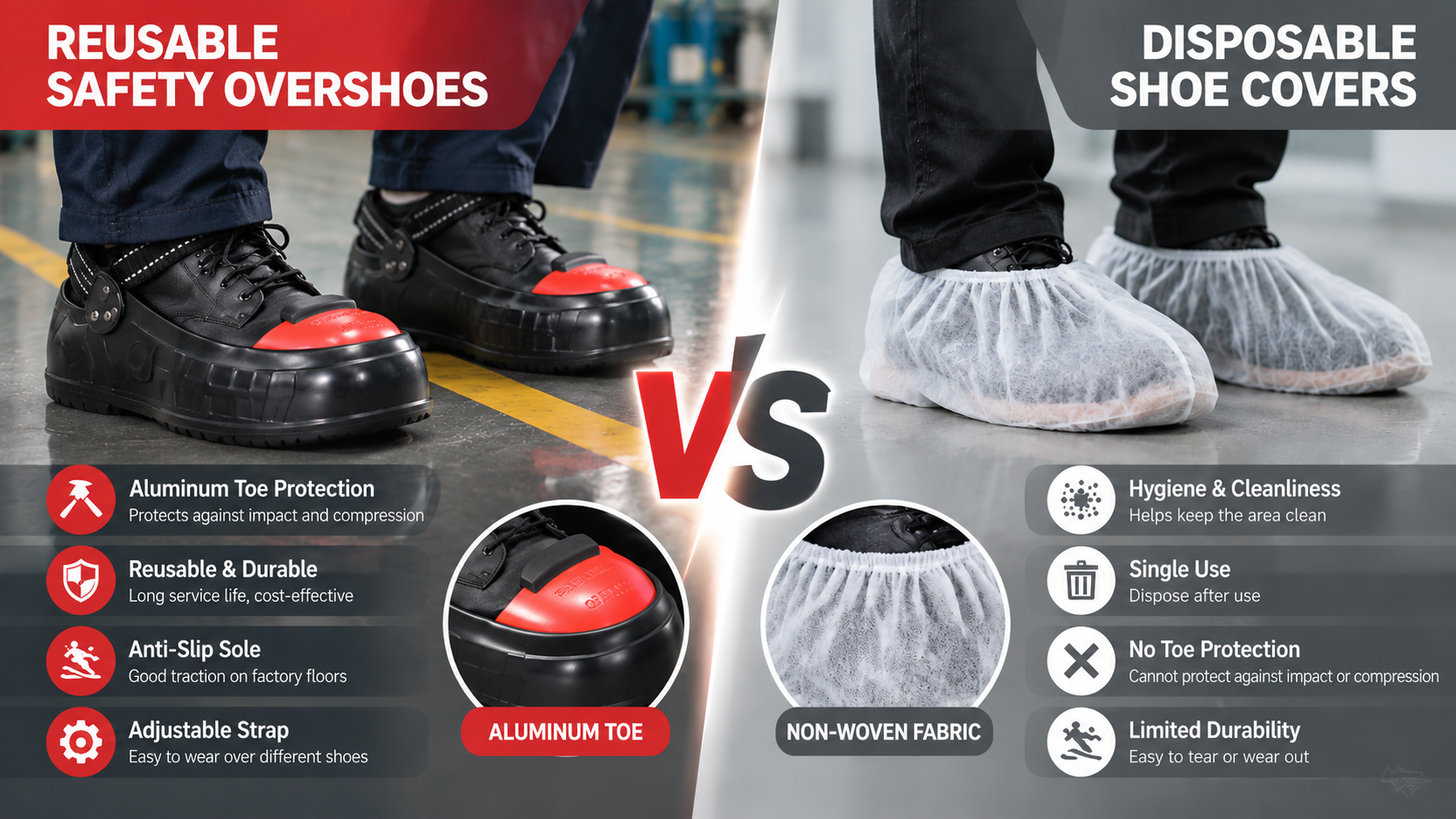
7. Reusable Safety Overshoes vs Disposable Shoe Covers
One common source of confusion is the difference between protective overshoes and disposable shoe covers.
Although both products are worn over existing footwear, their primary purposes are different.
| Comparison | Reusable Safety Overshoes | Disposable Shoe Covers |
| Primary Purpose | Specified foot protection | Hygiene and cleanliness |
| Toe Protection | Model-specific | Normally none |
| Industrial Visitor Use | Yes, where suitable | Not a safety-footwear substitute |
| Reusability | Designed for repeated use | Usually single-use |
| Factory Tours | Suitable when protection matches the risk | Primarily for hygiene requirements |
| Main Consideration | Protective performance | Contamination control |
For example, a food-processing facility may use disposable shoe covers to maintain hygiene, while an industrial manufacturing facility may require protective overshoes for visitors entering designated production areas.
The two products should not be treated as interchangeable.
8. How to Choose Visitor Safety Overshoes
Before purchasing reusable visitor safety overshoes, procurement and EHS teams should evaluate several factors.
1. Required Protection
Start with the workplace risk assessment. Identify the hazards visitors may encounter and determine whether the overshoe provides the required protection.
2. Certification and Test Evidence
Request the applicable test reports, certificates and technical documentation.
Do not assume that an aluminum toe component automatically establishes compliance with a particular safety footwear standard.
3. Toe-Cap Construction
Check the toe protection material, design and verified impact performance.
Aluminum toe protection is one option for visitor footwear applications.
4. Size Range
Consider the range of footwear sizes commonly worn by visitors.
The overshoe should accommodate different shoe dimensions without compromising its intended fit.
5. Fit and Adjustment
Check how the overshoe is secured over ordinary footwear.
A suitable retention system helps ensure that it stays in place during normal visitor movement.
6. Ease of Putting On and Taking Off
Visitor PPE should be straightforward to distribute and use, especially when multiple people enter the facility together.
7. Cleaning and Reuse
Establish cleaning, inspection and replacement procedures before introducing reusable overshoes into a shared PPE program.
8. Storage
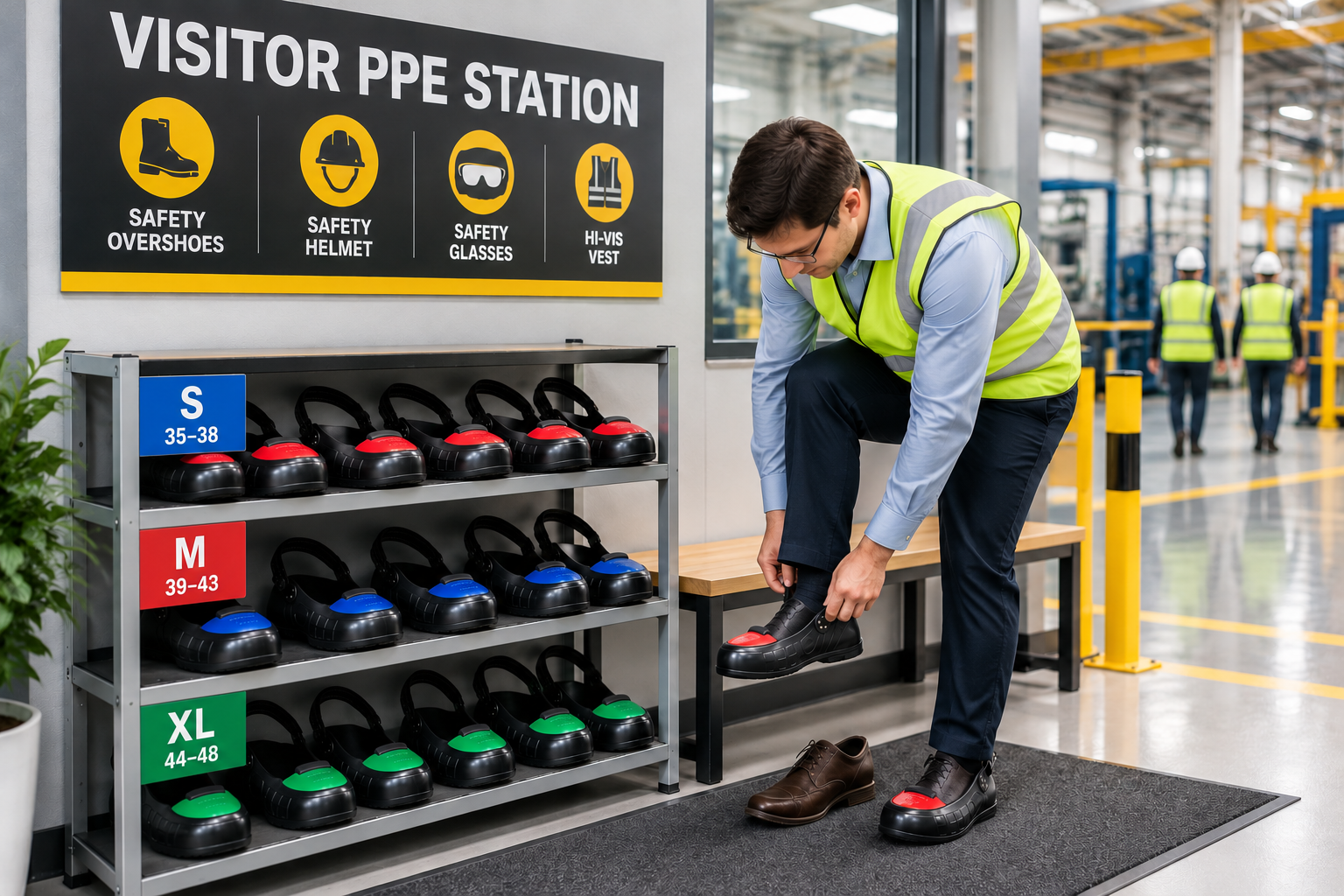
Consider where overshoes will be stored, such as reception areas, factory entrances or dedicated visitor PPE stations.
9. How Many Visitor Safety Overshoes Does a Factory Need?
The required inventory depends on visitor traffic and the number of people who may enter controlled areas simultaneously.
Rather than calculating stock based only on average daily visitors, factories should consider peak visitor demand.
Important factors include:
Peak simultaneous visitor group size.
Expected footwear size distribution.
Number of factory entrances.
Cleaning and maintenance rotation.
Spare inventory for unexpected visits.
For example, a facility that regularly receives large customer groups may need more available overshoes than a factory that receives only occasional individual visitors.
A practical approach is to organize the visitor PPE station by size, maintain a clear return and cleaning process, and keep additional stock available for unexpected demand.
10. Safetoe Reusable Visitor Safety Overshoes
Safetoe offers reusable visitor safety overshoes designed for temporary access to industrial environments.The product is intended to fit over existing footwear, providing an alternative to allocating a separate pair of occupational safety shoes to every temporary visitor.
Its aluminum toe construction is a key feature to evaluate when considering toe-impact protection requirements.
Suitable Applications
Key Product Considerations
Buyers should review the actual technical specifications and supporting test documentation to confirm suitability for their workplace.
Explore Reusable Visitor Safety Overshoes for factory visitors and temporary industrial site access.
11. Visitor PPE Checklist for Factory Tours
Footwear is only one part of a complete visitor PPE program.
Before allowing visitors into industrial areas, facilities should review the applicable site requirements.
A practical visitor PPE checklist may include:
Safety helmet where required.
Safety eyewear where required.
High-visibility clothing where required.
Hearing protection where required.
Appropriate visitor foot protection.
Site safety induction.
Restricted-area access instructions.
The required equipment depends on the specific facility and its risk assessment.
A properly organized visitor PPE station can make the process easier for reception staff, EHS teams and visiting customers.
FAQ: Visitor Safety Overshoes
1. What are visitor safety overshoes?
Visitor safety overshoes are protective devices designed to fit over existing footwear and provide specified temporary protection for people entering industrial workplaces.
2. Can safety overshoes replace safety shoes?
Only when the overshoe's verified protection meets the workplace requirements. They are not universally interchangeable with dedicated occupational safety footwear.
3. Are safety overshoes the same as disposable shoe covers?
No. Safety overshoes are designed for specified foot protection, while disposable shoe covers are primarily used for hygiene and contamination control.
4. Who should wear visitor safety overshoes?
They may be suitable for factory visitors, customers, suppliers, auditors, inspectors and temporary personnel entering designated areas where appropriate foot protection is required.
5. Are visitor safety overshoes reusable?
Reusable visitor safety overshoes are designed for repeated use. However, they should be cleaned, inspected and maintained according to the manufacturer's instructions. Damaged or unsuitable products should be replaced.
Conclusion
Visitor safety overshoes provide a practical way for factories to manage temporary footwear protection for customers, suppliers, auditors and other visitors.They can help reduce the need to allocate separate safety shoes for every occasional visitor, while supporting a more organized visitor PPE process.
However, the correct choice always depends on the workplace hazards and the protection verified for the specific overshoe model.
Identify the Workplace Risk → Verify the Protection → Choose the Right Visitor Footwear.
Explore Safetoe Reusable Visitor Safety Overshoes to learn more about visitor footwear solutions for industrial facilities.

 English


