Safety earmuffs may feel comfortable at first but hurt after several hours. Ear pressure, headband force, heat and poor adjustment can contribute. Comfort matters because protection must be worn correctly throughout noise exposure. Yet a loose fit may create gaps around the cushions and reduce protection. This guide explains the causes of discomfort and how to assess cushions, headbands and fit when choosing earmuffs for long shifts.
Why Do Earmuffs Become Uncomfortable After Long Wear?
Quick answer: Earmuffs can become uncomfortable because of concentrated pressure around the ears, excessive headband force, heat, weight or a poor fit. Comfort and noise protection both depend on maintaining appropriate cushion contact without unnecessary pressure.
1. Pressure Around the Ears
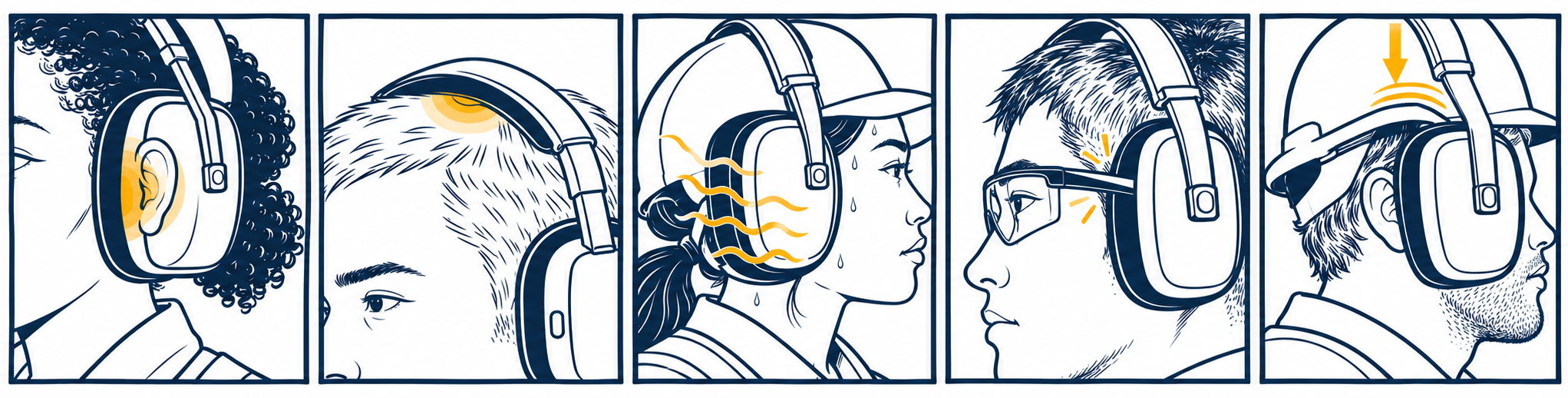
Ear cushions contact the head throughout wear. Firm cushions, narrow contact areas or uneven cup positioning may concentrate pressure. Check that both ears fit inside the cups and that the cushions lie evenly around them.
2. Headband Clamping Force
The headband presses the cups toward the head. More force is not automatically better: excessive pressure may hurt, while too little can allow movement or gaps. A worn headband may also lose tension, so inspect its fit over time.
3. Heat and Moisture
Earmuffs surround the ears and may feel warm during summer construction, hot factory work or physically demanding shifts. Perspiration can also affect comfort. In some hot environments, workers may find suitable earplugs more comfortable. Product choice should follow the assessed noise exposure and the worker’s ability to wear the protector correctly.
4. Poor Adjustment or Interference from Other PPE
Misaligned cups affect comfort and sealing. Hair, glasses, respirators and helmets may disturb the cushions. Check the complete PPE combination; a visible gap calls for reassessing the fit.
5. Weight and Wearing Fatigue
Weight can affect comfort, especially when earmuffs are worn with other head protection. Lighter earmuffs may suit some workers, but weight alone does not establish fit or adequate attenuation. Consider pressure distribution and the required protection too.
How Ear Cushions Affect Comfort and Fit
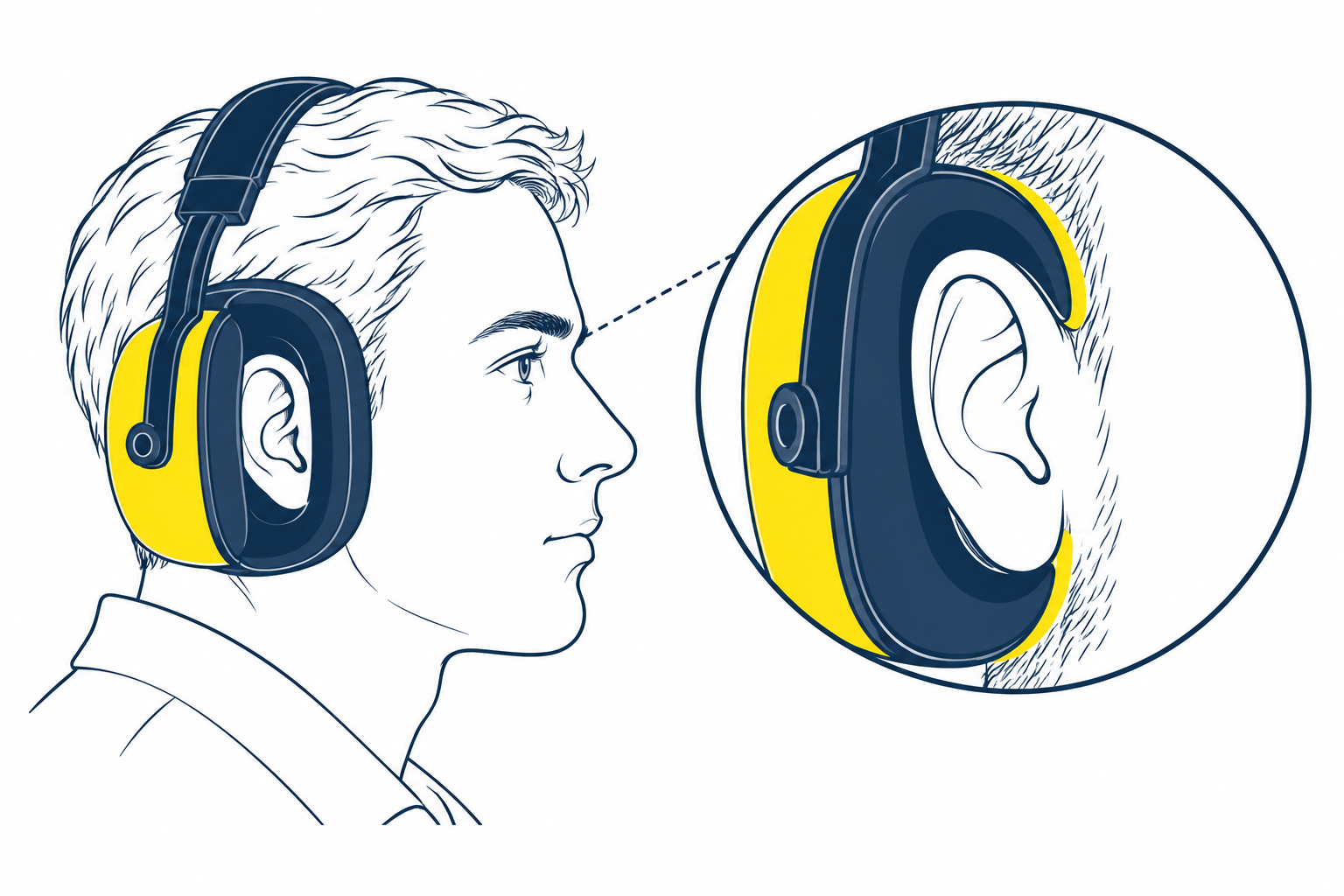
An ear cushion has two jobs: spread contact pressure and help maintain contact around the ear. Softness can reduce local discomfort, while the shape and contact area influence how pressure is distributed. But a cushion that fails to sit evenly against the head may leave gaps. The useful question is whether the complete earmuff feels comfortable and maintains its intended fit.
Inspect cushions for cracks, hardening or compression, and follow the manufacturer’s replacement instructions. Safetoe’s Cushentra™ Cushion Technology focuses on cushion comfort, pressure distribution and contact around the ear. The design concept does not replace checking how a particular earmuff fits an individual worker.
Cushion contact should be checked around the whole ear on the individual wearer.
Why Headband Pressure Matters
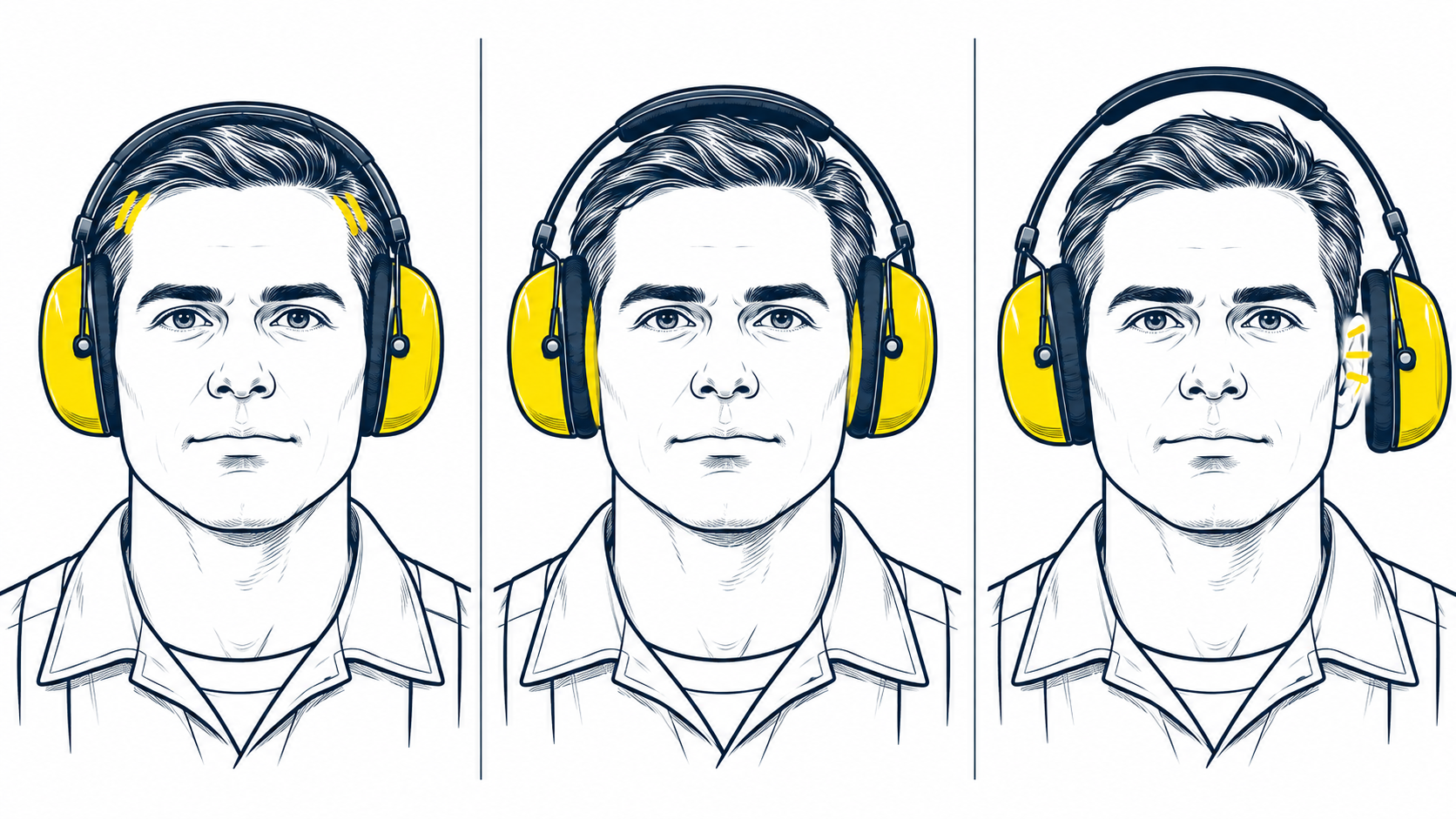
The headband and cushions work together: the band positions the cups, while the cushions distribute the contact force. A band that is too tight can create pressure points; one that is too loose can let the cups shift. Neither minimum nor maximum pressure is the target. Balanced clamping force helps the cups remain in position without avoidable discomfort.
Check the adjustable range and try the earmuffs on workers with different head sizes. Fit should be assessed while wearing required glasses or a helmet. PressureFlex™ Headband System is Safetoe’s approach to distributing headband force while supporting stable cup positioning. Individual comfort and seal still need to be checked on the wearer.
Comfort and Noise Protection: What Needs to Be Balanced?
Comfort should not compromise the seal, and a higher laboratory attenuation rating is not automatically better for every worker. Balance noise exposure, cushion contact, headband force and other PPE. WaveLock™ Noise Reduction Technologycovers acoustic design; Cushentra™ addresses cushions and PressureFlex™ the headband.
SNR and NRR are ratings derived from standardized testing, not guaranteed decibel reductions for an individual worker. Verify the model’s EN 352 documentation or applicable ANSI S3.19 testing information, then evaluate fit and the actual noise exposure. Individual fit testing can provide a more useful estimate of the protection obtained by the wearer.
How to Choose Comfortable Earmuffs for Long Shifts
Trial the earmuffs at work. Check:
1. Cushion contact and condition around both ears.
2. Headband pressure, adjustability and cup stability.
3. Heat, weight and comfort after realistic wearing time.
4. Interference from glasses, helmets, respirators or hair.
5. The required attenuation and product-specific documentation.
Recheck the fit with all PPE in place. No single protector feels best to everyone; another earmuff or suitable earplug may fit better while meeting the noise protection requirement.
Safetoe Earmuff Options to Compare
EM-5002 Professional Safety Earmuffs are listed with SNR 33 dB and NRR 26 dB, adjustable over-the-head cups and cushioned contact. They are an option to evaluate when a team needs a professional earmuff with the required attenuation and a suitable individual fit.
FM-1B Lightweight Safety Earmuffs are listed at approximately 230 g with NRR 26 dB. Their lower stated weight may appeal to workers who prioritize that aspect of wear, provided the model supplies the required protection and seals correctly with their other PPE.
Do not treat these ratings as each worker’s actual reduction. Confirm the model, documentation, fit and workplace requirements.
Frequently Asked Questions
1. Why do earmuffs hurt my ears after a few hours?
Pressure from the cushions or headband, heat, weight and poor adjustment can all contribute. Check cup position and cushion condition, then try another correctly rated protector if discomfort persists.
2. Should safety earmuffs feel tight?
They need enough pressure to keep the cushions in contact around the ears, but excessive force can cause discomfort. If they shift or leave gaps, reassess the fit rather than simply tightening them.
3. Are earplugs more comfortable than earmuffs for long shifts?
For some workers, especially in hot conditions, yes. Comfort varies by person. Choose between properly fitted earplugs and earmuffs based on noise exposure, working conditions, other PPE and adequate protection.
Summary
Long-wear earmuff comfort depends on cushion contact, balanced headband force, heat, weight and fit with other PPE. Check these factors on the worker while also verifying the noise protection requirement. A comfortable protector is useful only when it can be worn correctly throughout the exposure.
Author: By Jay Yuan, Technical Marketing Director, Safeyear
Explore More from Safetoe
Explore the technologies behind Safetoe hearing protection, find solutions for your worksite, or contact our team to discuss your requirements.

 English


