Safety earmuffs may look simple from the outside, but effective noise reduction depends on several components working together. The outer ear cups, internal acoustic materials, ear cushions and headband fit all contribute to controlling the sound that reaches the wearer’s ears.
A high attenuation rating is therefore not created by one component alone. Even a well-designed earmuff can provide less effective protection in real use if the cushions do not seal correctly around the ears or if other PPE interferes with the fit.
So, how do safety earmuffs reduce noise? The answer starts with understanding how fit, seal and acoustic design work together.
How Do Safety Earmuffs Reduce Noise?
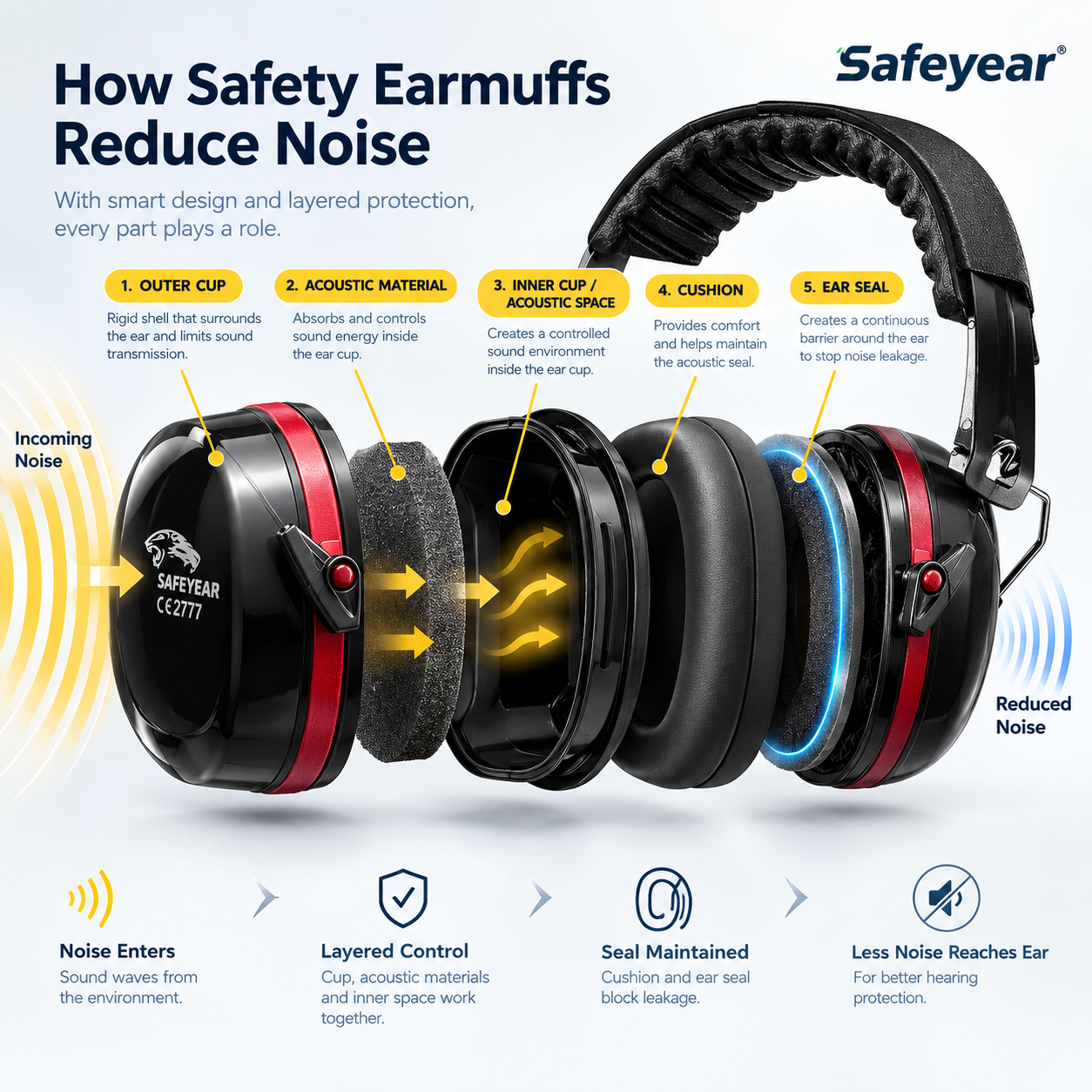
Safety earmuffs reduce noise by surrounding the ears with an acoustic barrier. The ear cups and internal materials help control sound transmission, while the cushions create a seal around the ears. A stable fit helps maintain that seal during use.
In other words, noise reduction is a system, not the function of one component.
1. Outer Ear Cups Create a Protective Barrier
The outer ear cup surrounds the ear and provides the structure for the internal acoustic system. It helps limit sound transmission while supporting the acoustic materials and cushion. The goal is not simply to make the shell thicker or harder. The cup structure, internal space and acoustic materials work together to influence overall performance.
2. Internal Acoustic Materials Help Control Sound
A safety earmuff is not simply an empty shell. Its internal structure may include acoustic foam, internal cavities, sound-absorbing materials or other layers that help control sound energy inside the ear cup. This means two earmuffs can look similar from the outside while having different internal acoustic designs.
For Safeyear, this acoustic approach is represented by WaveLock™ Noise Reduction Technology.
3. Ear Cushions Create the Acoustic Seal
The cushion is not only for comfort. It is part of the acoustic system.
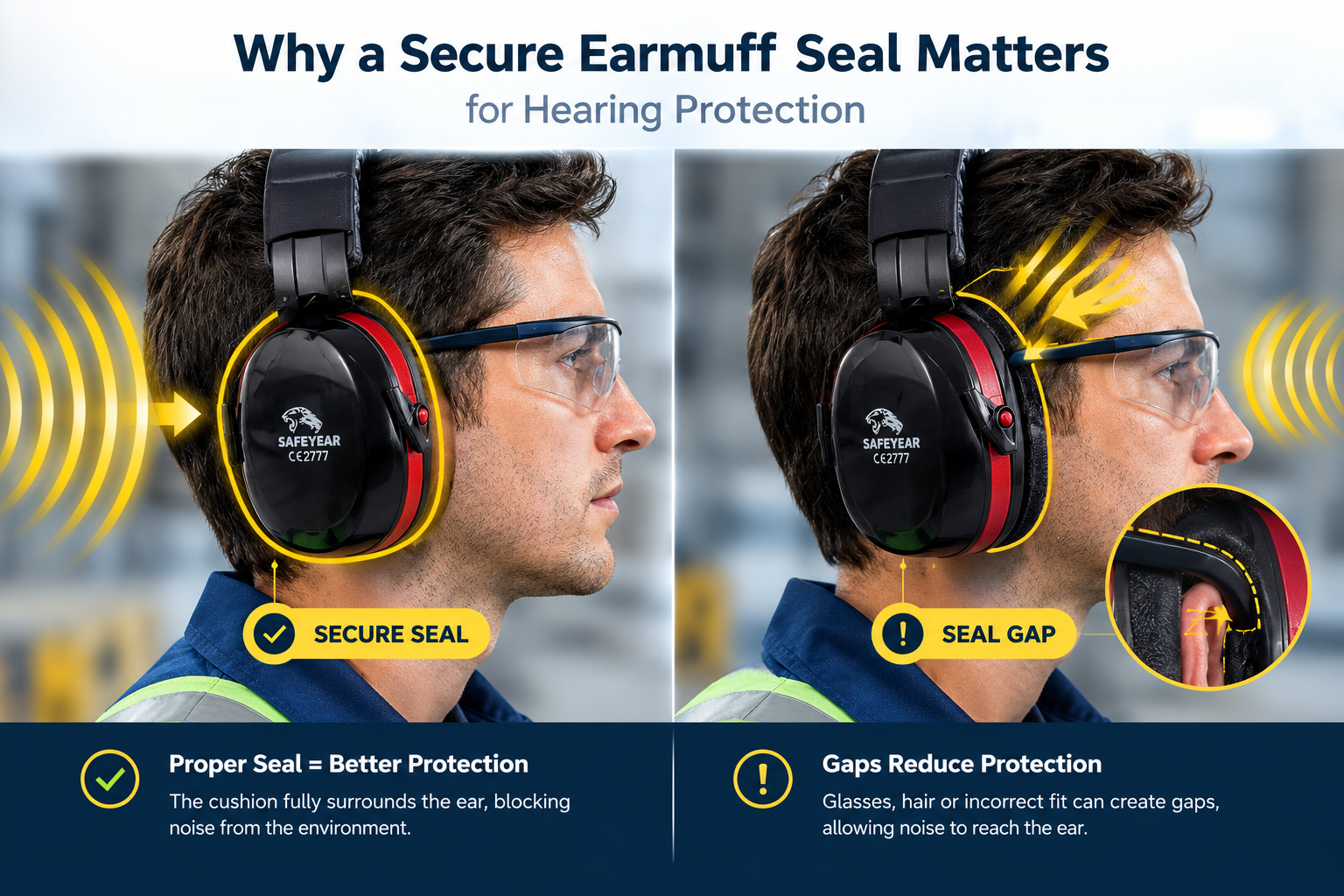
The cushion creates contact around the ear and helps maintain an acoustic seal between the earmuff and the wearer's head. If that seal is interrupted by a gap, sound may reach the ear through the opening.
Common factors that can affect the seal include:
Safety glasses
Hair under the cushion
Incorrect adjustment
Worn or damaged cushions
This is why cushion design matters when selecting hearing protection. Learn more about Cushentra™ Cushion Technology.
4. Stable Fit Helps Maintain the Seal
The headband helps keep the ear cups and cushions in position during use.
The basic relationship is: Ear Cup → Cushion → Head
Headband pressure should be sufficient to maintain a stable fit without creating unnecessary discomfort.
For more information, see PressureFlex™ Headband Technology.
Why Is the Earmuff Seal So Important?
A safety earmuff is designed to maintain continuous contact around the ear. If the cushion does not seal correctly, the protection achieved during actual use may be reduced.
Thick spectacle temples or other PPE positioned under the cushion can interfere with the seal. This does not mean that wearing safety glasses automatically prevents effective earmuff protection. Instead, PPE compatibility and overall fit should be considered together.
This is where Cushentra™ Cushion Technology becomes relevant: cushion design can influence both wearing comfort and the consistency of the ear seal.
Does a Higher SNR or NRR Always Mean Better Protection?
Not necessarily for every workplace or every wearer.
SNR and NRR ratings are important when evaluating hearing protection, but real-world performance also depends on correct fit, consistent wearing, seal quality and interaction with other PPE.
When comparing hearing protection products, buyers should consider both documented attenuation performance and how reliably workers can wear the product in the intended environment.
For more information, see EN 352 Hearing Protection Standards, ANSI S3.19 Hearing Protection and NRR vs SNR: Hearing Protection Selection Guide.
How Acoustic Design, Cushion and Fit Work Together
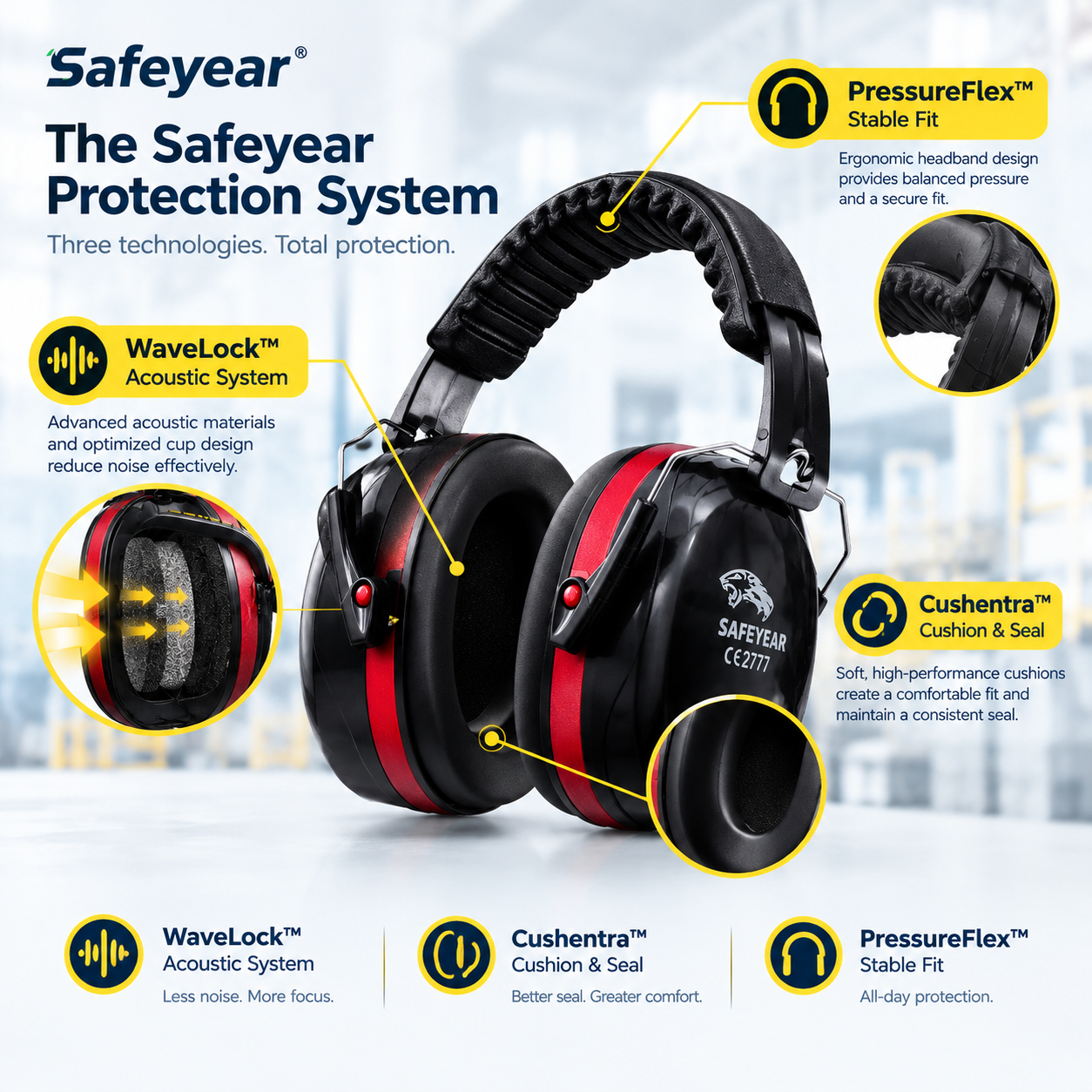
A simple way to understand a safety earmuff is to look at its three main functions:
| Earmuff Function | Design Focus | Safeyear Technology |
Noise Reduction | Cup & acoustic system | WaveLock™ |
Cushion & Seal | Ear cushion contact | Cushentra™ |
Stable Fit | Headband pressure | PressureFlex™ |
These technologies address different parts of the same protection system.
WaveLock™ focuses on the acoustic system and noise reduction.
Cushentra™ focuses on cushion contact and consistent ear sealing.
PressureFlex™ focuses on headband pressure distribution and fit stability.
Together: Protection + Seal + Fit form the foundation of an effective earmuff design.
What Should Buyers Check When Comparing Safety Earmuffs?
When evaluating industrial safety earmuffs, buyers should check:
Applicable SNR or NRR performance
Relevant hearing protection standard
Ear cup and acoustic design
Cushion condition and sealing
Headband adjustment and fit
Compatibility with safety glasses and other PPE
Expected wearing time and comfort
Product test or certification documentation
For workplace PPE procurement, documented performance should be considered alongside design and fit.
Safeyear Safety Earmuff Options
EM-5002 — Professional Safety Earmuffs
SNR 33 dB | NRR 26 dB
EM-5002 is a professional safety earmuff option for workplaces where documented attenuation performance and a complete hearing protection system are important.
FM-1B — Lightweight Safety Earmuffs
230 g | SNR 31 dB | NRR 26 dB
FM-1B provides a lightweight hearing protection option for workplaces where product weight and long-duration wear are important considerations.
The right choice should be based on workplace noise exposure, required protection, fit and wearing conditions.
FAQ
1. How Do Safety Earmuffs Reduce Noise?
Safety earmuffs surround the ears with an acoustic system consisting of ear cups, internal materials and sealing cushions. These components help control sound transmission, while a stable fit helps maintain the seal around the ears.
2. Does the Earmuff Seal Affect Noise Reduction?
Yes. Hair, safety glasses, incorrect adjustment or worn cushions can create gaps that may reduce the protection achieved during actual use.
3. Do Safety Earmuffs Use Active Noise Cancelling?
Most conventional industrial safety earmuffs use passive noise attenuation rather than consumer-style active noise cancelling. Their protective performance comes primarily from the physical acoustic system, sealing and fit.
Conclusion
Safety earmuff noise reduction is not created by the outer shell alone. The ear cup, internal acoustic materials, cushion, seal and stable fit work together to control sound around the wearer’s ears.
For PPE buyers, the key is to look beyond attenuation numbers and consider the complete system: acoustic design, sealing, fit, PPE compatibility and supporting documentation.

 English


