Industrial noise is one of the most common occupational health hazards in factories, construction sites, mining operations and manufacturing workshops.Long-term exposure to excessive noise can cause permanent hearing damage. Choosing suitable hearing protection is therefore essential for protecting workers and maintaining an effective workplace safety program.
However, purchasing managers often face two questions: What is the difference between NRR and SNR?
And should workers use safety earmuffs or earplugs?
This guide explains the main hearing protection ratings, compares different types of hearing protectors and helps industrial buyers select suitable products for their applications.
1. Why Is Hearing Protection Important?
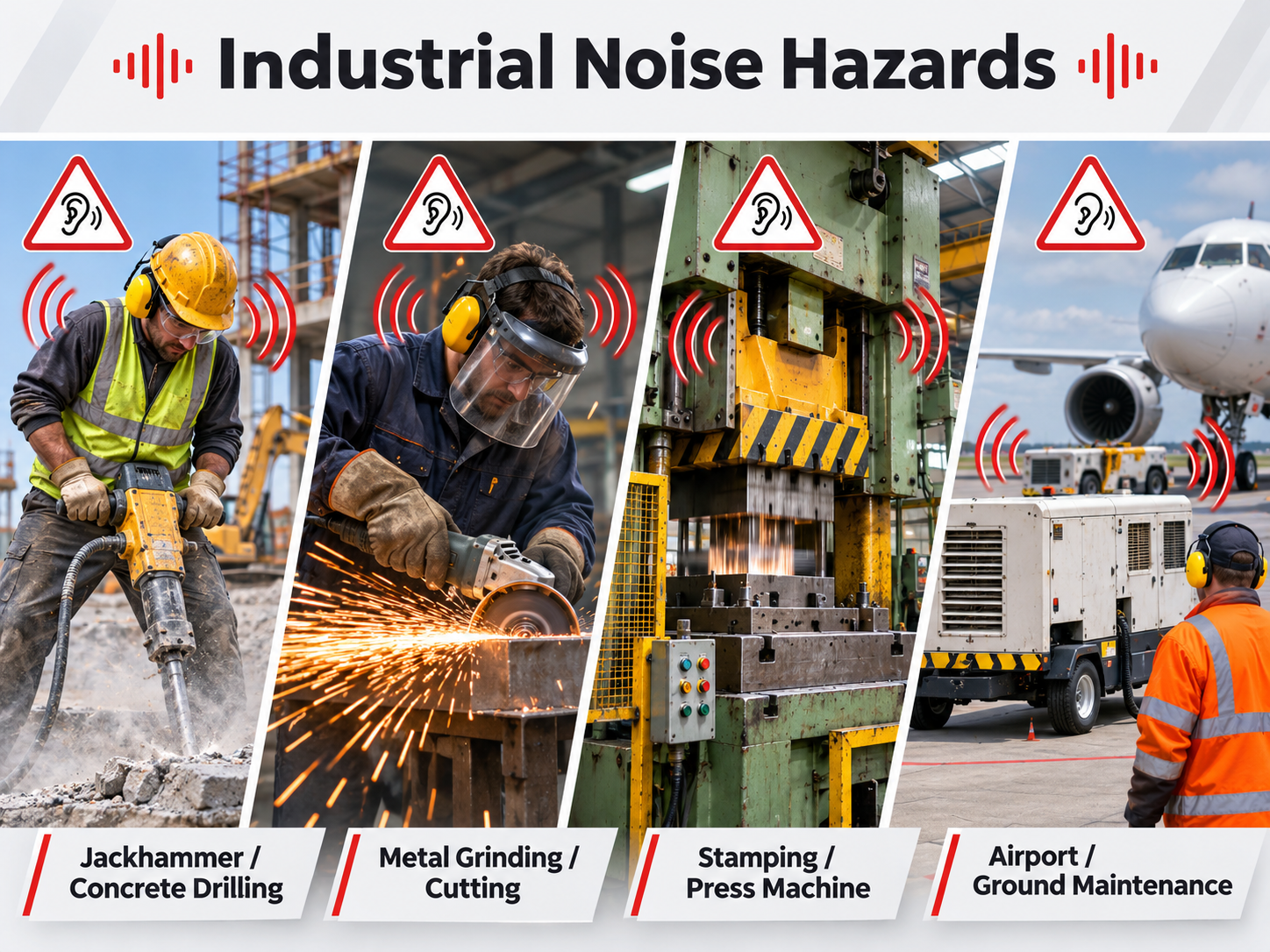
Industrial noise can come from machinery, power tools, compressors, stamping equipment, grinding operations and construction activities.
Common high-noise environments include:
Manufacturing: Stamping, injection molding, machining and production lines.
Construction: Drilling, demolition, cutting and concrete breaking.
Mining: Crushers, drilling rigs and heavy machinery.
Metalworking: Grinding, welding preparation and metal cutting.
Landscaping: Lawn mowers, leaf blowers and powered equipment.
Repeated exposure to excessive noise can damage hearing over time.
A workplace hearing conservation program should consider noise measurements, engineering controls, administrative controls, suitable hearing protection and worker training.Hearing protectors are an important part of this program, but they should not replace practical noise-control measures.
2. What Is the Difference Between NRR and SNR?
When purchasing industrial hearing protection, buyers commonly encounter two ratings: NRR and SNR.
Both describe the noise attenuation performance of hearing protectors, but they are based on different testing and rating systems.
NRR – Noise Reduction Rating
NRR is primarily used in the United States.
It is expressed in decibels (dB) and appears on hearing protection product packaging under the US noise-labeling system.
For example:
NRR 23 dB
NRR 26 dB
NRR 29 dB
NRR 32 dB
A higher NRR generally indicates greater potential noise attenuation under laboratory test conditions.
NRR is particularly relevant to US-oriented PPE procurement and projects requiring the appropriate US compliance documentation.
SNR – Single Number Rating
SNR is widely used in European hearing protection specifications.
It is associated with the EN ISO 4869-2 rating method, while hearing protectors are assessed against the applicable EN 352 product standards.
For example:
SNR 25 dB
SNR 28 dB
SNR 30 dB
SNR 33 dB
SNR provides a simplified indication of the expected noise attenuation performance of a hearing protector.
European products may also provide H, M and L values, representing attenuation at high, medium and low frequencies.
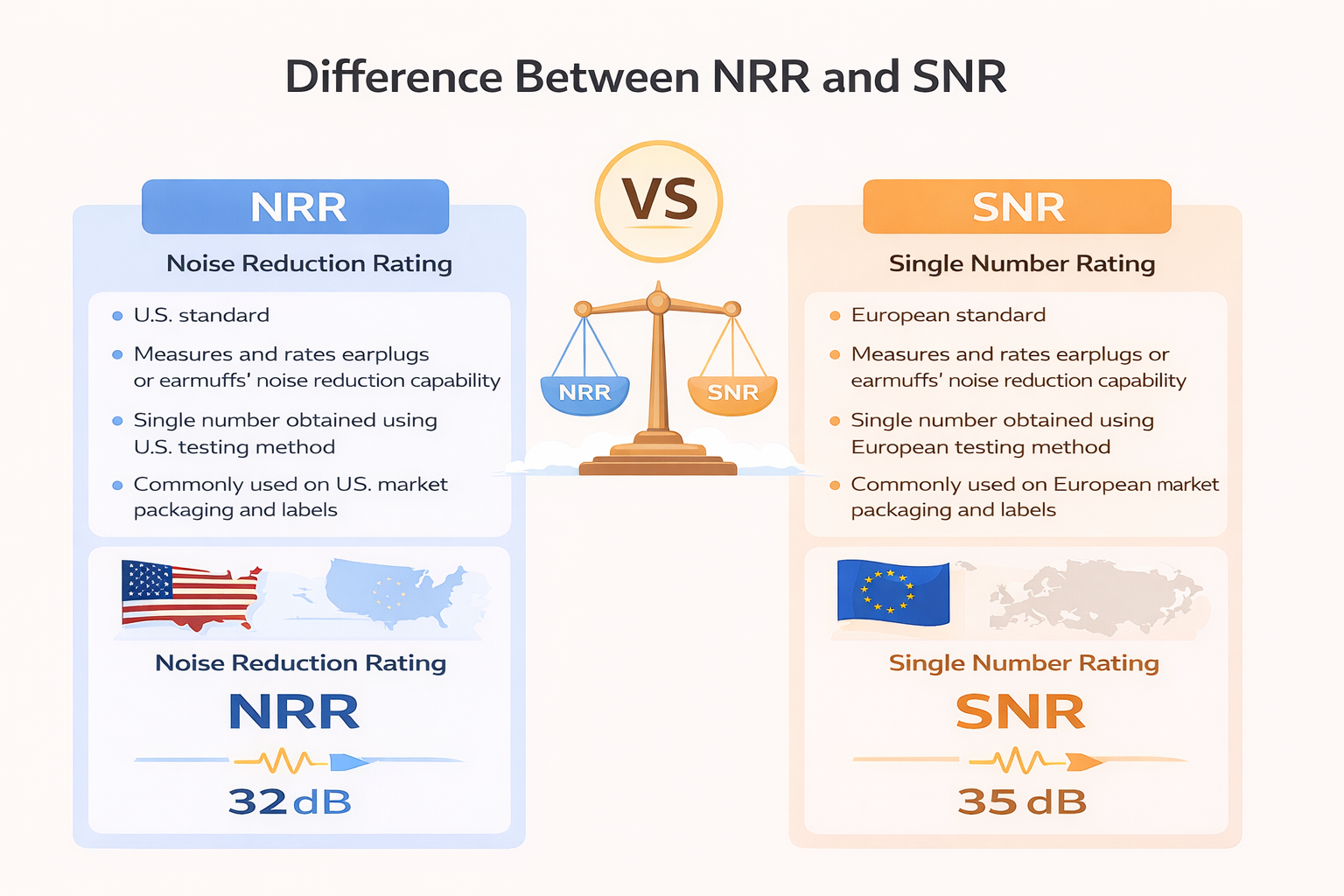
NRR vs SNR Comparison
| Item | NRR | SNR |
| Main market | United States | Europe |
| Rating unit | dB | dB |
| Relevant system | US EPA noise labeling | EN ISO 4869-2 |
| Product requirements | Applicable US requirements | EN 352 series |
| Main purpose | Noise attenuation rating | Noise attenuation rating |
Important: NRR and SNR are not directly interchangeable. A product with NRR 30 dB cannot automatically be considered equivalent to another product with SNR 30 dB.Buyers should compare the applicable test reports and evaluate the actual workplace noise exposure before selecting hearing protection.
3. Does a Higher NRR or SNR Always Mean Better Protection?
Not necessarily.A higher rating indicates greater potential noise attenuation under standardized testing conditions, but actual protection depends on several factors:
Correct Fitting:
Earplugs must be inserted correctly to create an effective seal. Poor insertion can significantly reduce their performance.
Proper Ear Cup Seal:
Earmuffs must fit securely around the ears. Hair, safety glasses and other equipment may interfere with the seal.
Wearing Time:
Hearing protection only works effectively when workers wear it consistently in noisy areas.
Comfort:
Excessive pressure, heat or discomfort may cause workers to remove their hearing protection.
Communication:
Excessive attenuation can make it difficult to hear instructions, warning signals and important workplace sounds.
The objective is to select sufficient protection without unnecessarily isolating workers from their surroundings.
Where available, individual hearing protector fit testing can help verify the attenuation achieved by each worker.
4. Earmuffs vs Earplugs: Which Should You Choose?
Both earmuffs and earplugs are widely used in industrial environments. The best choice depends on the application, noise exposure, worker preference and compatibility with other PPE.
Safety Earmuffs
Earmuffs cover the external ears using padded ear cups connected by a headband or attached to a safety helmet.
Advantages:
Easy to put on and remove.
Easier to check whether workers are wearing them correctly.
Suitable for intermittent noisy tasks.
Replaceable ear cushions can support long-term maintenance.
Helmet-mounted versions are available.
Limitations:
Can become warm during long shifts.
May interfere with some safety glasses.
Headband pressure may cause discomfort.
Proper ear cup sealing is essential.
Safety Earplugs
Earplugs are inserted into the ear canal or positioned at its entrance.
Common types include disposable foam earplugs, reusable silicone earplugs and corded earplugs.
Advantages:
Lightweight and compact.
Easy to carry and distribute.
Compatible with many other types of PPE.
Suitable for hot working environments.
Disposable versions are practical for shared-use programs.
Limitations:
Correct insertion is essential.
Poor fitting can significantly reduce protection.
Disposable products require regular replacement.
Hygiene and storage need attention.
Quick Selection Guide
| Workplace Situation | Recommended Option |
| Continuous high-noise operations | Suitable high-attenuation earmuffs or earplugs |
| Frequent removal and communication | Corded earplugs |
| Mandatory safety helmet use | Helmet-mounted earmuffs |
| Hot working environments | Comfortable earplugs |
| Shared-use applications | Disposable foam earplugs |
| Long-duration earmuff use | Earmuffs with replaceable cushions |
For extremely high-noise environments, double hearing protection using earmuffs and earplugs may be necessary following a professional noise risk assessment.The additional attenuation should not be calculated by simply adding the two product ratings together.
5. How to Select Hearing Protection for Different Industries
Different industries have different noise exposure patterns and PPE requirements.
Manufacturing and Factories
Workers operating stamping machines, compressors and production equipment may require suitable earmuffs or earplugs for continuous noise exposure.
Construction
Construction workers frequently move between noisy and quieter areas. Corded earplugs or suitable earmuffs can provide practical protection depending on the task.
Mining
Drilling, crushing and heavy machinery can create substantial noise exposure. Higher-attenuation hearing protection may be required following noise measurements.
Metalworking and Grinding
Workers using grinding wheels and cutting equipment may benefit from comfortable earmuffs or earplugs suitable for the measured noise levels.
Landscaping and Outdoor Maintenance
Lightweight hearing protectors are often preferred for lawn mowing, leaf blowing and powered garden equipment.
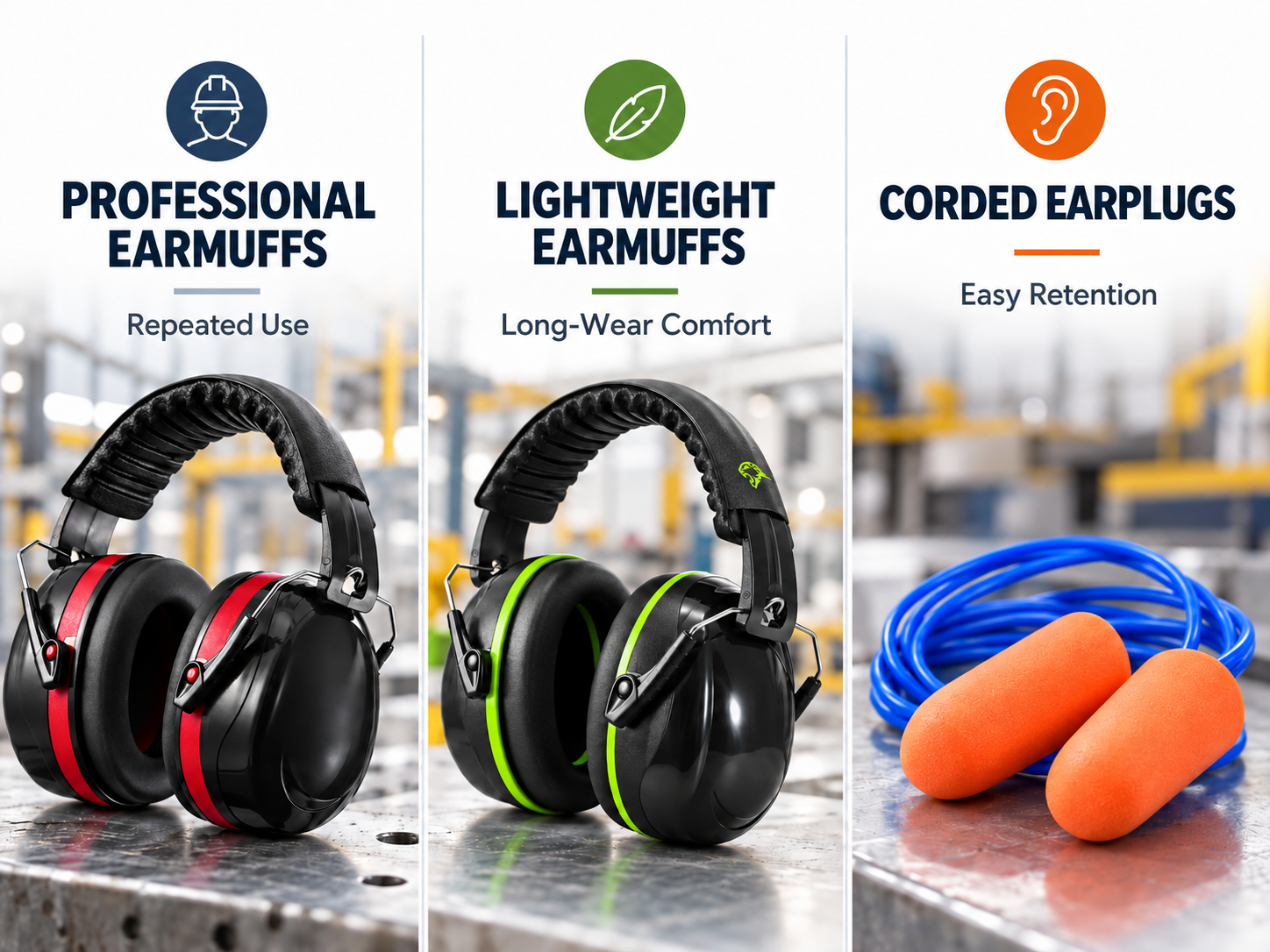
6. Safetoe Recommended Hearing Protection Products
Safetoe offers different hearing protection solutions for industrial distributors, construction projects and workplace PPE programs.
Suitable for continuous industrial noise environments, including:
A practical earmuff option for industrial hearing protection programs.
Designed for workers who prioritize lightweight construction and wearing comfort.
Potential applications include:
A practical solution for large-scale PPE distribution and applications requiring disposable hearing protection.
Suitable for:
For bulk procurement, buyers should confirm the exact model's attenuation rating, test documentation, packaging and applicable compliance requirements.
7. Three Important Tips for Industrial Hearing Protection Procurement
Before placing a bulk order, purchasing managers should consider the following:
1. Confirm the Rating and Compliance Documents
Request the applicable NRR or SNR information, test reports, certificates and product datasheets.
Make sure the documents correspond to the exact model being purchased.
2. Check MOQ, Customization and Lead Time
For distributors and industrial projects, confirm:
Available colors
Logo customization
Packaging options
Minimum order quantity
Production lead time
This helps avoid delays when preparing large PPE orders.
3. Consider Replacement Parts and Long-Term Supply
For reusable earmuffs, ear cushions are important consumable components.
Confirm whether replacement cushions are available and whether long-term supply can be maintained.
This helps reduce maintenance costs and unnecessary product replacement.
Frequently Asked Questions
1. What is the difference between NRR and SNR?
NRR is primarily used in the US noise-labeling system, while SNR is widely used in Europe. Both measure potential noise attenuation, but their testing and calculation methods differ.
2. Is NRR 30 better than SNR 30?
Not necessarily. The two ratings are based on different systems and cannot be directly compared using the same numerical value.
3. Are earmuffs better than earplugs?
Neither is universally better. Earmuffs are generally easier to put on and inspect, while earplugs are lightweight and compact. Selection depends on noise exposure, fit, comfort and workplace conditions.
4. Can workers wear earmuffs and earplugs together?
Yes. Double hearing protection may be appropriate in extremely noisy environments. The required combination should be determined through a workplace noise assessment.
5. What certificates should buyers request for industrial hearing protection?
Depending on the destination market, buyers may need applicable EN 352 documentation, CE conformity information or US NRR labeling and supporting test documentation. Always verify the exact product model and applicable regulatory requirements.
Conclusion
Choosing the right hearing protection involves more than comparing NRR and SNR numbers.Buyers should consider workplace noise levels, actual attenuation, correct fitting, comfort, compatibility with other PPE and the relevant compliance requirements.
From professional earmuffs to disposable foam earplugs, Safetoe provides practical hearing protection options for factories, construction sites, manufacturing facilities and industrial distributors.

 English


