
 English

Common Eye Hazards During Grinding & Woodworking

Flying Sparks & Hot Particles

Fine Dust & Abrasive Particles

High-Speed Flying Debris

Lens Scratches & Reduced Clarity
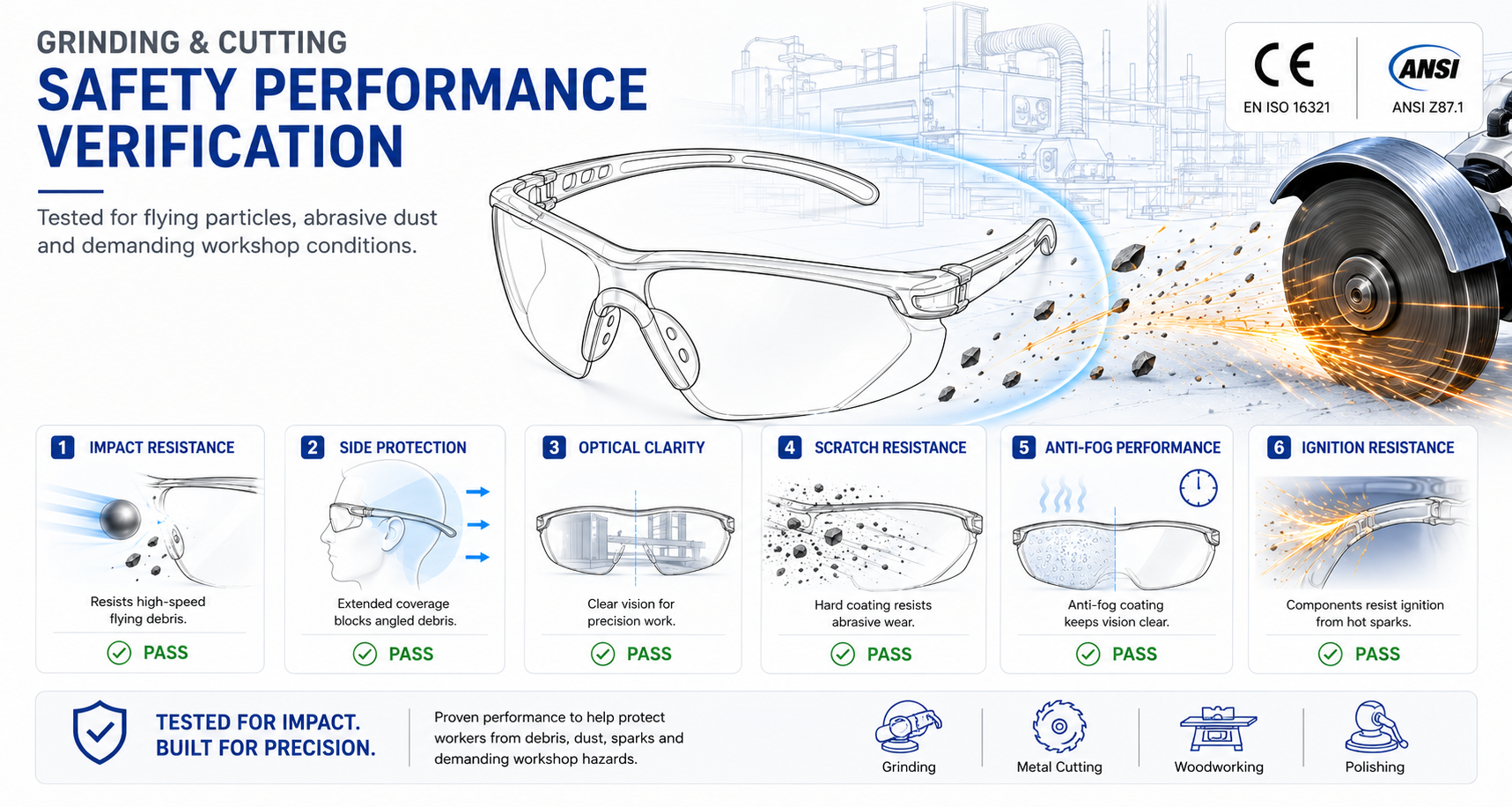
Recommended Eye Protection Technologies

Wrapova™
Extended Side Coverage

Korvion™
Scratch-Resistant Technology

Veratopium™
Anti-Fog Technology

Flexentra™
All-Day Comfort


How to Choose Safety Glasses for Different Work Environments
How to Choose Safety Glasses for Different Work Environments

Safety Glasses for Grinding: What Eye Protection Do Workers Really Need?
Safety Glasses for Grinding: What Eye Protection Do Workers Really Need?

7 Safety Glasses Mistakes Construction Workers Should Avoid
7 Safety Glasses Mistakes Construction Workers Should Avoid
Grinding Safety Glasses FAQ
1.What Type of Safety Glasses Are Best for Grinding, Cutting, and Woodworking?
Grinding, cutting, and woodworking generate high-speed flying particles, wood chips, metal fragments, sparks, and abrasive dust that can cause serious eye injuries. Safety glasses used in these environments should meet **ANSI Z87.1** or **EN ISO 16321** standards and feature high-impact polycarbonate lenses, extended side protection, scratch-resistant coatings, and anti-fog performance. For heavy grinding operations, safety glasses may also be worn together with a face shield for additional protection. Choosing comfortable, certified eyewear encourages continuous use throughout the workday. Safeyear grinding safety glasses integrate Veratopium™, Korvion™, Flexentra™, and Wrapova™ technologies for reliable protection in demanding industrial applications.
2.Why Is Side Protection Essential for Grinding Safety Glasses?
3.Why Are Anti-Fog and Scratch-Resistant Lenses Important for Grinding Work?
4.Are Safety Glasses Alone Enough for Heavy Grinding Operations?
5.How Can Comfortable Safety Glasses Improve Grinding Productivity?
6.Why Choose Safeyear Grinding Safety Glasses?
Stay Focused. Stay Protected.
Discover safety eyewear built for grinding, cutting and woodworking applications.
